
Where to Catch Bass in Late August: Shallow or Deep? A Region-by-Region Answer
Share this article with every angler you know!
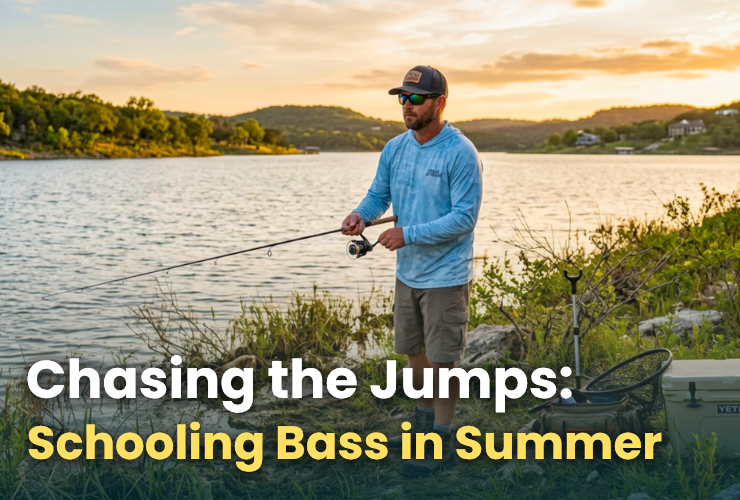
Where to Catch Bass in Late August: Shallow or Deep?
A Region-by-Region Answer
You pull up to the boat ramp on Saturday morning.
Your buddy says fish shallow. Someone at the ramp says fish deep. The online reports contradict each other. The last time you were on this water, you caught fish at 4 feet. The time before that, you caught them at 15 feet. You have no idea which is right for today.
Shallow or deep is the wrong question.
The right question is where does the answer sit on your specific water in your specific region right now. Southern reservoirs push fish deep during peak heat. Northern smallmouth waters keep fish shallow on rocky structure. Ozark reservoirs have fish stacked on offshore ledges. Great Lakes have fish holding at specific depths tied to the thermocline. The debate has different winners in different regions and the same lake produces different answers on different days.
This article gives you the answer for every one of the eight bass fishing regions in America right now. Find your region. Get the specific depth range for this week. Know what to throw and when to fish it.
Sign up to be notified of new bass fishing articles!
Get the Bass Fishing Playbook Every Week
The Shallow-Versus-Deep Question That Misses the Point
Frame this framework section with observed pattern language. Both sides of the debate are right in different situations. The debate exists because it treats bass fishing as a national question when it is fundamentally a regional and lake-specific question.
Why the Debate Exists
Bass fishing content on social media, YouTube, and the major publications comes from anglers in specific regions writing for national audiences. A Texas angler talks about offshore ledge fishing because that is what produces on their water in August. A Great Lakes angler talks about rocky smallmouth structure at 12 feet because that is what produces on their water. Both are giving good advice. Both apply to specific water types.
The reader who tries to apply Texas ledge advice to a natural lake in Wisconsin or Great Lakes drop shot advice to a Florida grass lake fails on both counts. Not because the advice was wrong, but because it was written for different water.
The Variables That Determine the Answer
Water temperature drives vertical positioning. Bass are ectothermic. Their body temperature and metabolism track water temperature closely. Extreme heat pushes bass to cooler depths where thermal stratification allows. Cooler water keeps them shallower.
Thermocline depth matters on lakes deep enough to develop one. The thermocline separates warmer oxygenated upper water from cooler oxygen-depleted lower water. Bass hold at or just above the thermocline where both temperature and oxygen are optimal. On shallow lakes and river systems, no thermocline exists and the depth answer is different.
Forage location tells bass where to be. Bass follow the shad, bluegill, crawfish, and baitfish that make up their diet. Where the forage concentrates, bass concentrate. Late summer shad school movement is the biggest single forage-driven factor in reservoir fishing right now.
Structure type on your water changes what "deep" and "shallow" actually mean. Deep on a Florida grass lake might be 8 feet. Deep on Lake Fork might be 25 feet. Deep on Lake Ontario might be 30 feet. The absolute depth number matters less than the relative depth on your specific water.
How to Read Your Water Before You Commit
Check current surface water temperature on your specific lake. Check the trend over the last 48 hours. Look at cloud cover forecast for the trip window. Note whether the water body is deep enough for thermocline stratification. Read local reports for the general depth range that has been producing.
Then use the regional breakdown below to place your water on the shallow-or-deep spectrum for late August.
The Four Factors That Determine Where Bass Hold in August
Framework applies across every region. Read these four factors on your specific water before you apply the regional answer.
Water Temperature and Vertical Positioning
The single most important variable. Bass thrive in a temperature range that varies by species and region but generally sits in the mid-70s to low-80s for largemouth and 65 to 75 degrees for smallmouth. Water above the target range pushes bass to depths where cooler water is available. Water within the range keeps bass wherever forage and structure concentrate.
On southern reservoirs in mid-August with surface temperatures in the 90s, bass push to offshore structure where deeper water offers thermal refuge. On northern waters with surface temperatures in the mid-70s, bass have no thermal reason to push deep and hold wherever structure and forage concentrate.
The Thermocline (Where It Applies)
On reservoirs and lakes deeper than about 25 feet with limited water flow, summer heat creates thermal stratification. Warm oxygenated water sits on top. Cold oxygen-depleted water sits below. A transition layer called the thermocline separates them.
Bass position above the thermocline because that is where dissolved oxygen exists. On a stratified reservoir, the exact depth of the thermocline determines the depth range where bass hold. Locating the thermocline on your specific water is one of the highest-value pieces of information for summer fishing.
On shallow lakes, rivers, current-influenced reservoirs, and lakes with significant vertical mixing from wind, no meaningful thermocline develops and the depth answer is different.
Forage Location and Shad School Movement
Bass go where the food is. In late August, shad populations are near peak size and density. Shad schools on reservoirs move predictably through structure during dawn and dusk feeding windows. Bass position on the structure that intersects those movement patterns.
In late August, shad on many southern reservoirs are beginning to concentrate toward creek arms as the pre-fall migration signal. On northern waters, shad are still in open water summer patterns. The stage of the shad migration on your water affects where bass are holding.
Structure Type on Your Water
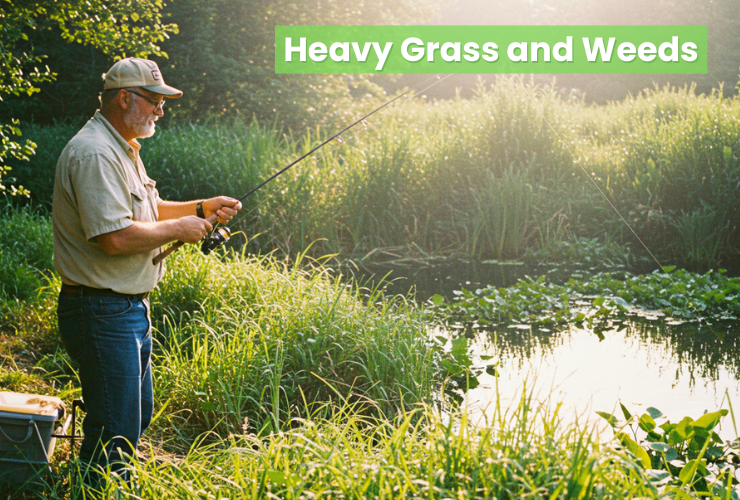
Grass and matted vegetation waters have bass in the vegetation regardless of temperature. Rocky reservoirs push bass to hard-bottom structure. Timber lakes hold bass in the standing wood. Natural lakes with mixed cover give bass more options.
The structure your water offers changes both the depth answer and the tactical approach. A depth range that is standard for one water type is empty water for another.
Regional Breakdown: The Answer for Your Water Right Now
Find your region. Get the specific answer. Know what to throw.
Southeast (Florida, Georgia, Alabama, Mississippi, South Carolina, Louisiana)
Answer: Deep during midday. Shallow at dawn, dusk, and night.
Why: Water temperatures in the low 90s across most southern reservoirs push fish to offshore structure at 12 to 20 feet during the middle of the day. Only heavy matted cover holds bass shallow through midday. Compressed feeding windows at low light bring bass shallow for 45-minute windows at dawn and dusk. Night fishing produces shallow feeding on the right waters.
Top three baits at depth:
Dirty Jigs Casting Jig with football head in green pumpkin or brown craw. Drag it slowly across offshore brush, shell beds, and hard bottom points at 12 to 18 feet.
Strike King 10XD deep crankbait in sexy shad or citrus shad. Bang the bait off cover and let the deflection trigger reaction bites from fish positioned on structure.
Carolina rig with a creature bait like the Zoom Brush Hog for methodical structure fishing on offshore ledges.
Top three baits shallow:
Booyah Pad Crasher in black on hydrilla mats and matted vegetation. Peak Florida frog production through late August.
Booyah Buzz with a Colorado blade along grass edges at first and last light. Buzzbait works on cover that walking baits cannot reach.
Heddon Zara Spook in bone on main lake points at dawn for the compressed 45-minute topwater window.
Regional tip: Southern anglers should default to deep during midday and only fish shallow in the compressed dawn and dusk windows or matted vegetation. Fighting a shallow pattern during midday in September temperatures is fighting the fish rather than fishing them.
Southwest (Texas, Oklahoma, Arkansas)
Answer: Deep, almost exclusively during the day.
Why: 88 to 92 degree water and heat dome conditions concentrate fish on offshore ledges at 15 to 25 feet. Shallow water is essentially dead during daylight hours. The evening window opens shorter than the morning window. Night fishing is legitimate on the right water.
Top three baits at depth:
Strike King 10XD deep crankbait in sexy shad on offshore ledges and channel swings. Long cast, aggressive retrieve to depth, then slower through the strike zone.
Dirty Jigs Casting Jig with football head in watermelon red or green pumpkin on offshore rock and shell. Slow methodical drag.
Z-Man ChatterBait Elite EVO HD in shad patterns for schooling activity at first and last light. Schooling bass respond aggressively to Chatterbait-style baits when they push shad up.
Regional tip: Texas and Oklahoma anglers who commit to offshore structure during the day catch fish. Anglers who fight shallow patterns catch heat exhaustion. Lake Fork, Sam Rayburn, Ray Roberts, and Amistad are all in peak ledge fishing right now.
Mid-South (Tennessee, North Carolina, Virginia, Kentucky, West Virginia)
Answer: Split. Deep during midday, shallow at low light.
Why: Mid-80s water with Tennessee River grass and offshore ledges producing simultaneously. This is the region where anglers can legitimately fish both patterns on the same day and catch fish on both.
Top three baits at depth:
Football jig in green pumpkin on Tennessee River ledges and offshore brush at 12 to 18 feet.
Strike King 10XD or Rapala DT-16 deep crankbait on offshore structure.
Carolina rig with a creature bait on hard bottom transition areas.
Top three baits shallow:
Booyah Pad Crasher on Tennessee River grass, submerged vegetation, and mat cover. Peak frog production this week.
Z-Man ChatterBait Elite EVO HD on grass edges during low light windows.
Heddon Zara Spook at dawn on main lake points and offshore brush edges.
Regional tip: Tennessee River reservoirs including Guntersville, Kentucky Lake, and Chickamauga give anglers the best of both patterns on the same day. Grass early, ledges midday, grass late. Anglers who commit to one pattern miss half the day's fish.
Mid-Atlantic and Ozarks (Missouri, Illinois, Indiana, Ohio, Maryland, Pennsylvania)
Answer: Deep on Ozark reservoirs. Split on natural lakes.
Why: Ozark reservoirs at peak offshore pattern with fish stacked on rock and brush at 10 to 18 feet. Natural lakes in the region have fish on grass edges, pad fields, and outside weed lines. Water type dictates the answer.
Top three baits at depth (Ozark reservoirs):
Football jig in brown craw or green pumpkin on Ozark rock structure. Slow methodical drag.
Rapala DT-10 on transition points and secondary structure at 8 to 12 feet.
Drop shot with Roboworm Straight Tail Worm for suspended fish near offshore structure.
Top three baits shallow (natural lakes):
Booyah Buzz along natural lake grass and pad edges at first and last light.
Heddon Zara Spook on main lake points and shallow flats with depth access.
Strike King KVD Finesse Swim Jig along outside weed edges.
Regional tip: Lake of the Ozarks, Bull Shoals, Table Rock, and Beaver Lake are at peak offshore pattern with the offshore football jig bite at highest reliability of the year. Northern natural lakes offer more shallow opportunity as the region begins showing early transition signals.
Great Lakes and Upper Midwest (Michigan, Wisconsin, Minnesota, Iowa, New York)
Answer: Shallow to moderate depth. Peak smallmouth season continues.
Why: Upper 70s water keeps smallmouth on rocky offshore structure at 8 to 14 feet. Largemouth on outside weed edges. First fall transition signals appearing on the coolest northern natural lakes as overnight temperatures begin dropping.
Top three baits at moderate depth:
Roboworm Straight Tail Worm on drop shot rigs over Great Lakes smallmouth structure. Six-inch length in Morning Dawn or Aaron's Magic.
Z-Man Finesse TRD on Ned rigs with Z-Man ShroomZ jig heads. Green Pumpkin or Coppertreuse.
Tube baits in smoke or brown craw for smallmouth on rocky flats.
Top three baits shallow:
Heddon Zara Spook in bone on rocky flats at dawn for peak smallmouth topwater window.
Booyah Pad Crasher on largemouth mats and matted vegetation in protected bays.
Keitech Fat Swing Impact 3.3 in hot minnow along outside weed edges.
Regional tip: Northern anglers are in the transition zone right now. Watch for shad concentrating toward creek arms as the fall pattern signal. Peak smallmouth topwater window on the Great Lakes remains open for another 3 to 4 weeks before cooler water shifts patterns.
Northeast and New England (New York, Pennsylvania, New Jersey, Connecticut, Massachusetts, Vermont, New Hampshire, Maine)
Answer: Shallow to moderate. Early transition beginning.
Why: Mid-70s water keeps bass on main lake points, outside weed edges, and rocky structure at 8 to 14 feet. Post-spawn feeding window still open on many waters. Peak fall transition begins in about 2 weeks.
Top three baits at moderate depth:
Rapala DT-10 in shad patterns on transition zones and secondary points.
Z-Man ChatterBait Elite EVO HD in shad colors on grass edges at moderate depth.
Drop shot with Roboworm Straight Tail Worm on rocky structure for smallmouth.
Top three baits shallow:
Heddon Zara Spook on main lake points at dawn and dusk. Full topwater windows still open.
Strike King KVD Finesse Swim Jig in white or bluegill along grass edges.
Booyah Buzz along shoreline cover at low light.
Regional tip: Peak fall transition begins in about 2 weeks in the Northeast. Right now is the last window for peak summer patterns before shad migration and cooler nights change what produces. If you can commit to a Northeast bass trip in the next 2 weeks, this is the window.
West and Pacific Northwest (California, Oregon, Washington, Nevada, Arizona)
Answer: Deep on California reservoirs. Split on Pacific Northwest waters.
Why: Clear-water California reservoirs push fish to 18 to 25 feet on offshore structure. Pacific Northwest waters have fish at 8 to 14 feet on weed edges and rocky structure with cooler surface temperatures.
Top three baits at depth:
Dirty Jigs Casting Jig with football head on deep California ledges at 18 to 25 feet.
Strike King 10XD deep crankbait on offshore structure.
Drop shot for suspended fish on California reservoirs.
Top three baits moderate:
Whopper Plopper 110 at dawn on California reservoir offshore points. Clear water rewards sustained surface noise.
Heddon Zara Spook at dawn on Pacific Northwest waters.
Z-Man ChatterBait Elite EVO HD on grass edges across the region.
Regional tip: Clear-water Western reservoirs require deeper thinking than equivalent Southern reservoirs. Look 5 to 10 feet deeper than you would elsewhere. Clear Lake, Folsom, and Castaic are at peak summer pattern. Columbia River smallmouth in strong late summer window with river tactics producing consistently.
Rocky Mountains (Colorado, Utah, Wyoming, Montana, Idaho)
Answer: Shallow to moderate at low elevations. Moderate at high elevations.
Why: Lower elevation water in mid-70s keeps bass on main lake points and grass edges. Higher elevation water in upper 60s has bass on rock structure at moderate depths. High elevation lakes already showing early transition behavior as overnight air temperatures drop into the 40s.
Top three baits low elevation:
Booyah Buzz on grass and shoreline cover at low light.
Heddon Zara Spook at dawn on lower elevation lakes.
Strike King KVD Finesse Swim Jig on weed edges.
Top three baits high elevation:
Roboworm Straight Tail Worm on drop shot for clear water at moderate depth.
Z-Man Finesse TRD on Ned rig for rocky structure.
Small swimbait like Keitech Fat Swing Impact 2.8 on weed edges.
Regional tip: Elevation matters more than latitude in the Rockies. Higher elevation lakes already showing early transition behavior. Lower elevation reservoirs in full summer pattern. Match your approach to your specific elevation.
The Bank Angler's Shallow-Versus-Deep Answer
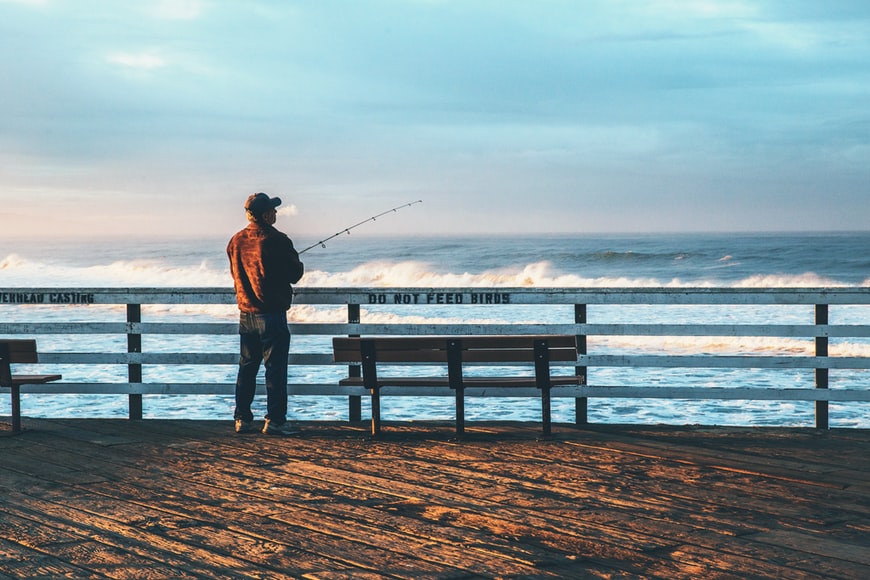
Bank anglers cannot follow bass to deep offshore structure. The shallow-versus-deep question is different when you cannot get to the deep water without a boat.
When Bank Anglers Are Actually Fishing Deep
Bank anglers fishing bridge pilings, riprap extending into channels, bluff banks with immediate depth access, and marina walls are legitimately fishing deep water during offshore days. The location matters more than the technique. A bank spot with 20 feet of water within casting distance is a deep spot even though you are fishing from shore.
Identify the bank spots on your home water that offer depth access. Prioritize those spots on days when offshore fish are the pattern. Skip the shallow shoreline banks that fish well only during low light windows.
Bank Spots That Produce During Offshore Days
Long points that extend into the main lake and offer deep water access on both sides. Bridge causeways with concrete piling structure. Rocky bluff banks where the water depth drops immediately from shore. Riprap that extends into deep water rather than paralleling a shallow shoreline.
These spots hold bass during offshore days because they combine bank accessibility with the deeper water where fish are actually holding.
The Bank Angler's Shallow Water Opportunity
Every region has shallow water that produces from the bank during low light windows. Dawn and dusk on rocky flats. Overcast midday on grass edges. Night fishing on rocky shorelines with immediate depth access.
The shallow water opportunity is real but time-constrained. Bank anglers who commit to the 45-minute morning window and the 45-minute evening window on the right shoreline catch fish during hours when reservoir midday fishing is dead.
The Kayak and Boat Angler Decision Framework
For anglers with more access flexibility, the shallow-or-deep question becomes a rotation decision throughout the day.
How Kayak Anglers Should Approach the Depth Question
Kayaks are perfect for fishing multiple depth ranges on the same trip in specific water types. Mat-covered protected coves for shallow morning fishing. Offshore rocky structure for midday drop shot work. Shaded backwater coves for hot midday alternatives.
The kayak advantage is stealth. Kayaks can get onto shallow schooling activity without spooking the school. Kayaks can hold on offshore rock structure without spooking pressured fish. Match the kayak advantage to the depth pattern your region calls for.
Boat Anglers and the Range Advantage
Boats offer the most flexibility for depth rotation. Cover offshore structure during midday. Run to shallow water for the evening window. Repeat the offshore rotation the next morning. The boat angler who rotates through multiple depth ranges on the same day catches significantly more than the angler who commits to a single depth.
Electronics matter more for boat anglers than for kayak or bank anglers. Marking offshore structure, identifying suspended fish, and locating the thermocline all pay off in offshore fishing. Invest in learning the electronics on your boat if you have not already.
When to Change Depth Mid-Trip
If you have been fishing one depth range for 90 minutes without a bite, change depth before you change anything else. Move from shallow to offshore or from offshore to shallow. The wrong depth kills more trips than the wrong bait.
Time-of-day cues also matter. Shallow fishing during the compressed dawn and dusk windows. Deep fishing during midday. Night fishing on the right waters. Match your depth to the productive window for the current time of day.
What August Tells Us About September
The shallow-versus-deep question changes as August rolls into September. Understanding the transition helps you anticipate what your water will do over the next four weeks.
Early Transition Signals to Watch For in Northern Regions
Northern anglers should watch for the first sustained overnight cooling that drops water temperatures 5 or more degrees over a week. Shad beginning to concentrate toward creek arms and shallower feeding areas. Bass moving from offshore summer structure to transition zones. Increased daytime activity as productive windows extend beyond dawn and dusk.
When you see these signals on your water, the summer offshore pattern is ending and early fall transition begins. Adjust tactics accordingly.
Southern Regions Holding Pattern Through Mid-September
Southern anglers have another 3 to 5 weeks of peak summer patterns before conditions change. Do not expect the transition to arrive in early September on Florida, Texas, or deep southern reservoirs. The transition arrives when water temperatures drop out of the 80s consistently, typically late September into October.
Southern anglers should stay locked in on offshore ledges during midday and compressed shallow windows at dawn, dusk, and night through mid-September.
When to Start Shifting to Fall Patterns
The shift is trend-driven, not calendar-driven. Water dropping from 85 to 78 degrees over a week produces stronger transition behavior than water sitting stably at 78 degrees. Bass Forecast tracks water temperature trends and can identify when your specific water is beginning the transition.
Anglers who wait for calendar dates to shift tactics miss the transition on their water. Anglers who watch the temperature trend catch the transition as it happens.
Frequently Asked Questions (FAQ's)
Should I fish shallow or deep for bass in August?
Depends on your region and your specific water. Southern reservoirs typically push bass deep during midday due to heat. Northern smallmouth waters keep fish at moderate depths on rocky structure. Ozark reservoirs have fish stacked deep on offshore ledges. The right answer depends on water temperature, thermocline depth, forage location, and structure type on your specific lake. See the regional breakdown for your specific answer.
Where do bass hold in August during the middle of the day?
Region-dependent. Southern reservoirs have bass on offshore ledges 12 to 20 feet or in matted vegetation for holdout fish. Southwest reservoirs have bass on ledges 15 to 25 feet. Mid-South has fish split between offshore structure and Tennessee River grass. Northern smallmouth waters have fish on rocky offshore structure 8 to 14 feet. Read your regional section for your specific water.
What depth should I fish for bass in August?
Depth depends on your water temperature and thermocline depth. On deeper reservoirs, target the depth just above the thermocline. On shallow reservoirs and natural lakes, target the depth where structure and forage concentrate. Bass Forecast tracks conditions for your specific water and can help identify the productive depth range.
Do bass go deep in hot weather?
Yes, on reservoirs deep enough for meaningful thermal stratification. Bass position at or just above the thermocline where temperature and oxygen levels are optimal. On shallow reservoirs, natural lakes, and rivers, bass adjust differently because the same thermal structure does not exist. The "bass go deep in hot weather" rule applies specifically to stratified reservoirs.
What baits work for deep bass fishing in August?
Football jigs on offshore rock and hard bottom. Deep crankbaits like the Strike King 10XD for ledge and structure work. Carolina rigs with creature baits for hard bottom. Drop shots with finesse worms for suspended fish. The specific bait depends on your water type and the specific depth range where fish are holding.
What baits work for shallow bass fishing in August?
Hollow body frogs for matted vegetation. Buzzbaits along grass edges at low light. Walking baits on main lake points at dawn and dusk. Chatterbaits along grass edges and shoreline cover. Shallow water fishing in August compresses to specific windows tied to light conditions and cover types.
When do bass move from deep to shallow in August?
Bass shift from deep holding water to shallow feeding water during light transitions at dawn and dusk. The windows typically last 30 to 60 minutes and are shorter in extreme heat. Overcast conditions extend the shallow feeding window significantly. On some waters, night fishing produces shallow feeding activity that daytime fishing does not.
How do I know if my lake has a thermocline?
Most lakes deeper than 25 to 30 feet develop a thermocline during summer. Sonar units can identify it as a horizontal band across the display. On reservoirs with clear thermal stratification, bass typically hold at or just above the thermocline. On shallow reservoirs, natural lakes with mixed water, and rivers with current, thermocline behavior is different or does not apply.
Is it better to fish shallow or deep during the day in August?
For most regions, deep is better during the middle of the day due to water temperature and light conditions. Exceptions include waters with matted vegetation that provides thermal refuge for shallow fish, waters with heavy cover that shades bass through midday, and northern waters where surface temperatures stay in the bass comfort range. Read your regional breakdown for the specific answer for your water.
When does the shallow-versus-deep answer change in fall?
Regionally dependent. Northern regions see the shift in late August through mid-September as water temperatures drop and shad migration begins. Southern regions see the shift in late September into October as water temperatures finally drop out of the 80s. Track water temperature trends on your specific water and watch for the first shad concentration toward creek arms as the pre-fall signal.
Use the Bass Forecast App or Web App
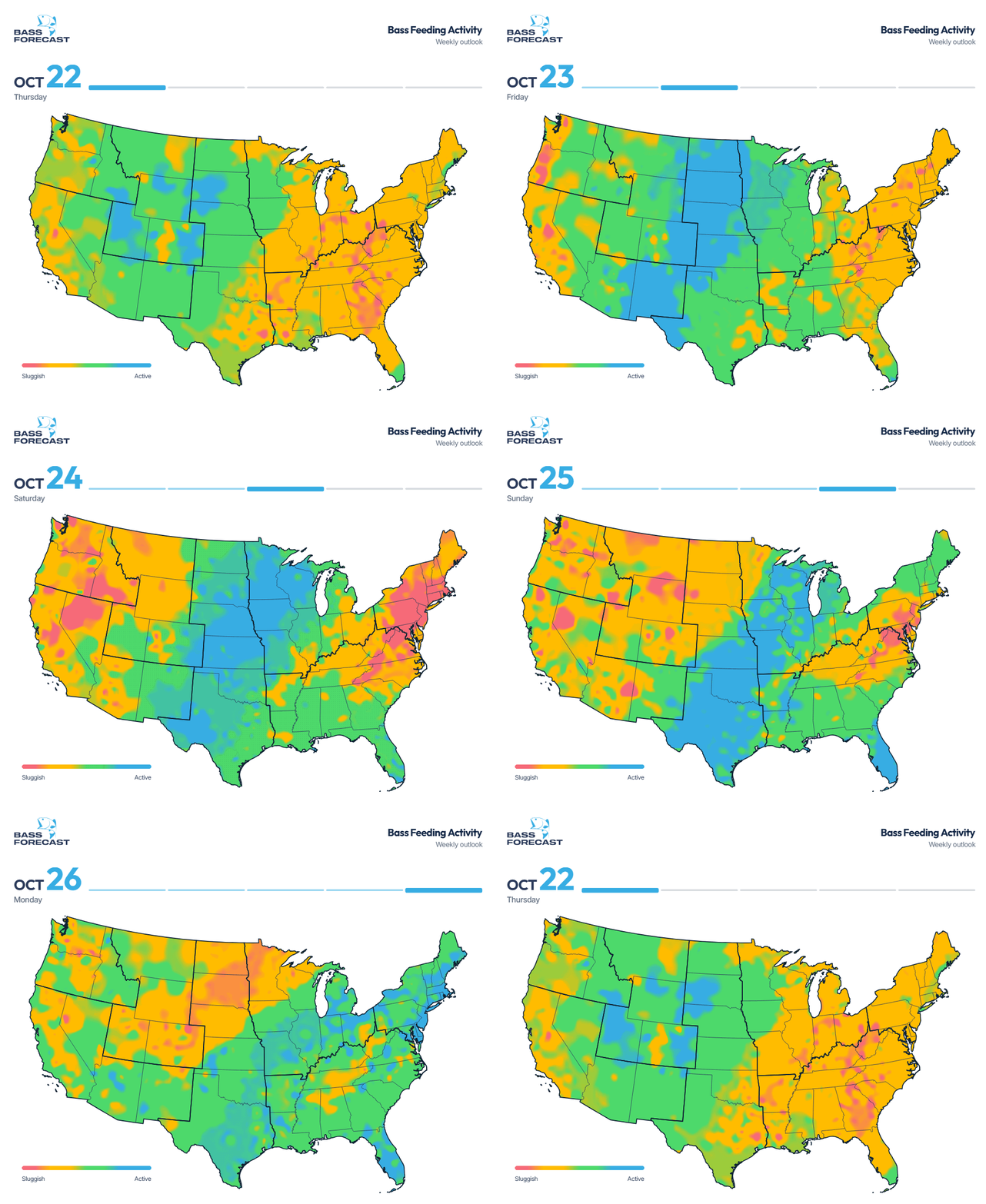
The shallow-versus-deep question changes daily based on conditions. Bass Forecast tracks water temperature, barometric pressure trends, wind, and solunar timing for your exact location and translates them into daily bait recommendations from 22 categories. Instead of guessing whether today is a shallow day or a deep day, get the specific answer for your water before you leave the truck.




.png)
.png)