
Why Urchin Baits Fish Better on a Tokyo Rig Than a Texas Rig
Share this article with every angler you know!
Why Urchin Baits Fish Better on a Tokyo Rig Than a Texas Rig
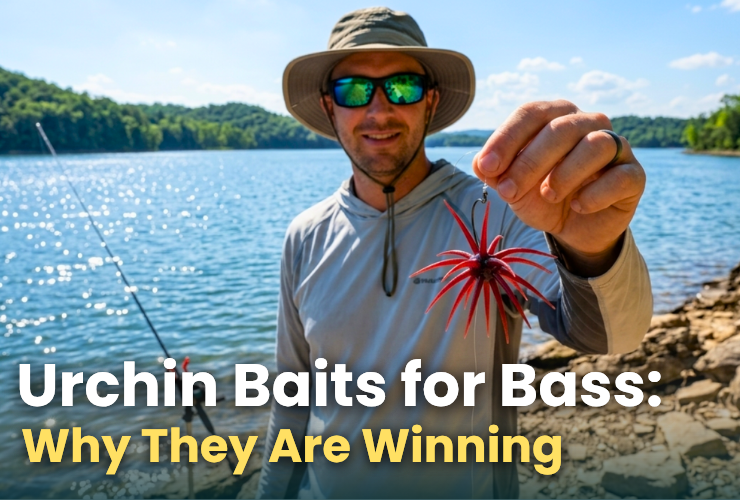
You bought urchin baits.
Maybe you saw them at the tackle shop. Maybe a friend told you about them. Maybe you read about the tournament wins in May and June and figured you should have some in your box. Whatever brought you to the category, you now have urchin baits in your tackle. And you have been Texas rigging them, because that is what every soft plastic gets.
The results have been fine. Not great. You caught a few. You missed more than you should have. The bait pulled out on a hookset. A fish dropped it before you could set. Or the bite just was not there the way the reviews promised. You blamed the water, the conditions, the moon phase, your presentation.
The rig is the problem.
Urchin baits fish better on a Tokyo rig, a Jika rig, or one of a few other standoff rig variations than they fish on a Texas rig. The difference in production is not small. Once you understand why, you will not rig an urchin bait Texas-style again.
Sign up to be notified of new bass fishing articles!
Get the Bass Fishing Playbook Every Week
The Texas Rig Problem With Urchin Baits
Texas rigging is the workhorse of bass fishing. It is versatile, it is weedless, and it works with almost every soft plastic on the market. That is why most anglers default to it when they open a new pack of urchin baits.
The specific design of an urchin bait is why the Texas rig underperforms with the category.
The Weight Sitting Against the Bait Deadens the Appendage Action
A Texas-rigged urchin bait has a bullet weight sliding down the line and resting directly against the nose of the bait. The weight applies constant pressure against the bait body. The radial appendages that give the urchin its distinctive pulsing action need freedom to move, and a bullet weight pressed against the bait dampens that freedom.
Watch a Texas-rigged urchin bait fall in clear water. Compare it to the same bait on a Tokyo rig. The difference is immediate. The Tokyo-rigged urchin has appendages that flutter and pulse independently as it falls. The Texas-rigged urchin has appendages that trail behind the weight in a straight line. Same bait, completely different action.
Bullet Weights Bury Compact Profiles
Urchin baits have a compact body relative to their overall profile. The radial appendages create the visual size but the actual mass is small. A bullet weight is engineered to bury a soft plastic through cover, which works well for a large-bodied creature bait but works against a compact urchin. The weight pulls the small body through vegetation and debris while the appendages catch on everything above.
A standoff rig positions the weight below the bait, which means the weight leads through cover while the bait follows behind. The compact urchin body slips through openings the weight has already cleared.
The Compact Profile Does Not Need a Bullet Weight
The whole reason Texas rigging works well for large creature baits is that the bullet weight helps the bait penetrate cover and reach the bottom quickly. Urchin baits are compact and dense enough that they reach the bottom without help. The bullet weight is solving a problem urchin baits do not have.
What Urchin Baits Actually Need From Their Rig
The right rig for an urchin bait needs to do three things. Keep the weight separated from the bait so the appendages move freely. Position the bait elevated slightly above the bottom so bass looking up see the full silhouette. Provide bottom contact through the weight without dragging the bait itself through cover and debris.
A Texas rig does none of these things well. A standoff rig does all three by design.
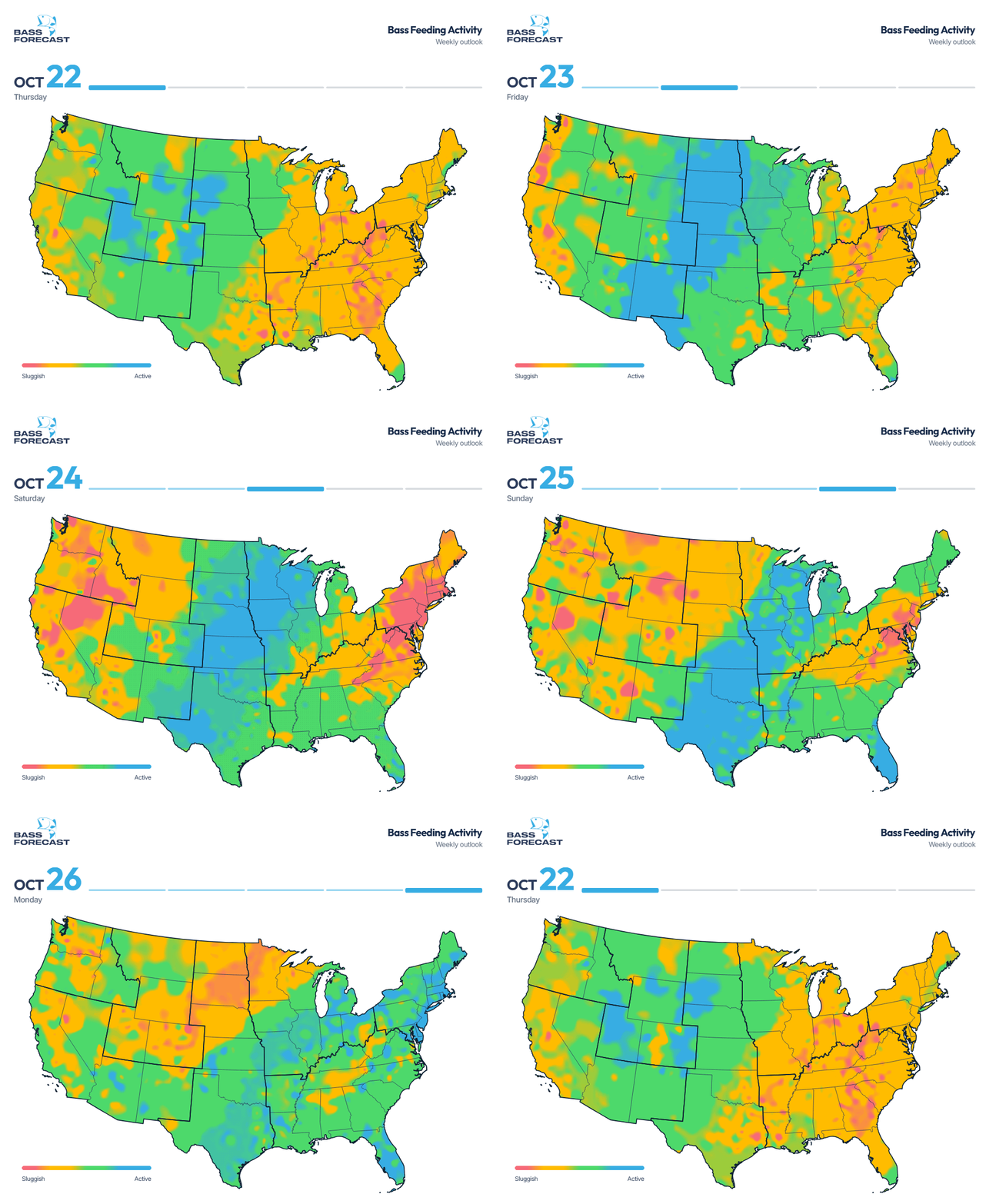
Check your local Bass Forecast ratings and intel report for your specific 10-day outlook, bite time windows, and bait recommendations tailored to your location.
What Is a Standoff Rig?
Standoff rig is the category name for any rig where the weight is positioned below the hook rather than above it on the line. The category includes the Tokyo rig, the Jika rig, and several purpose-built variations.
The core concept is simple. Instead of the weight sliding down the line to the bait, the weight hangs below the bait. The bait stays elevated. The weight maintains bottom contact. The two components work together but do different jobs.
The category emerged from Japanese finesse fishing where anglers were looking for ways to present baits to pressured bass in ways the fish had not seen. American anglers picked up the technique slowly at first. Recently, with the urchin bait wave, standoff rigs have become the tournament-tested rigging solution for the category.
The Three Primary Standoff Rig Variations
The Tokyo rig. An EWG hook attached to a swivel with a wire extension below. A weight attaches to the bottom of the wire. Split rings or wire rings connect the components. The wire extension gives the bait more space above the bottom than a Jika rig.
The Jika rig. A hook connected directly to a split ring and swivel. The weight hangs directly below with no wire extension. More compact profile than a Tokyo rig. Better for heavy cover and dock structure.
The drop-shot-weight-and-split-ring rig. A double frog hook or wide gap hook attached to a split ring. A drop-shot weight attaches to the same split ring or to a short dropper below it. This is the rig Jason Christie used to win the Bassmaster Elite at Pasquotank River on June 14. Extremely weedless around dock structure and wood cover.
All three are standoff rigs. All three outperform a Texas rig with urchin baits in most situations.
The Tokyo Rig With Urchin Baits
The Tokyo rig is the default standoff rig for open water and offshore applications. It fishes well anywhere you would drag a Texas rig or Carolina rig but produces better results with urchin baits specifically.
How to Build a Tokyo Rig for Urchin Baits
Start with a Gamakatsu EWG hook or an Owner J-Hook in a 3/0 or 4/0 size. Attach the hook to a small swivel. Attach a length of wire (three to four inches works well) to the same swivel with a split ring. Attach a tungsten weight (1/4 to 3/8 ounce for most applications) to the bottom of the wire.
Thread the urchin bait onto the hook so the radial appendages splay naturally. The bait should sit above the swivel with the wire and weight hanging below.
Commercial Tokyo rigs from VMC and Owner Hooks come pre-assembled if you prefer not to build your own. Both brands offer the components as complete rigs at most tackle shops.
When the Tokyo Rig Outperforms Other Rigs
The Tokyo rig is the strongest option in four specific applications.
Offshore rock and hard bottom structure. The weight maintains bottom contact through the rock while the bait stays elevated. Bass positioned on hard bottom see the elevated bait clearly.
Brush piles and offshore vegetation. The wire extension keeps the bait clear of the brush structure while the weight can drag through the branches without hanging the bait.
Ledge and channel swing applications. The Tokyo rig maintains bottom contact through the depth changes while the bait tracks along the bottom without dragging.
Extended structure areas where you want to cover water methodically. Slow drag retrieves work particularly well because the weight stays in contact while the bait maintains its natural profile.
The Jika Rig With Urchin Baits
The Jika rig is the compact cousin of the Tokyo rig. Same core concept but streamlined for tight cover.
How to Build a Jika Rig for Urchin Baits
Attach a hook to a split ring. Attach a swivel to the same split ring. Attach a tungsten weight directly below the split ring. No wire extension.
The compact profile makes the entire rig slip through cover in ways a Tokyo rig cannot.
When the Jika Rig Outperforms the Tokyo Rig
Dock structure and boat house cover. The compact rig skips well under docks and works cleanly around pilings.
Flooded wood and laydowns. The Jika rig slips through branches without the wire extension catching on cover.
Isolated vegetation clumps and matted grass edges. The compact profile penetrates cover the Tokyo rig cannot navigate.
Anywhere the Tokyo rig would foul on cover, the Jika rig is worth trying first.

Why the Tournament Results Tell the Same Story
The tactical reasoning above is not theoretical. The tournament coverage from May and June 2026 validated the standoff rig approach across multiple professional anglers.
Chris Johnston won the Bassmaster Elite at Santee Cooper on May 17 with 113 pounds, 12 ounces. He fished a Hideup Coike Fullcast on a No. 1 Gamakatsu treble hook with a one-eighth-ounce tungsten nail sinker inserted into the body of the bait. This is a variation of the standoff concept where the internal weight replaces the standard bullet weight and keeps the bait's appendages free.
Alex Davis won at Lay Lake later that month using a similar Coike-style bait. Post-tournament coverage confirmed he did not use standard Texas rigging.
Jason Christie won the Bassmaster Elite at Pasquotank River on June 14 with his tenth Elite title. His rig was the most explicit standoff variation of the three. A Trokar TK130 2/0 double frog hook attached to a drop-shot weight by a split ring. The frog hook kept the hooks upright and weedless. The weight kept the bait pinned to the bottom. The bait moved freely between them.
Six of the top ten Championship Sunday anglers at Pasquotank had urchin-style baits on their front decks. None of them used a standard Texas rig.
Brandon Palaniuk finished as runner-up with a Coike Fullcast on a No. 1 BKK Spear 21 treble and a three-thirty-second-ounce tungsten nail weight. Another internal-weight variation of the standoff concept.
The pattern across all four anglers is consistent. Standoff rigs and internal-weight variations outperform Texas rigs on urchin baits. The professional field figured this out first. The rest of us can learn from what they demonstrated on national tournament coverage.
When Each Rig Outperforms a Texas Rig
Not every rig fits every situation. The framework below helps you pick the right rig for your water.
Offshore rock and hard bottom. Tokyo rig favored. The wire extension keeps the bait elevated. The weight maintains bottom contact. Drag the rig slowly across offshore ledges, brush piles, and hard-bottom transitions.
Dock cover and boat houses. Christie's variation or Jika rig favored. Both are weedless around dock pilings and wood cover. Skip the rig under dock structure and let it fall on a controlled slack line.
Matted vegetation and heavy grass. Jika rig favored. Compact profile slips through cover the Tokyo rig cannot navigate. Pitch into openings and work through the vegetation deliberately.
Open water and moderate cover. Tokyo rig favored. General-purpose standoff application. Works across a wide range of conditions.
Very shallow water and dead-sticking presentations. Texas rig still wins. The compact profile and immediate bottom contact of a Texas rig is what you actually want in shallow water where the bait needs to rest still.
Specific finesse applications. Texas rig still works. For weightless or lightly weighted finesse presentations in clear water, a Texas rig or weightless rig may outperform a standoff rig. The extra weight of a standoff rig is unnecessary at very light weight ranges.
Purpose-Built Standoff Rig Products From ICAST 2026
The urchin bait wave triggered a wave of purpose-built terminal tackle at ICAST 2026 in July. Several products worth knowing about.
G-Ratt Baits Urchin Rig. Won Best Terminal Tackle at ICAST 2026. Purpose-built standoff rig system designed specifically for urchin baits. Solves the DIY problem for anglers who want the standoff geometry without building their own from components.
Gamakatsu Ball Rig Hook. Wide gap hook with Tournament Grade Wire and Nano Alpha coating. Features an innovative Weight Clip system that lets you change weight sizes without retying. Available in a Weedless model with a titanium weedguard for grass and heavy cover.
Missile Baits Hangtime Clip Weights. Purpose-built weights that clip onto any ring and remove for storage or size changes. Chemically dulled grey-black finish. Work with urchin baits, free rigs, and drop shot applications.
Owner Jungle Fixer. Hook with a mid-shank bait keeper and accessory loop that opens up urchin-specific rigging options. The integrated loop lets you attach drop weights or teaser baits directly.
Any of these products get you into standoff rig fishing without the DIY assembly of raw components. Worth considering if you want to skip the buildout step.
How to Fish Standoff Rigs With Urchin Baits
The rig is only half the story. Standoff rigs fish differently than Texas rigs even when both use the same bait.
The Slow Drag on Offshore Structure
The primary technique for Tokyo rigs on offshore rock, ledges, and brush. Cast to the structure. Let the rig fall on a controlled slack line. Once the weight makes bottom contact, drag it slowly across the structure with the rod tip low. Pause frequently. Bites often happen on the pause when the bait settles above the weight.
The retrieve is not aggressive. Slower than a Texas rig retrieve. The elevated bait profile does the work of triggering strikes.
The Hop and Pause on Brush and Cover
For Tokyo rigs and Jika rigs on brush piles and cover structure. Cast past the target. Retrieve the rig into the strike zone. Once the weight is in position, hop the rig with short rod movements and let it pause between hops. The bait pulses on the hop and settles on the pause. Bites often happen on the settling phase.
The Pitch and Fall on Dock Structure
For Jika rigs and Christie's variation on docks, laydowns, and shoreline cover. Pitch or skip the rig into the target area. Let it fall on a controlled slack line. Watch the line for movement. Most dock cover strikes happen on the fall before the rig reaches bottom.
If the rig reaches bottom without a strike, hop it once and let it fall again. Two or three fall cycles per target is usually enough. Move to the next target.
What a Standoff Rig Strike Feels Like
Standoff rig strikes feel different from Texas rig strikes. The weight is separated from the bait, which means the initial strike telegraphs through the weight before reaching the rod. You feel the weight tick as the bass takes the bait, then a pull as the fish moves off with it.
Set the hook when you feel the pull, not the tick. Setting on the tick often results in a missed fish or a pulled bait. The pull confirms the bass has committed to the bait and the hookset penetrates cleanly.
Angler-Type Breakdown
Bank Anglers
Standoff rigs work exceptionally well from the bank because the weight-first design maintains bottom contact on retrieves back toward shore. The bait stays elevated at the exact position bass are looking for prey. A Jika rig with a compact urchin bait pitched into shoreline cover produces on water where standard Texas-rigged baits foul out. Bank anglers who add a standoff rig setup to their tackle will find water that produced marginally with Texas rigs produces significantly better with standoffs.
Kayak Anglers
Kayaks and standoff rigs pair naturally. The controlled boat position kayaks offer lets you work standoff rigs slowly and methodically. A Tokyo rig with an urchin bait dragged across offshore structure from a kayak covers water efficiently without the trolling motor noise that spooks pressured fish on the same structure. Kayak anglers who spend time on protected offshore water should have at least one standoff rig setup ready.
Boat Anglers
Boat anglers get the most range for standoff rig applications. Cover offshore structure with a Tokyo rig at midday. Switch to a Jika rig for dock and cover fishing at low light. Run to a different arm of the lake for creek-mouth docks. The three variations of the standoff category give boat anglers a tackle rotation for different water types on the same trip.
Frequently Asked Questions (FAQs)
Should I fish urchin baits on a Texas rig or a Tokyo rig?
For most applications, a Tokyo rig or other standoff rig outperforms a Texas rig with urchin baits. The standoff rig keeps the weight separated from the bait, which lets the urchin's appendages move freely and keeps the bait elevated above the bottom cover. Texas rigging is still a valid option for very shallow water or specific dead-sticking presentations, but standoff rigs are the tactically stronger default.
What is a Tokyo rig?
A Tokyo rig is a standoff rigging system that positions the weight below the hook using a wire dropper. The setup includes an EWG hook attached to a swivel, a wire extension below the swivel, and a weight attached to the wire. The rig originated in Japanese finesse fishing and has gained mainstream adoption for pressured bass fishing situations.
What is a Jika rig?
A Jika rig is a compact version of the standoff rig category. A hook connects directly to a split ring and swivel with a weight hanging directly beneath it. There is no wire extension. The compact profile makes it exceptionally effective in heavy cover including flooded wood, docks, brush piles, and isolated vegetation.
How is Christie's Pasquotank rig different from a Tokyo rig?
Christie's Pasquotank rig used a Trokar TK130 2/0 double frog hook attached to a drop-shot weight by a split ring. The frog hook keeps the hooks upright and weedless, which is different from a Tokyo rig's EWG hook orientation. Functionally, all three rigs serve the same standoff purpose with slightly different applications.
What weights should I use on a standoff rig?
Weight selection depends on depth and cover. For most standoff rig applications with urchin baits, tungsten weights in the 1/4 to 3/8 ounce range work well. Deeper water and heavier cover require heavier weights up to 1/2 or 3/4 ounce. Missile Baits Hangtime Clip Weights and similar clip-on systems let you change weight sizes without retying.
Can I use standoff rigs with baits other than urchin baits?
Yes. Standoff rigs work well with creature baits, beaver baits, small swimbaits, and finesse worms. Urchin baits are a particularly strong match because the compact profile and appendage action benefit specifically from the standoff geometry.
What is the G-Ratt Baits Urchin Rig?
The G-Ratt Baits Urchin Rig won Best Terminal Tackle at ICAST 2026. It is a purpose-built rigging system designed specifically for urchin bait applications. The rig combines the standoff rig concept with hardware optimized for the urchin category, solving the problems anglers have been improvising around with homemade rigs.
When should I use a Texas rig instead of a standoff rig?
Texas rigging still wins in specific situations. Very shallow water where the extra weight and bottom contact of a standoff rig is unnecessary. Dead-sticking presentations where the bait needs to rest still without the elevation of a standoff rig. Specific finesse applications where the compact Texas rig profile is what you actually want. For most other urchin bait applications, a standoff rig is the better choice.
How does a standoff rig strike feel different from a Texas rig strike?
Standoff rig strikes telegraph through the weight before reaching the rod. You feel the weight tick as the bass takes the bait, then a pull as the fish moves off with it. Set the hook on the pull, not the tick. Setting on the tick often results in a missed fish. The pull confirms the bass has committed and the hookset penetrates cleanly.
Use the Bass Forecast App or Web App
Standoff rigs excel when bass are pressured and holding tight to structure. Bass Forecast tracks the conditions that create pressure situations. Weekend traffic on public water. Post-front bluebird days. Extended stable weather stretches. All of these signal that standoff rigs will outproduce standard Texas rigs on your water.
Bass Forecast also recommends baits from 22 categories including urchin baits based on your current water conditions. Match the right bait to the right rig to the current conditions before you leave the truck.
Download Bass Forecast to plan smarter trips with the right rigging for the day.





.png)
.png)