
Post-Migration Bass Fishing: The Fall Topwater Bite Playbook
Share this article with every angler you know!
Post-Migration Bass Fishing:
The Fall Topwater Bite Playbook
The hardest part of fall bass fishing is already over.
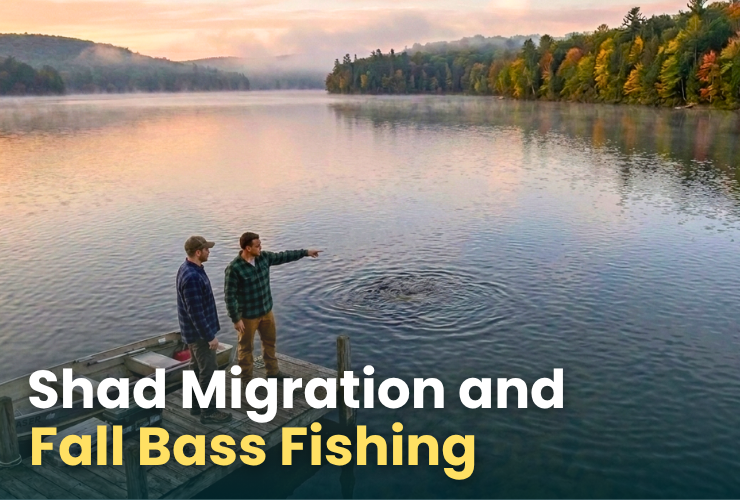
Shad migration pulled bass out of their summer holding water and sent them chasing baitfish toward creek arms and shallow feeding zones. That migration created the chaos most anglers associate with fall transition. Water that produced in September is empty in October. Bass that were offshore are suddenly shallow. Fishing reports contradict each other because the fish are moving faster than the reports can keep up.
Then the migration ends.
The bass that followed the shad settle into specific feeding zones where the baitfish have concentrated. The water that was chaos becomes predictable. The biggest bass of the year lock into feeding patterns that produce consistently for the next 4 to 6 weeks.
This is the post-migration window. It is the single best opportunity to catch a trophy bass on most waters in America. And one of the techniques that produces best during this window is topwater.
If you have been putting the topwater away as water temperatures drop, you are leaving fish behind.
This article covers where post-migration bass concentrate, why topwater produces so well right now, the specific baits that work by category, and how to time the daily windows that make fall topwater the most consistent reaction bite of the year.
Sign up to be notified of new bass fishing articles!
Bass Forecast Newsletters
What Post-Migration Actually Means on Your Water
Post-migration is the period after shad have completed their fall movement from open water summer zones to shallower fall feeding areas. Bass that followed the migration have settled into the water types where shad concentrated. Both species stay there through late fall until water temperatures force the next transition.
Signs you are in post-migration on your water.
Shad are visible in backwater coves, creek arm pockets, and shallow flats where they were not holding in summer. Bird activity concentrates over specific water types where shad schools have arrived. Bass start showing up on structure that was dead through summer. Catch rates on specific water patterns increase while other historical patterns stop producing.
Timing varies by region. Northern lakes typically enter post-migration from late September through early October. Mid-South and Ozark reservoirs enter mid-October through early November. Southeast reservoirs enter mid-October through November. Southwest reservoirs enter late October through late November.
If you have been fishing a lake and shad are suddenly concentrated in water where they were not two weeks earlier, you are in post-migration right now.
Where Post-Migration Bass Concentrate
The specific water types that hold post-migration bass are consistent across regions.
Backwater coves with wintering water access. Coves and bays that offer both shallow feeding areas and nearby deeper water for thermal refuge. Bass can stage in the shallow feeding water during active windows and drop to deeper water during inactive periods. These are high-percentage areas on most reservoirs through late fall.
Creek arm pockets with cover. Secondary pockets inside creek arms, especially pockets with wood, rock, or vegetation cover. Shad schools often concentrate in these pockets as the migration completes. Bass hold on the cover and ambush the concentrated forage.
Grass lines adjacent to channels. On grass lakes, the grass edges that run parallel to creek channels or main lake drops become prime post-migration zones. The grass holds forage. The adjacent depth provides thermal comfort and escape routes. Both species of bass use this water type reliably through fall.
Main lake points near shad concentrations. Points that extend into shad holding water hold bass that are feeding on migrating and migrated schools. Primary and secondary points both produce depending on water temperature and shad depth.
Bluff banks with current or wind. Bluff and rocky bank water that catches wind-driven current or natural lake current produces post-migration bass holding on vertical structure near baitfish concentrations.
Every one of these water types produces post-migration bass. Not every lake has all five. Identify which types your lake offers and focus trip time on the water that holds the most structure in combination with the most shad activity.
Why Fall Topwater Explodes During Post-Migration
Topwater fishing in fall is often better than topwater fishing in summer. The reasons are directly tied to post-migration dynamics.
Shad are concentrated at the surface in specific water types. Post-migration shad schools frequently push to the surface in creek arm pockets, backwater coves, and over grass flats. Bass feed on them from below. Topwater baits that imitate those surface-oriented shad trigger reaction strikes from aggressive feeding bass.
Water temperatures move into the bass comfort range. Summer temperatures in the 80s and 90s compressed productive windows and pushed many bass to deeper water during the day. Post-migration temperatures in the 60s to mid 70s on most waters put bass back into their optimal feeding zone, which includes aggressive surface feeding.
Low light windows extend significantly longer than summer. Dawn and dusk windows that lasted 45 minutes in summer last 2 to 3 hours in fall. Overcast midday conditions can produce continuous topwater activity across much of the day. More productive hours means more topwater opportunity.
Bass are feeding to build winter reserves. The pre-winter feeding pattern drives aggressive strikes on reaction baits. Topwater triggers that feeding response more consistently in fall than in any other season because the bass actively want calories and the surface presentation is maximum visibility.
The combination means fall topwater can produce from first light until late morning on good days, and sometimes through the full day on overcast conditions. That is a bigger productive window than most anglers expect.
The Fall Topwater Playbook
Six categories of topwater baits produce during post-migration. Match the category to the water type and conditions.
Walking baits. The classic open-water fall topwater. Walking baits imitate wounded or dying shad on the surface, which matches exactly what post-migration bass are feeding on in main lake and creek arm water.
Heddon Zara Spook in bone, chrome, or shad patterns. The original walking bait. Still produces as well as anything on the market. 1/2 ounce for most applications.
Lucky Craft Sammy 100 or 115 for slightly more compact profile and tighter walking action.
Berkley Choppo 105 or 120 for sustained surface noise that calls bass from distance. Peak producer on windy fall days when standard walking baits get lost in the chop.
Whopper Plopper 110 for aggressive sustained noise. Produces well on larger reservoirs and open water flats.
Work walking baits over main lake points, grass edges with adjacent depth, and creek arm mouths. Vary cadence from steady walk to erratic twitch-pause until you find what the fish want.
Buzzbaits. The grass edge and shallow cover reaction bait that produces into cold water surprisingly well.
Booyah Buzz in snow white shad, chartreuse shad, or black for low-light applications. 1/4 or 3/8 ounce depending on retrieve speed.
Menendez Buzzbait for high-quality blade construction and clacker action.
Z-Man Jack Hammer buzz for premium construction and chatter signature.
Buzzbaits work grass edges, shallow cover, and shoreline cover during low-light windows. Produce reliably until water temperatures drop below the mid-50s.
Poppers. The precision bait for working specific targets within post-migration zones.
Rebel Pop-R in standard or Super Pop-R size for working around cover and in grass pockets.
Yellow Magic popper for pressured bass that have seen too many Pop-Rs.
Megabass Pop-X for premium precision applications on clear water.
Poppers excel at working individual targets like laydowns, dock corners, grass pockets, and specific cover edges. Slower presentation than walking baits with heavier bite emphasis per cast.
Hollow body frogs. The matted cover and heavy vegetation producer through fall.
Booyah Pad Crasher for standard mat applications in bullfrog, black, or watermelon red.
SPRO Bronzeye Frog 65 for aggressive walking action on lighter mats.
Snag Proof Ish's Phat Frog for heavy slop and matted vegetation.
Frogs produce on grass lakes through October and into November on southern waters. Northern frog window closes faster but the technique still produces in the right conditions.
Prop baits. The classic old-school topwater that still produces during post-migration.
Smithwick Devil's Horse for working main lake points and secondary structure.
Heddon Tiny Torpedo for pressured bass and precision applications.
Prop baits create a specific surface signature that triggers bass that have seen other topwater baits all season. Underused compared to the big three (walking, buzz, popper) but produces reliably.
Soft plastic toads and buzz frogs. The weedless alternative to hollow body frogs that lets you fish grass edges without the hangup issues.
Zoom Horny Toad in green pumpkin or watermelon red on a 5/0 EWG hook.
Stanley Ribbit for alternative action profile.
Toads work on grass edges, matted cover transitions, and open flats with scattered vegetation. Fast steady retrieve. Pause on strikes rather than setting immediately.
When Topwater Is Not the Answer
Topwater does not produce every day of the post-migration window. Three conditions kill the topwater bite.
Post-front bluebird sky with no wind. The combination of high pressure, bright sunlight, and dead calm water puts bass on cover and makes surface strikes rare. These are days for jigs and finesse baits.
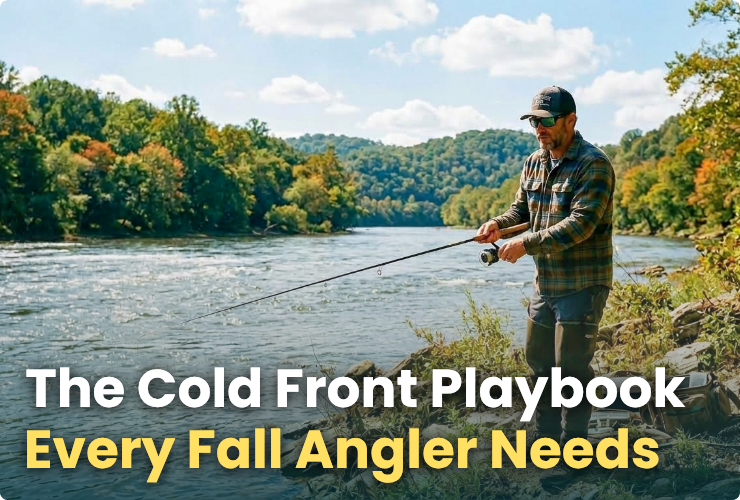
Cold front shutdown. The 24 to 48 hour post-front window where bass have reduced feeding across every category. Even if the sky breaks, surface activity usually waits for the recovery window.
Water temperatures below the mid-50s. As water drops into the low 50s on most waters, bass metabolism slows enough that surface strikes become increasingly uncommon. Topwater can still produce on warming days but the window compresses significantly.
For these conditions, three alternative categories produce during post-migration.
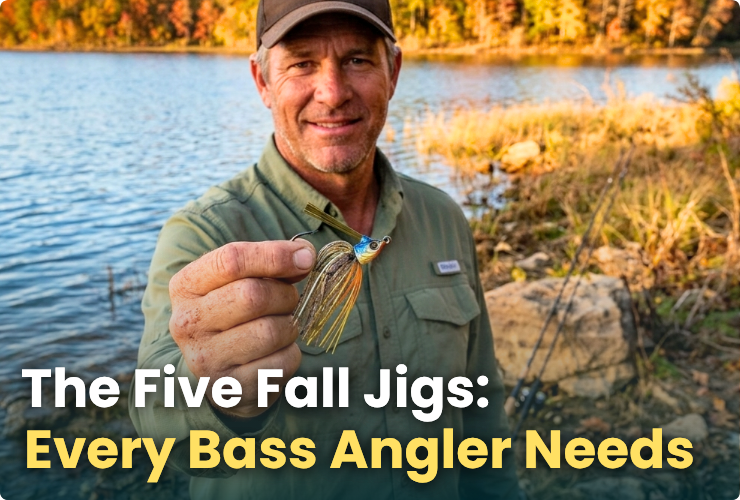
Jigs. Football jigs for offshore structure, flipping jigs for cover, swim jigs for grass edges. Jigs produce in every post-front and cold-water condition where topwater fails.
Swimbaits. 3 to 5 inch paddle tail swimbaits like the Keitech Fat Swing Impact 3.3 in shad patterns. Fish them slowly along post-migration structure for suspended and inactive bass.
Jerkbaits. The post-50-degree water fall bait that produces when nothing else works. Rapala Shadow Rap or Megabass Vision 110 worked with long pauses triggers strikes from inactive bass. Jerkbaits enter their peak season as water drops into the 50s.
Reading the Daily Window
Fall topwater has a daily rhythm that varies by weather. Reading the day correctly matters more than reading the bait.
Early morning. First light to roughly two hours after sunrise is the strongest topwater window on most days. Walking baits and buzzbaits produce consistently. Fish main lake points, creek mouths, and grass edges first.
Late morning to midday. The window compresses or extends based on cloud cover. Overcast conditions extend topwater activity through midday. Sunny conditions push bass to specific cover and reduce surface activity.
Late afternoon to evening. The second peak window of the day. Often stronger than morning on fall waters where cooling overnight temperatures reset bass into active feeding. The last two hours before dark produce reliably.
Pre-front days. The 24 hours before a cold front arrives produce some of the best topwater fishing of the year. Falling barometric pressure triggers aggressive feeding. If you can identify a front approaching, prioritize topwater trips during the pre-front window.
Post-front days. The topwater bite shuts down significantly for 24 to 48 hours. Switch to jigs and finesse baits during the shutdown period or wait for the recovery window.
Overcast conditions any time. Cloud cover extends productive topwater windows. A sustained overcast fall day can produce topwater strikes continuously from dawn through dusk.
Regional Timing for Post-Migration
Mid-October 2026 regional snapshot.
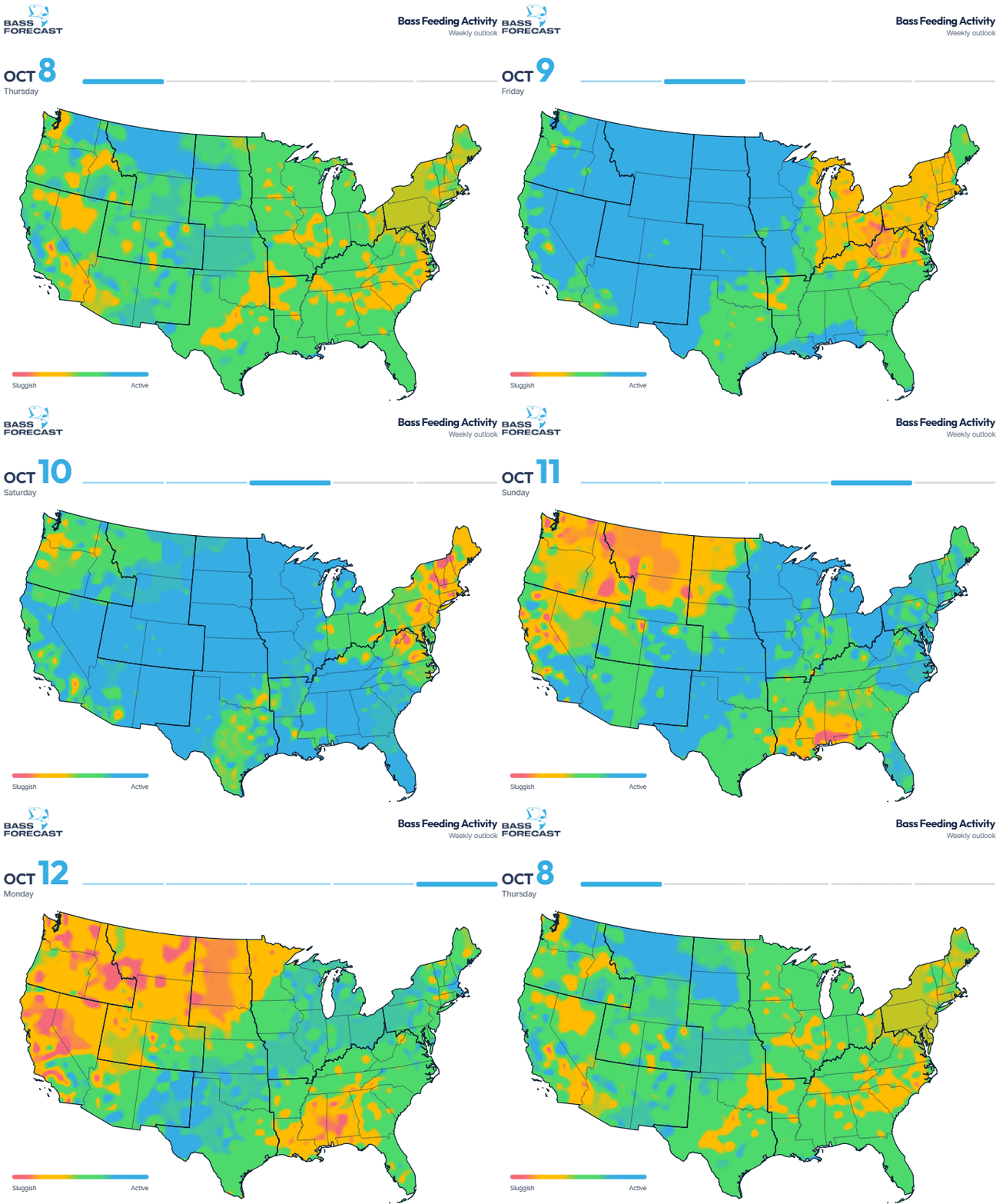
Northern (Great Lakes, Upper Midwest, Northeast). Peak post-migration right now through late October. Shad migration complete on most waters. Bass concentrated in backwater coves and creek arm pockets. Topwater producing through mid-October. Jerkbaits taking over as water drops into the low 50s.
Mid-South and Ozarks. Entering peak post-migration window right now. Tennessee River reservoirs and Ozark lakes producing peak fall topwater through early November. Longest productive window of any region.
Mid-Atlantic. Post-migration developing on reservoirs. River systems including Susquehanna and James in peak fall smallmouth window. Topwater producing on both reservoirs and rivers through late October.
Southeast. Entering post-migration this week on most waters. Guntersville, Kissimmee, Okeechobee all producing fall topwater. Peak window extends through late November on warmer waters.
Southwest. Approaching post-migration on Texas and Oklahoma reservoirs. First significant cool fronts will trigger the window. Peak expected late October through late November.
West and Pacific Northwest. California reservoirs in developing post-migration patterns. Clear Lake and Delta producing fall topwater. Pacific Northwest waters cooling into prime fall patterns.
Rocky Mountains. Lower elevation lakes in peak fall patterns. Higher elevations already past productive topwater window as water temperatures drop below optimal range.
BEFORE YOU PUT THE TOPWATER AWAY
Common Questions About Post-Migration Bass Fishing and Fall Topwater (FAQ's)
Frequently Asked Questions
What is post-migration bass fishing?
Post-migration bass fishing refers to the period after shad have completed their fall movement from summer holding water to shallower fall feeding zones. Bass that followed the migration settle into specific concentrated feeding areas where they stay through late fall. The window typically produces the biggest bass of the year because larger bass claim the best feeding zones.
When does post-migration happen on my lake?
Timing varies by region. Northern lakes enter post-migration late September through early October. Mid-South and Ozark reservoirs enter mid-October through early November. Southeast reservoirs enter mid-October through November. Southwest reservoirs enter late October through late November. Watch for shad concentrated in backwater coves and creek arm pockets as the signal.
Does topwater work in fall for bass?
Yes. Fall topwater often produces better than summer topwater because water temperatures move into the bass comfort range, low-light windows extend significantly, and pre-winter feeding triggers aggressive surface strikes. Fall topwater can produce from dawn through late morning on good days and continuously through overcast days.
What is the best fall topwater bait?
Walking baits like the Heddon Zara Spook, Berkley Choppo, and Whopper Plopper produce reliably on main lake and open water. Buzzbaits like the Booyah Buzz work grass edges and shallow cover. Hollow body frogs continue producing on matted vegetation. The specific best bait depends on water type and current conditions.
How cold can water get before topwater stops working?
Topwater typically produces reliably until water temperatures drop below the mid-50s. In the low 50s and below, surface activity decreases significantly though occasional strikes still happen on warming days. Jerkbaits replace topwater as the primary fall reaction bait once water drops into this range.
Where do bass go after shad migration?
Post-migration bass concentrate in backwater coves with wintering water access, creek arm pockets with cover, grass lines adjacent to channels, main lake points near shad concentrations, and bluff banks with current or wind. Shad availability drives location more than specific structure type.
What time of day is best for fall topwater?
Early morning from first light to roughly two hours after sunrise is the strongest window. Late afternoon to evening is often equally strong or stronger. Overcast conditions extend windows through midday. Pre-front days produce some of the best fall topwater of the year due to falling barometric pressure triggering aggressive feeding.
When does the topwater bite stop in fall?
Topwater productivity declines as water temperatures drop below the mid-50s. Northern waters typically see the topwater window close by late October or early November. Southern waters may continue producing topwater into late November and sometimes December. Match your expectations to your specific water temperature trends.
Why do post-migration bass bite topwater so aggressively?
Multiple factors align. Shad concentrated at the surface create visible feeding targets. Cooler water temperatures put bass into optimal feeding ranges. Pre-winter feeding instinct drives aggressive strikes on reaction baits. The combination makes surface presentations trigger strikes that would be ignored in summer or winter conditions.
What baits work when topwater is not producing?
Jigs produce in post-front conditions where topwater shuts down. Swimbaits work on suspended and inactive bass. Jerkbaits take over as water drops into the 50s. All three produce on post-migration water when surface conditions do not favor topwater presentations.
Use the Bass Forecast App and Web App to know What Baits to Throw This Bass Season
Post-migration windows and fall topwater productivity depend on water temperature, barometric pressure, wind, cloud cover, and solunar timing. Bass Forecast tracks all of these variables for your specific water and recommends baits from 22 categories including walking baits, buzzbaits, poppers, and frogs.
Bass Forecast PRO users see the full 10-day forecast with the specific days that favor topwater versus days that favor jigs and finesse presentations. Plan trips around the strongest topwater windows and skip the days that would waste your time.
Download Bass Forecast to catch the post-migration window on your water.



-1739275914.jpg)
.jpg)
.jpg)

.png)
.png)