
Bass Metabolism Explained: How Water Temperature Controls Feeding and Movement
Share this bass fishing article with every angler you know!
Most anglers don’t hit the lake and start wondering about the metabolic changes driving a bass’ behavior, but that physical change is the driving force behind all your favorite (and least favorite) bass behaviors. From feeding frenzies to lethargic lulls, water temperature and metabolism are at the core of it, and it’s important to understand their relationship. That’s why fisheries biologists call water temperature and water temperature trend the “Master Factor” that drives feeding behavior.
We’re going to go over how bass metabolism works, how water temperature affects bass, and how you can implement that knowledge into your fishing strategy.
Bass fanatics, let's reel in all the details.
Be notified of new bass fishing articles, tips and tricks!
Get the Bass Fishing Playbook Every Week
What is Metabolism and Why Does Temperature Affect It in Bass?
Metabolism is an umbrella term that covers all the ways a living creature breaks down materials and converts them into energy. Understanding how your own metabolism works is a good way to understand why it impacts bass behavior so much.
When humans eat or drink, their digestive system starts breaking that down. It also happens with fat storage.
The faster your metabolism is, the more you can eat and the more energy you have. The slower it is, the less energy you have, and you also tend not to be as hungry, because you’re not efficiently breaking down what you consume.
For human metabolism, temperature isn’t all that important. It’s mostly based on what we eat, hormonal balances, exercise, and similar factors because we can regulate our temperature naturally.
A bass can’t do that. As a cold-blooded animal, bass rely on the temperature in their environment to regulate their bodies, and that impacts almost every physiological aspect of a bass’s existence. That includes its metabolism and feeding habits.
Water temperature impacts the bass directly, and it also has a dramatic impact on the oxygen content of the water and a variety of other factors that all impact a bass’s metabolism and general health.
As such, when water temperatures swing up and down, a bass’s metabolism changes dynamically. It can go from hyperactive and driving a feeding frenzy, to sluggish and causing lethargic behavior, in a matter of hours.
The Optimal Temperature for Bass Metabolism
In general, the further the water temperature is from the “thermal optimum” range for a bass, the slower a bass’s metabolism will be. The bass simply don’t have the heat necessary to break down food into energy, and they feel sluggish.
In their thermal optimum range, the bass’s metabolism speeds up, and they burn through energy extremely quickly.
That does not mean that bass simply get more aggressive the hotter it is. There’s a cut-off point where the water is so warm that it throws everything out of whack, and the bass end up slowing down dramatically to preserve themselves.
However, there’s a sweet spot for bass metabolism. In temperature ranges of 70 to 82 degrees, a bass is in prime condition. It’s generating energy efficiently, it needs more food to keep up with its energy needs, and it’s a lot more likely to bite anything that looks like food.
Below 60 and above 85 degrees, it starts to slow down. After the water is below 45 or above 92 degrees, the bass start having major metabolism problems, and they slow way down. This is why winter bass fishing is usually more productive in deeper water, because the water is usually warmer there.
Also, when the water gets above 80 degrees, bass begin seeking cooler water, which means moving deeper and/or seeking shade to cool down and stay within their sweet spot.
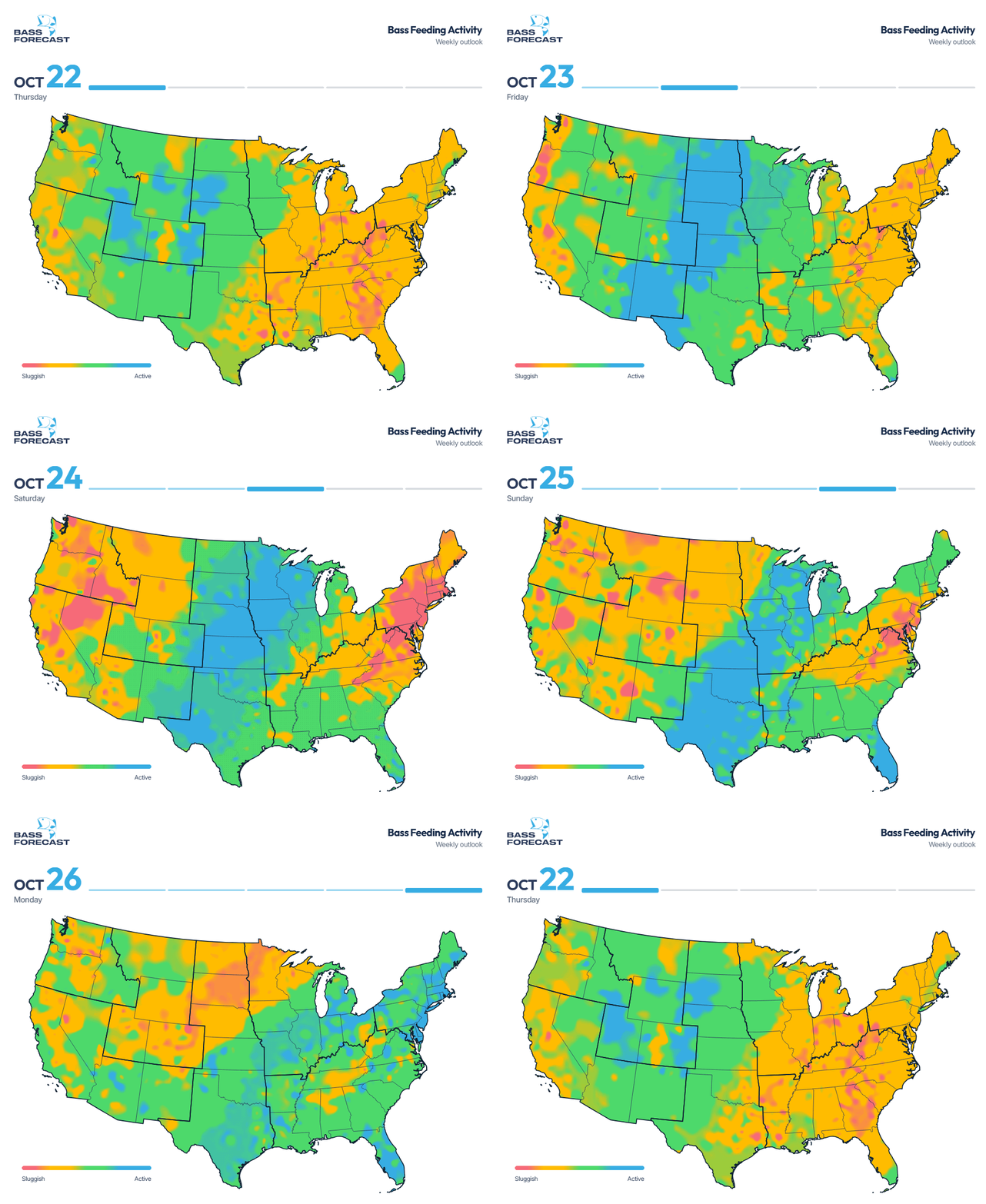
In addition to the “Absolute Temperature,” “Relative Temperature Trend” toward their thermal optimum is a very important driver of feeding activity. For example, if the water temperature is 50 and a week-long warm spell drives it up to 55, bass will be feeding more actively than normal.
Lake Conditions Affected by Temperature
It’s not just the temperature’s effect on the bass itself that impacts bass feeding behavior. Temperature also affects several parts of the lake’s ecosystem that bass rely on.
One of the main changes that affects a bass’s behavior is oxygen concentration. As temperature changes in the lake, oxygen becomes scarce in less active areas such as calm coves and deep areas just beneath steep drops.
When that happens, bass are forced to move to high-activity areas such as points along currents. Those areas are much more oxygenated, and the bass can properly breathe. This also greatly boosts their energy levels and metabolism, because they’re not struggling to get oxygen.
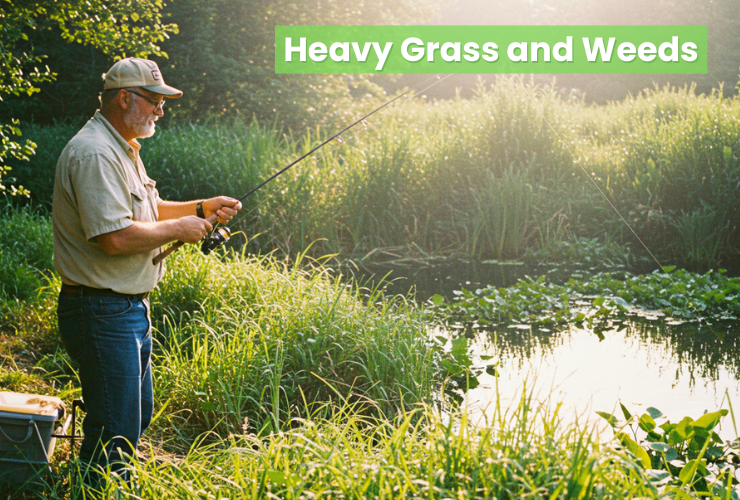
Other important oxygenated areas to consider are spots with lots of shade and vegetation. The vegetation adds lots of oxygen to the water, and since the water is cooler in the shade, that oxygen sticks around to become much more concentrated.
Temperature also greatly impacts baitfish behavior, and as long as the water temperatures aren’t impacting the bass’s metabolism too much, the bass will typically follow the baitfish around.
Temperature Isn’t the Only Weather-Related Factor
Temperature isn’t the only thing that impacts a bass’s energy levels and behavior. Barometric pressure is another weather-related factor.
If the barometric pressure is rapidly falling, the bass go nuts. They’ll enter a feeding frenzy that is likely to put more bass on your line during that magic 4 to 6 hour window than you have ever caught in a day’s bass fishing, and this is one of the best times to fish.
If the barometric pressure is high, the bass get a lot more sluggish. Their environment starts to change, there are metabolic changes affecting the bass, and they become a lot more cautious than usual.
Wind is another factor. It affects both water temperature and baitfish locations. As wind blows across the surface, it’s just like a cool breeze on your skin. If the water temperature is below 75 and the air temperature is warmer than the water temperature, it will draw baitfish and bass to wind-blown banks. Depending on the surface temperature before wind became a factor, this can drive fish deeper or into different spots. However, even if water temperature stays in the sweet spot for bass, wind pushes baitfish to the banks and shallows. So, bass will typically follow them there.
The Time of Year Affects the Impact of Temperature Swings
How important temperature is for bass metabolism depends on the season.
During summer and winter, you can fish for bass in generally stable weather. Various factors can cause sudden extreme changes that dramatically impact bass feeding behavior, but in general, the water temperature doesn’t change enough in the span of a day for minor differences to mean much. Typically, the water temperature will have to show a 5 to 10% increase or decrease in temperature before it forces bass to dramatically change their behavior.
However, the spring and fall seasons make even the smallest changes something to look out for.
Because the environment isn’t as stable, just a quick 5-degree temperature shift can make bass go from lethargic to a feeding frenzy in a heartbeat and vice versa.
This can greatly impact how your strategy evolves throughout the day, and it’s something to keep in mind while you’re looking at weather data before you hit the water.
Using Bass Metabolism and Temperature Data to Your Advantage
There’s a lot you can do if you understand how water temperature impacts bass metabolism.
Here are some of the key ways to use it to your advantage.
1. Pre-Trip Preparation
Unless you’re just stopping by a pond on your way home from work, you really need to spend a little time preparing yourself and your gear before every fishing trip. It’ll help you make the most of your time and increase your chances of catching trophy bass.
If you understand the current water temperature, wind speed and direction, barometric pressure, and more, on top of knowing how the bass respond to those factors, you can make smarter gear and strategy choices in advance.
This greatly cuts the chance of you casting around at random or switching out lures nonstop to see what works.
2. Making Effective Mid-Trip Strategy Changes
In the spring and fall, or even in some conditions in summer and winter, fish metabolism can change very quickly. When that happens, a lot of casual anglers pack up and go home, and even die-hard fishermen tend to go a while without bites before they head home, too.
When you understand why bass behavior has changed so suddenly, you can immediately switch to more effective methods to get more fast-paced action on the water.
For example, let’s say it’s a beautiful day for fall bass fishing, conditions are great for the bass, and then the water temperature drops just 5 degrees from a cool front rolling in.
Most anglers would stop getting bites with the rigs they set up for the good conditions, and they’d head home. However, you would know that the bass have simply shifted to more stable and oxygenated parts of the water and grown lethargic. So, you could quickly switch to a finesse bait or something better suited for reaction bites, and you’d have a good chance of bringing in bass as if nothing changed.
3. Knowing When to Quit and When to Push
Weather and its impact on bass is tricky to understand. Some negative conditions simply require a change in tactics. Others make it a better idea to head home to keep from wasting time or putting themselves in undue danger. There’s definitely a risk/reward balance that you need to consider.
By knowing how each weather condition impacts a bass’s metabolism and behavior, you can more accurately determine when it’s best to go home and when you can push for a great opportunity.
The quality of a spot can be miserable for quite a while, but you might see that the barometric pressure is about to fall dramatically. While other anglers are staying home, you know that a feeding frenzy is going to pop off the second that pressure starts to drop, and you can have your line in the water as it happens.
Likewise, if several negative weather patterns are forming, such as extreme cold, high pressure, and wind, you know there isn’t going to be a great chance of you overcoming the challenge and getting a bass. We often recommend fishing when others won’t, to enjoy opportunities that so many anglers miss out on, but sometimes it truly is pointless.
4. Knowing Where to Cast
There are general guidelines that most anglers know when it comes to locating bass. For example, most people know to fish deep when the sun is high in the air in summer, but to fish the shallows when it’s sunny in the winter.
However, water temperature plays a huge role in where the bass hang out throughout the day, and understanding their metabolism and habits lets you take a much more nuanced approach to targeting key spots.
You know that on a good day with wind, you need to cast at the banks, or when the water is hotter than usual, you need to cast at weeds or at breakpoints in the current that provide bass with lots of oxygen.
You get a much more detailed understanding of where bass are without having to rely on luck or advanced tools like sonar as much.
Weather Guidelines for Time of Day
The best time of the day for bass fishing depends on the season and weather conditions. These are very general, but temperature does change throughout the day even without special circumstances, and these basic temperature fluctuations do affect bass metabolisms.
In the early to mid-morning, shallow waters heat up very quickly. This will make the bass extremely active around the shallows as they try to eat everything they can get a hold of.
Throughout the bulk of the day, when the sun is at its highest, the bass will typically retreat to cooler waters during prime fishing season. In the winter, they can stick around the shallows during this period to absorb more heat as long as it isn’t cloudy.
Finally, the early evening generally drops the water temperature and pushes bass back to the shallows before they chill out for the night.
Make the Most of Each Fishing Trip and Adapt to Water Temperature
Water temperature impacts bass a lot. While many anglers fixate on gear and tactics, one of the best skills you can develop as an angler is the ability to look at weather patterns and understand exactly how that’s going to impact bass feeding behavior.
Take this guide as a starting point, explore other fishing guides from Bass Forecast, and start making the most of each trip.
Download the Bass Forecast app to get the latest weather information in real time.








.png)
.png)