
Bass Behavior During Stable Weather: Why “Nothing Changes” is a Pattern
Share this bass fishing article with every angler you know!
When you think about stable weather without a lot of noticeable condition changes, you probably think it’s the best time to get out and fish. You’re probably thinking that bass behavior in stable weather is predictable, that everything is staying the same, you’re very comfortable, and the fishing quality should be pretty consistent. Right?
Well, stable weather can be both a good thing and a bad thing for bass fishing.
Today, we’re going to go over the various ways stable weather conditions can impact bass and your ability to fish effectively.
Be notified of new bass fishing articles, tips and tricks!
Get the Bass Fishing Playbook Every Week
Defining Stable Weather
“Stable” doesn’t mean sunny skies, gentle breezes, and an abundance of bass-friendly hotspots. It just means that the weather patterns are holding for a prolonged period.
Winter is often stable, the harshest parts of summer are usually stable, and you can have decent periods of stability even during spring and fall when the weather tends to change the most.
Depending on what the weather pattern is, bass behavior in stable weather can be favorable or difficult for fishing, or a mix of both.
How Stable Weather Affects Fish Behavior
We’re going to go over a variety of pros, cons, and general expectations for a variety of stable weather conditions to help you know what to expect.
General Patterns for Stable Weather Conditions
Stable weather can create predictable bass patterns that vary from season to season, but there are some patterns that are true regardless of what the weather looks like.
First, you gain a sense of predictability when the weather is stable. It’s a lot more likely that you can use the same strategy every day and see decent results. In unstable weather, not adapting your strategy to the day-by-day weather patterns will cost you more often than it pays off.
However, in exchange for that predictability, you also lose some of the best opportunities in fishing. Sudden pressure drops from weather changes cause bass to enter a feeding frenzy that promises nonstop, fast-paced action. However, if those bad weather conditions, such as storms, aren’t coming in for weeks at a time, you don’t get that opportunity.
Another key point about bass behavior in stable weather is that you can get stuck with unfavorable patterns in bad conditions.
A good example of this is the middle of summer. When the weather holds at 90 to 100 degrees for three weeks straight, the weather is technically stable, but it’s also horrible for bass fishing. The bass are sluggish and feel impossible to catch, and of course, you’re uncomfortable the entire time you’re on the water.
On the other hand, when the temperature stays in a bass’s prime range, you get a long period of comfortable fishing with plenty of predictable action.
Stable Weather Patterns in the Winter
Winter is often seen as the hardest season to fish in, but when the weather is stable, it can be a fun and challenging experience without being pointless.
Winter weather that cools the water to below 45 degrees makes a bass’s metabolism slow down dramatically, but it’s not usually so frigid that the bass stop wanting to move at all. What you should expect is a lot less activity, but predictability that makes it a lot easier to overcome the challenges of winter.
Bass behavior is also highly predictable throughout the day/night cycle. In the winter, the best time of day to fish for bass is midday, when the water’s surface heats up fast as the sun starts to stretch over it. The bass may move up in the water column and start to feed as they warm themselves up.
They’ll continue this for a few hours until the sun starts to shift away again, and they’ll plunge into the depths where pockets of warmth are found. Just knowing that fact alone will help you plan out your trips extremely efficiently throughout the winter.
However, when a cold front finally moves through and that stable period ends, if you do not have sophisticated gear such as forward facing sonar to locate deep bass, you may get skunked regardless of what time you go out.
Consistent cold weather can also greatly impact the oxygenation of the water. The plant life is mostly dead; if the water isn’t moving around due to precipitation or wind, oxygen levels can plummet in a lot of parts of the column. This is particularly noticeable in ponds and large, calm spots of lakes.
While not behavior-related, stable winter weather also leads to very clear water. Even water that is typically stained and muddy can be clear to the bottom, because there’s no bad weather to stir it up, and the plant life has died off. So, the plants aren’t filling the water with debris and waste.
That can be a huge benefit for bass winter fishing, especially if you live in an area where most waterways are stained.
Stable Weather Patterns in the Summer
Stability in the summer can either be an angler’s idea of an oasis or it can be one of the most frustrating experiences in summer bass fishing.
In the worst-case scenario, you’re dealing with 90-degree heat for weeks without conditions such as precipitation, wind, or inbound cold fronts to cool things off.
If that’s the case, the bass are mostly going to be active in the early morning hours when it’s not pitch black, but the sun isn’t at its peak, either. It’s also a great time to go evening or night fishing if your local waterway doesn’t have rules against fishing after sundown.
The midday period tends to be the least productive period during stable summer weather. That's when the sun is beating down on the water the most, and the bass dive deep and suspend for a while to escape the heat.
Oxygenation and barometric pressure also change during stable summer weather.
Oxygen tends to dissipate from wide-open areas, and that drives bass to oxygen-rich areas next to shaded plants and areas with a lot of movement, such as break points along currents. That can be good, because it helps you choose the right spots to start your search since you know you’re not going to find anything in open water and other areas that have a low chance of holding bass.
Stable Weather Patterns in Spring and Fall
Weather patterns in spring and fall tend to be somewhat similar to summer and winter. After all, they’re the transitional seasons between those two periods.
Spring and fall are perfect for stable weather bass fishing when the weather is at an optimal temperature range, with minimal challenging factors such as precipitation, wind, and incoming storms. However, these seasons also lose their stability a lot faster.
While it takes a fairly noticeable temperature change for stable summer and winter weather to greatly impact the bass behavior, spring and fall can change in a heartbeat.
When fishing for bass in spring or fall, you might have the perfect conditions, and then a light rain will drop the surface temperature five degrees, ruining your stable and predictable weather.
Of course, since stable weather patterns are easier to break in the spring and fall, that also means that you get those amazing bass fishing opportunities between pressure changes, as well as other environmental factors that don’t help you out when the weather is staying stable.
One of the best parts of stable transitional weather is that the temperature is usually within the 60–75 degree range, and that’s when bass are most active. Other factors can quickly change that, but it’s a lot better than consistently dealing with extreme temperatures.
Using Stable Weather to Your Advantage for Bass Fishing
Bass behavior in stable weather is advantageous in two ways.
First, there’s the predictability that we’ve covered throughout this guide. When the weather is consistent, so is bass behavior. You get predictable bass patterns, whether that means they’re sluggish or extremely active, and you know exactly how to approach the water and have a successful day.
You can tailor your kit to the weather more easily, choose the right spots, and know what type of retrieval methods and techniques are going to get the most attention from bass.
It’s a lot harder to do that when the weather is all over the place from day-to-day.
That’s not the best advantage, though. Being able to tell when the conditions are going to suddenly change is one of the best perks of stable weather bass fishing.
Bass can be very active for a variety of reasons, but some of the best times to fish are when the weather is about to change dramatically. Before a storm, the barometric pressure plummets. Bass pick up on that and immediately go into a feeding frenzy.
If you can look at real-time weather data, you can tell when the pressure is going to start dropping, and you know when to get out on the lake and have one of the best bass fishing experiences you can have.
That’s true even when the conditions have been relatively difficult to work with. Large pressure drops always result in feeding frenzies. The bass are essentially prepping themselves for the harder weather to come while they can.
Looking at real-world data during stable periods also tips you off to necessary strategy changes. One of the biggest mistakes anglers make is that they get comfortable with a routine.
If the weather is stable and the same strategies are working for weeks, it’s very likely that the average angler will completely miss a change in the weather and keep using strategies that are no longer relevant. If you see that change coming and know the stable weather is ending, you know to start switching things up.
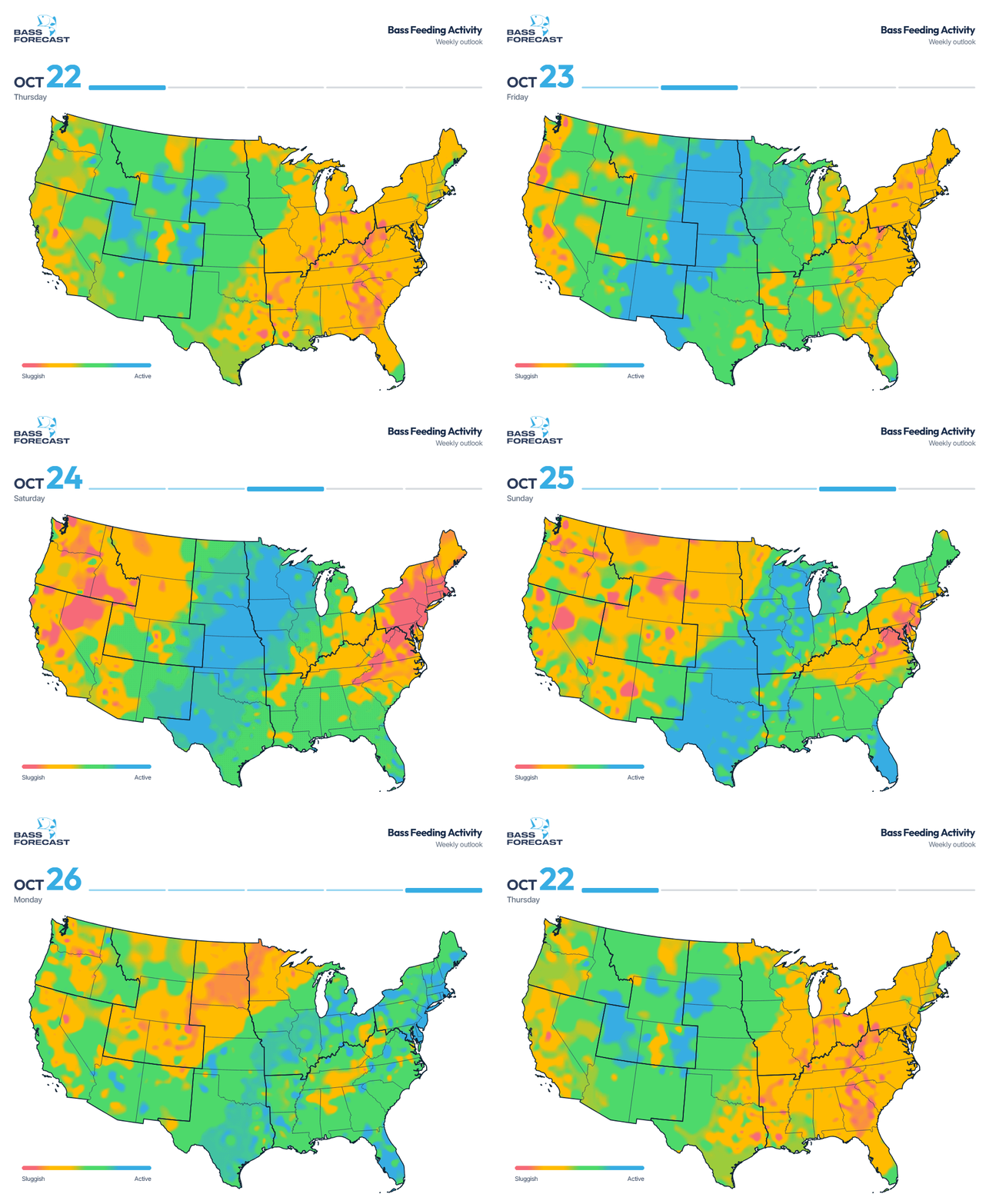
You can find all the real-time data you need at Bass Forecast. The app provides real-time temperature, cloud coverage, moon cycle, barometric pressure, and precipitation updates, and it offers a massive collection of maps to help you find the right spots for each type of weather condition.
Tackling Stable Weather Effectively
Dialing in your tackle and strategy for a long stretch of stable weather is a good way to ensure you lock in the right approach early and make the most of the period.
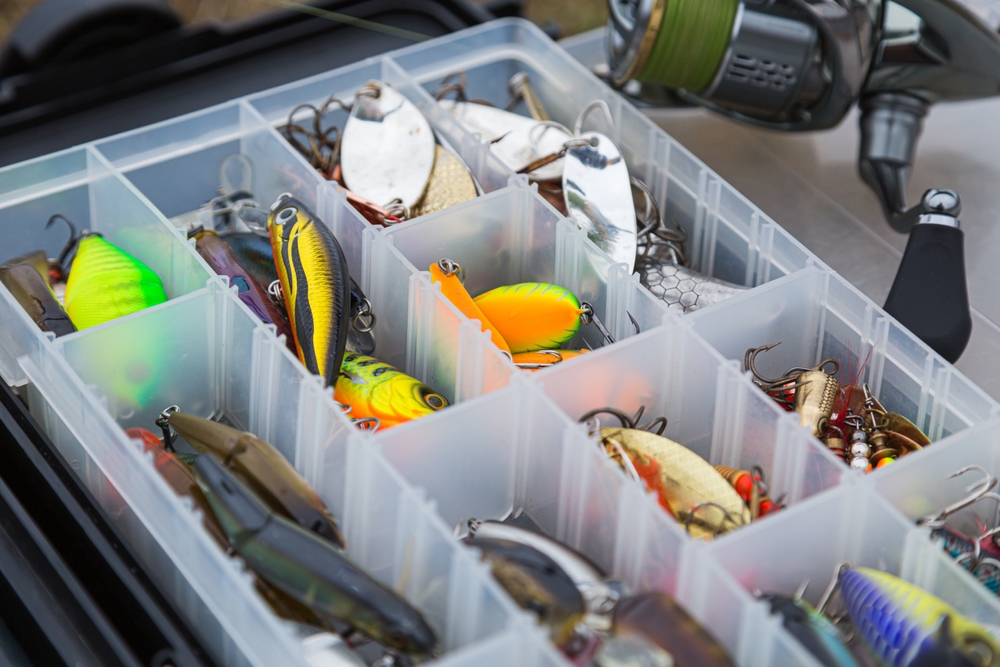
The best way to start is to have a good understanding of which lures and rigs work best in each season. Stable weather tends to reflect the most common weather patterns of each season, and we have plenty of guides available covering which lure is best for summer, fall, winter, and spring in general.
To keep it brief, crankbaits, spinnerbaits, and Texas rigs are all great summer and late-spring choices, and finesse baits and jerkbaits are great for winter and late fall.
If the weather is going to be optimal with plenty of action, using the right seasonal bait for fast action is your best choice. If the weather pattern is going to make them lethargic, small finesse baits are your go-to option.
From there, it’s all about figuring out which color the bass are striking the hardest and what type of retrieval patterns are working the best. If you can spend an hour or two working that out, you can end up with a winning strategy until the weather breaks and it’s time to adapt.
Of course, you should also make sure you’re adapting to minor changes, even if everything is still technically stable. A little extra cloud coverage or a light rain can change things up a lot, and that’s especially true in extreme weather or the transitional seasons.
Stable Weather is a Recognizable Pattern for You to Use
Just like hurricane and tornado season, periods of stable weather aren’t random periods with a lack of change. They’re usually fairly predictable, especially if you’ve lived and fished in an area for a long time. You’ll start to notice when you’re likely to have long stretches of the same pattern and when things get a bit more hectic.
In any case, there’s a pattern for you to recognize and take advantage of - whether you’re dialing in the perfect combo to catch as many bass as possible day after day, or you’re looking for that feeding frenzy at the start of a storm.
Download the Bass Forecast app today to get access to real-time weather data and numerous guides on bass fishing.






.jpg)
.png)
.png)