Bass Fishing for Beginners: The Complete 2026 Blueprint
Share this article with every angler you know!
Bass Fishing for Beginners:
The Complete 2026 Blueprint
New to bass fishing? Welcome. You picked one of the most rewarding outdoor pursuits there is, and you can start catching bass with less gear and less complication than most content on the internet will tell you.
Here is what most beginner guides leave out. Gear is only about 25% of what catches a bass. The water you choose is another 25%. The remaining 50% comes down to when you go and the conditions when you do. Nearly every beginner article focuses on the first 25% and ignores the other 75%, which is exactly why most beginners load up on tackle, show up on the wrong day, catch nothing, and conclude they are bad at fishing.
This article is the complete blueprint. We will cover what to buy, what to tie on, where to fish, and most importantly, when to go and why that matters more than the color of your worm. Everything is honest about the learning curve, and every recommendation is one you can actually act on this weekend.
Sign up to be notified of new bass fishing articles!
Kniow the Bass Fishing Playbook Every Week
What Makes Bass Fishing Different From Other Fishing
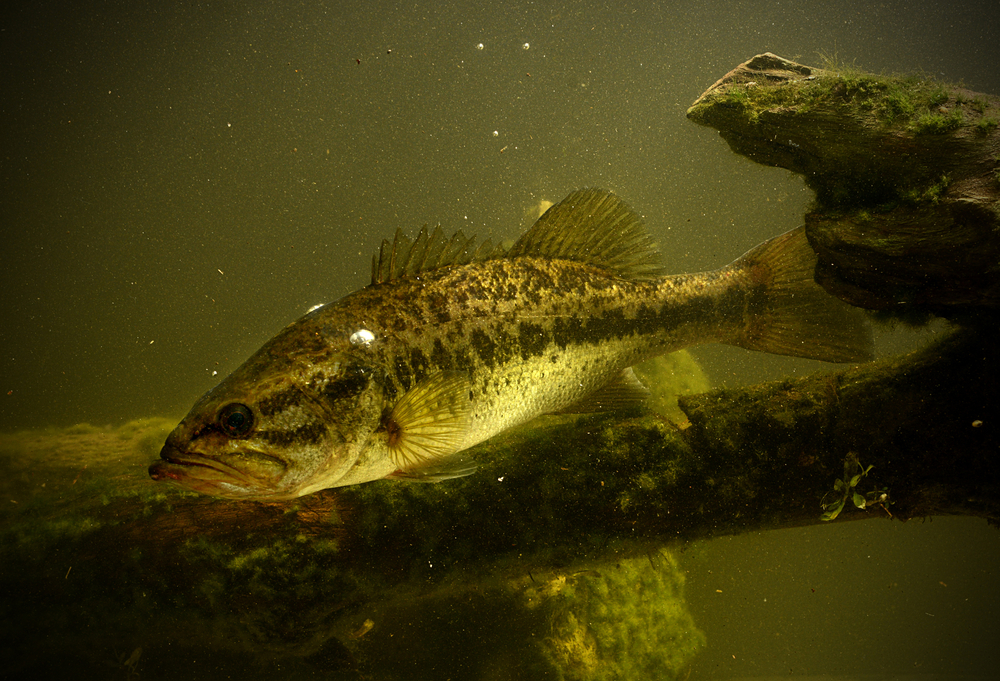
Bass are ambush predators. They do not chase baitfish across open water like a striped bass or school in the middle of a lake like crappie. They sit next to structure (docks, laydowns, grass edges, points) and wait for prey to come close enough to grab.
Everything you learn about bass fishing eventually comes back to that single fact. The reason spinnerbaits work is that they move prey past ambush points. The reason a Senko works is that it looks like easy, slow-moving prey that a lazy bass can grab without moving far. The reason topwater works is that struggling prey on the surface is the easiest meal of the day.
Bass fishing is also the most popular freshwater pursuit in North America, which means more content, more gear, more community, and more waters stocked with bass than any other species. You can find bass in every state in the continental US and most of Canada. A city park pond, a golf course water feature, or a farm pond is often where most anglers catch their first fish.
The Three Things That Actually Catch Bass
If you remember nothing else from this article, remember these three.
Gear (about 25%). The right rod, reel, line, and lure for the technique. This is the part everyone talks about. It matters, but less than most people think.
Location (about 25%). The specific water you fish and where in that water you cast. A bad spot with perfect gear catches nothing. A great spot with mediocre gear catches a lot.
Conditions and timing (about 50%). Barometric pressure, water temperature, cloud cover, wind, time of day, moon phase, and seasonal patterns. This is the part most beginner content ignores completely, and it is the single biggest factor in whether a bass bites.
The split is not scientific but the ratio is right. Experienced anglers know that a perfect bait fished in bad conditions catches nothing, while an average bait fished in prime conditions can produce a career day. Bass Forecast exists specifically to solve the conditions problem for anglers at every level, which is why we spend more time on timing in this guide than most sources do.
Your First Rod and Reel
Spinning tackle is the clear beginner recommendation. Spincast reels (the push-button ones you probably used as a kid) are fine for an absolute first-timer but you will outgrow them within a few trips. Baitcasting reels require casting technique that takes weeks to develop and will frustrate you with tangles ("bird's nests") during the learning curve. A spinning setup gives you the best balance of ease, versatility, and room to grow.
Target specs for your first setup: a 6'6" to 7' medium-power spinning rod with a fast or moderate-fast action, paired with a 2500 size spinning reel. This single combo will cover 90% of what you want to do as a beginner, from throwing weightless Senkos to Texas-rigged worms to spinnerbaits.
The simplest path is to buy a matched combo. The Daiwa BG Spinning Combo comes rod and reel together in the exact spec most beginners need, and the components are dialed in to work together out of the box.
If you want to buy the rod and reel separately for better quality in each piece, the Shimano Sedona FJ Spinning Reel is one of the smoothest reels in its class and the Daiwa BG Spinning Reel is bulletproof enough to last for years. Pair either one with a 7 foot medium-power spinning rod and you are set. For a deeper dive on rod selection beyond the basics, our full guide on how to choose the best rod for bass fishing breaks down power, action, and length for every technique.
Fishing Line for Beginners
Three line types exist for bass fishing: monofilament (mono), fluorocarbon, and braid. Each has a specific job. For your first season, use monofilament only. Here is why.
Monofilament stretches, which is forgiving when a beginner sets the hook too hard or jerks on a snag. It floats, which is perfect for Senkos and topwater baits. It ties good knots easily. You will eventually add fluorocarbon and braid to your arsenal, but for the first six months of bass fishing, 10 to 12 pound monofilament is all you need.
Berkley Trilene XL is the classic beginner choice and has been for decades. It is low memory, easy to cast, and strong enough to land anything you will catch as a beginner. Load your reel to about 1/8 inch below the spool lip, tie an improved clinch knot, and you are ready to fish.
The 5 Beginner Baits That Actually Catch Bass
If you buy five baits before your first trip, buy these five. They cover almost every situation you will encounter in your first year.
The weightless Senko. The single most forgiving bass bait ever made. The Yamamoto Senko rigged wacky-style (hook through the middle of the worm) catches bass with almost no action input from you. Cast it near structure, let it fall, twitch it once, let it fall again. Bass eat it on the fall because it looks like easy prey. If you only buy one bait, buy this one. Our walkthrough on how to rig soft plastics for bass shows the two or three rigs you need for Senkos and similar baits.
A straight-tail soft plastic worm. The Zoom Trick Worm is the universal "I can catch a bass anywhere on any day" bait. Rig it Texas-style on an offset shank worm hook with a 1/8 oz bullet weight and you can fish any depth from the bank. The step-by-step on how to rig a worm for bass covers the exact Texas rig setup you need.
A spinnerbait. The War Eagle Painted Spinnerbait in a chartreuse-and-white 3/8 oz is the all-purpose searching bait. Cast and reel at a steady pace. The spinning blades flash and vibrate, which calls bass out of cover. A spinnerbait is one of the easiest baits in bass fishing because there is almost no technique to learn.
A chatterbait. The Z-Man Original Chatterbait is a vibrating jig that produces when bass want more action than a spinnerbait. Chatterbaits shine when water is slightly stained or when bass are feeding aggressively on shad. Our dedicated guide on how to fish a chatterbait for bass covers the retrieve variations and when each one works.
A topwater popper. The Rebel Pop-R catches bass on the surface in a way nothing else does. Watching a bass blow up on a topwater is the single most exciting moment in bass fishing, which is why experienced anglers never stop throwing them. For the full topwater category breakdown, our rundown of the best topwater lures for bass covers poppers, walkers, buzzbaits, and frogs. If you want to skip live bait entirely and focus on learning artificial lures, our guide on how to catch bass without live bait is a solid parallel read.
Essential Terminal Tackle
Terminal tackle is the stuff at the end of your line that is not the lure itself: hooks, weights, swivels. You do not need a tackle box full of options. Here is the minimum viable kit.
Hooks. Size 1/0 to 4/0 offset shank worm hooks for Texas-rigging soft plastics. Size 1 or 1/0 wacky-worm hooks for Senkos. A small pack of each covers almost everything.
Weights. Bullet-style sinkers in 1/8 oz and 1/4 oz are enough for your first season. The 1/8 oz works most of the time, and you step up to 1/4 oz when it is windy or you need to fish deeper water.
Scissors or line clippers. For cutting line after tying knots.
Needle-nose pliers. For removing hooks from bass without hurting the fish (or your fingers).
That is it. You do not need swivels, split rings, snap connectors, or any of the fifty specialty items you see at the tackle shop. Add those later if specific techniques require them.
Where to Fish for Your First Bass
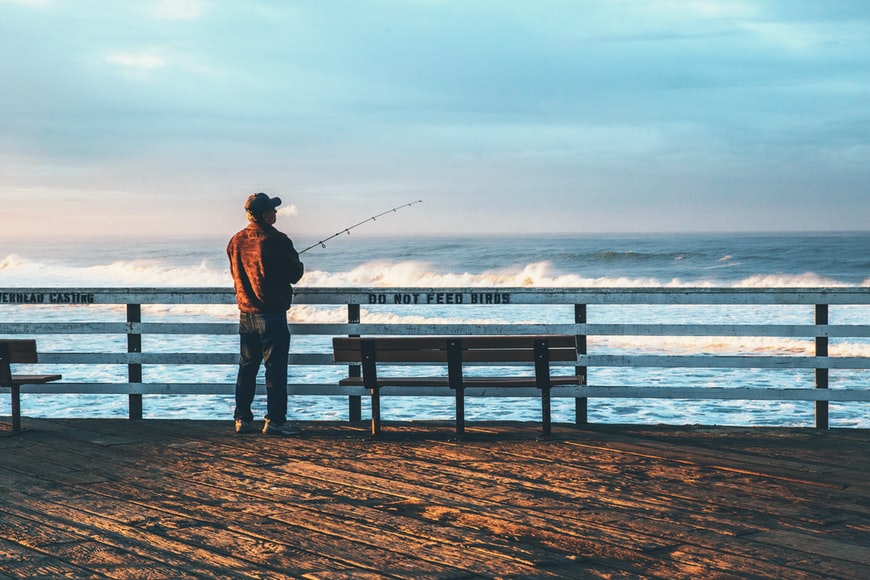
You do not need a boat to catch bass. In fact, most beginners catch their first bass from the bank, and plenty of experienced anglers catch bigger bass from the bank than they ever do from a boat.
Start with ponds. City park ponds, golf course ponds (where fishing is allowed), neighborhood ponds, and farm ponds are the single best starting water for new anglers. Ponds concentrate bass. Structure is obvious. Casting distance is short. You can see what you are doing. A 2-acre pond that holds bass is better practice than a 2,000-acre reservoir where fish could be anywhere.
Fish small lakes next. Once you are catching bass in ponds consistently, move to small lakes under a few hundred acres. The patterns scale up but the structure principles are the same.
Then move to reservoirs and bigger water. By the time you are ready for 1,000+ acre reservoirs, you have the fundamentals to find bass instead of just hoping to run into them.
For step-by-step guidance on bank fishing techniques (the primary approach for most beginners), our full guide on how to bank fish for bass covers casting angles, structure to target, and how to move along a shoreline efficiently. If you are fishing a new water for the first time, our tips for catching bass on a new lake walks through what to look for before you even make a cast.
Target the obvious structure first. Docks. Overhanging trees. Grass edges. Submerged logs. Rocky points. These are where bass hold. Cast parallel to the structure, not perpendicular across it. A worm dropped along the shady side of a dock will outfish ten random casts into open water.
When to Fish: The Conditions That Actually Matter
This is the section nobody else writes, and it is the most important part of this guide.
Beginners are told "go fishing early in the morning or late in the evening." That advice is not wrong, but it is incomplete. Bass bite based on many factors, and some of them matter more than time of day. Here is what you actually need to know.
Barometric pressure. Falling barometric pressure (the pressure dropping as a weather front moves in) is prime time to fish. Bass become aggressive and feed hard before storms. Rising pressure immediately after a cold front is the toughest fishing of all. If you watch the weather and fish the day before a storm instead of the day after, you will catch more bass than most beginners catch all season. The full explanation is in our article on how barometric pressure affects bass fishing.
Cloud cover. Overcast skies spread bass out of cover and make them more aggressive. Bluebird-sky bright-sun days pin bass tight to structure and make them more selective. Most beginners prefer bright sunny days to fish, which are the worst conditions. The best day of your season is probably a mild overcast afternoon.
Water temperature. Water temperature controls bass metabolism. Below 50 degrees, bass barely eat. From 55 to 75 degrees is prime bite temperature. Above 85 degrees, bass get sluggish during the day and feed at night. Water temperature matters more than air temperature.
Wind. A moderate wind (5 to 15 mph) is almost always good. Wind pushes baitfish, which brings bass to the windy shore, which is exactly where you want to cast. Experienced anglers love a windy day. Beginners dread it. You should learn to love it.
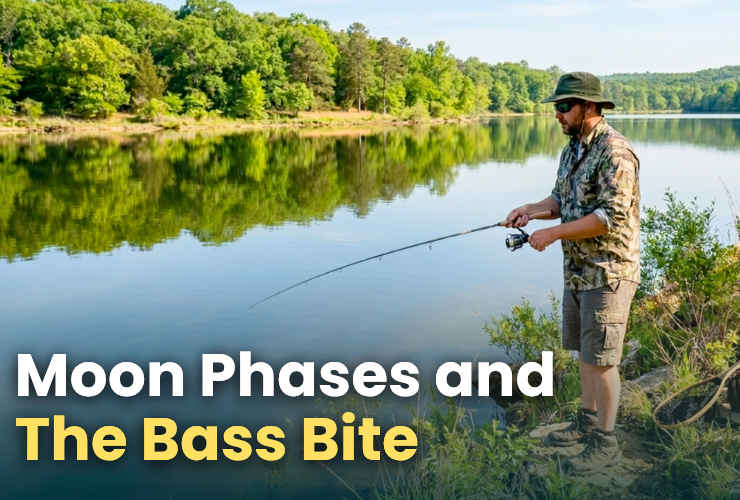
Solunar timing. The moon's position affects fish feeding windows throughout the day. Our guide on moon phases and bass fishing covers how solunar peaks line up with specific windows when bass are most active, usually one or two short periods per day.
Full weather pattern. Everything above combines into a single pattern. Our broader guide on how weather affects bass fishing connects temperature, pressure, wind, and precipitation into one framework.
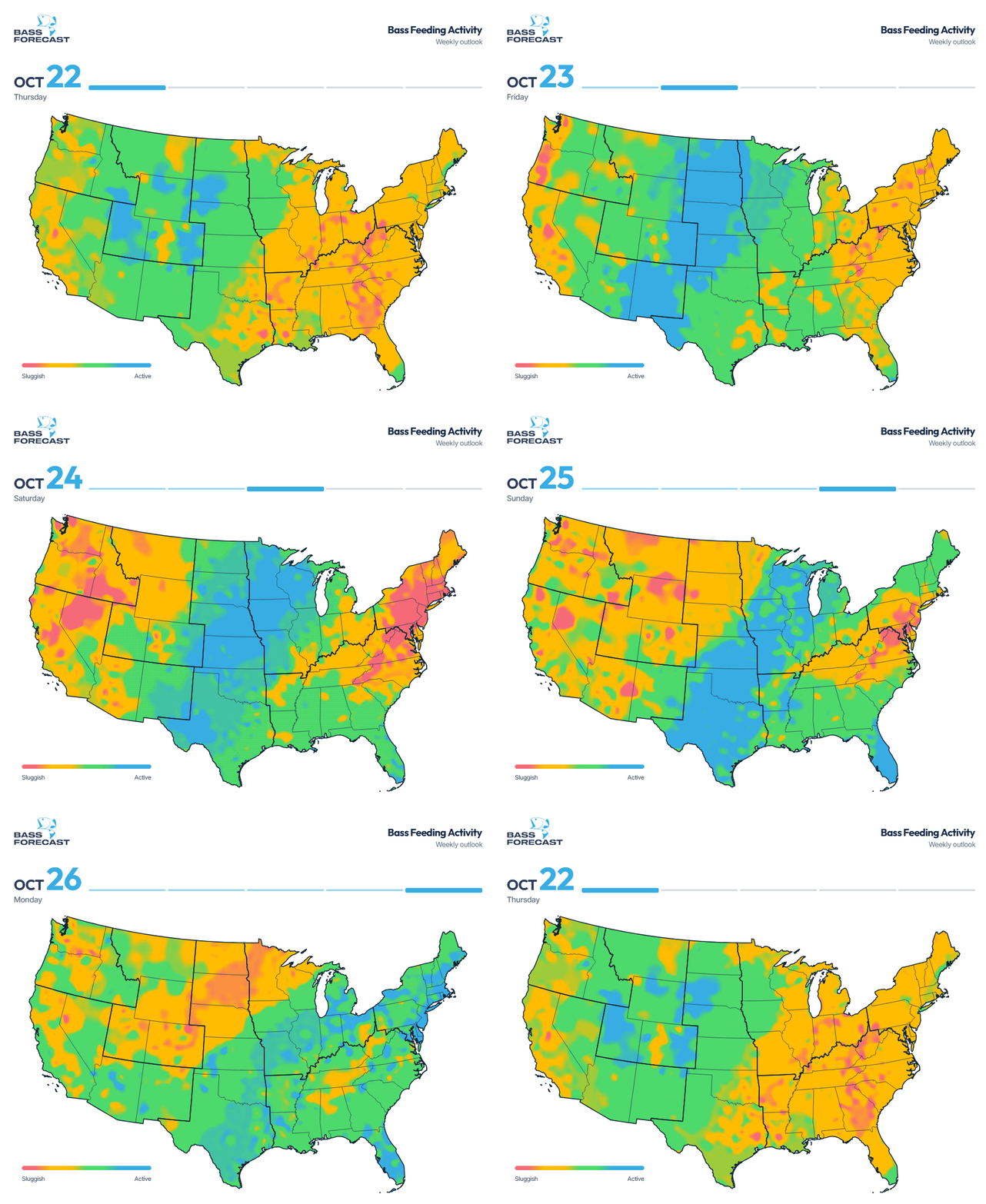
The practical takeaway: before every trip, check Bass Forecast. The Bass Forecast Rating (BFR) combines all of these factors into a single score for your exact location. A GOOD or EPIC day on the BFR will out-produce a POOR day on the same water by a factor of four or more. If you only fish the best scored days, you will catch more bass in half the time of a beginner who ignores conditions and just goes fishing whenever.
Reading the Water Like a Bass
Bass hold near three types of water features: structure, cover, and current breaks.
Structure is the shape of the bottom. Points, humps, drop-offs, channel swings. Bass use structure as travel highways and feeding stations.
Cover is the stuff on top of the structure. Grass, wood, docks, rocks, boat lifts. Bass use cover to ambush prey and hide from predators.
Current breaks are anywhere water flow is interrupted. Bridge pilings, laydowns, rock piles, boat lanes. Bass position behind current breaks to let prey come to them.
In a pond, the obvious structure and cover are shoreline features. Overhanging trees. Lily pads. The deepest end. The shallowest end. The dam or spillway. Fish each of these systematically rather than casting randomly. If you want to go deeper into identifying different bass species as you catch them, our guide on how to identify bass species covers largemouth, smallmouth, and spotted bass. For an inside look at how bass are built to hunt, our deep dive on largemouth bass anatomy shows how bass sense prey, process food, and interact with their environment.
Look for signs of bait. Jumping shad or minnows on the surface. Nervous ripples. Panfish schooling. If you see bait, bass are probably nearby.
How to Set the Hook and Land Your First Bass
Setting the hook on a bass is different from setting the hook on panfish. Bass have hard, bony mouths. The hook needs to drive through tissue, which requires a firm hook set.
The feel of a bite. With a Senko or soft plastic, the bite often feels like a tiny tap, extra weight, or your line moving sideways. Learning to detect subtle bites is the biggest skill curve for new anglers, which is why we built a dedicated guide on how to detect bites while fishing.
The hook set. When you feel a bite, reel the slack out of the line first (two or three fast turns of the handle), then sweep the rod up and to the side in one firm motion. Not a cartoon jerk. A firm, deliberate pull.
Fighting the fish. Keep the rod tip up. Let the drag do the work. Reel steadily when the fish is not pulling. Do not try to winch the fish to you by brute force. Bass will often jump; keep tension on the line and lower your rod tip toward the water when they do, which prevents them from throwing the hook.
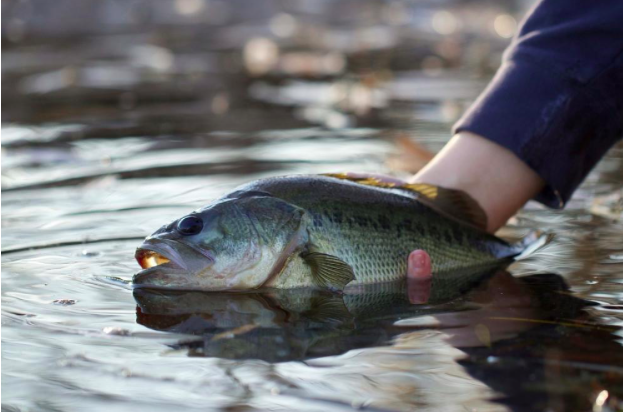
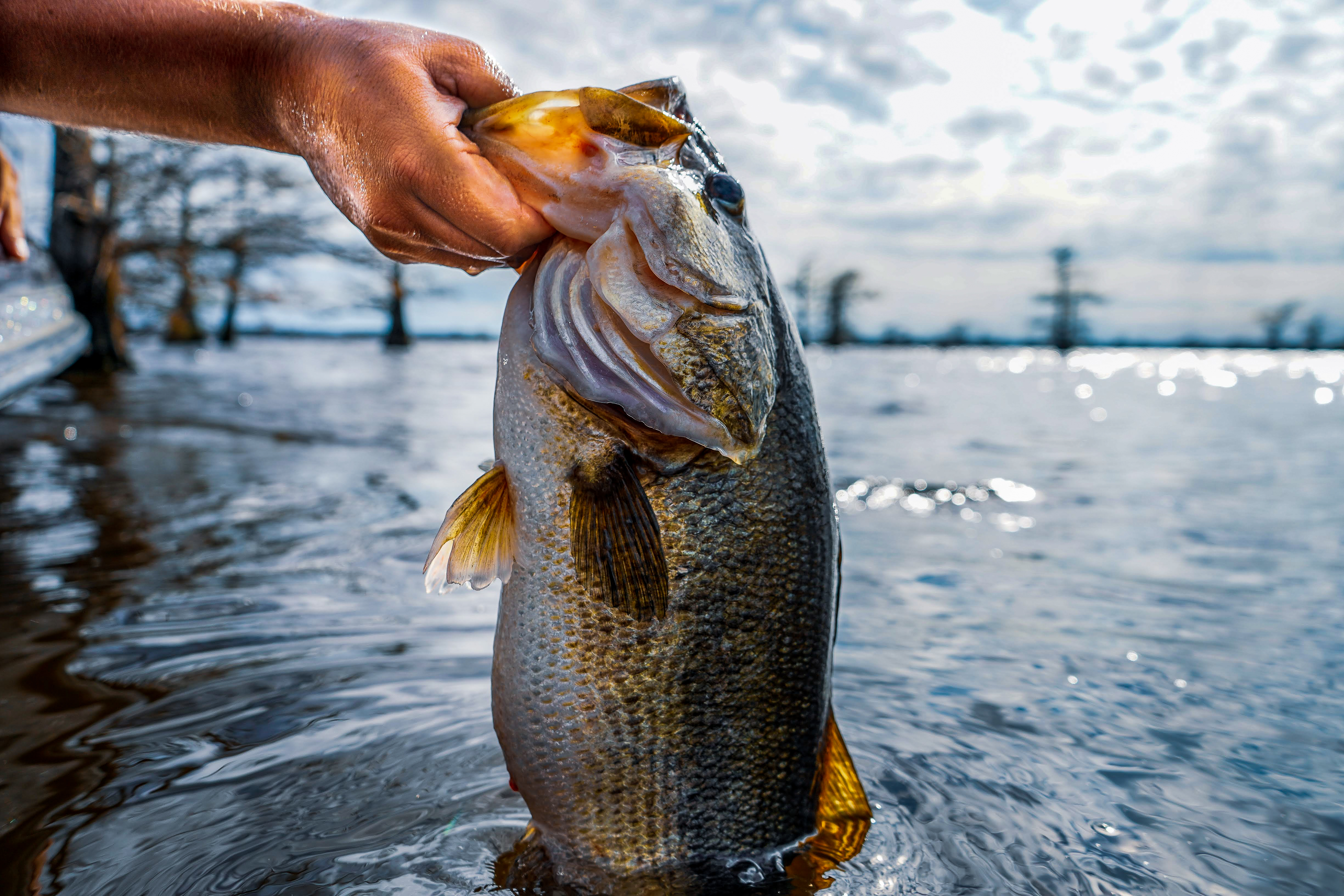
Landing the bass. Lip-grip the lower jaw with your thumb. Bass have teeth but they are not sharp like pike or walleye. The teeth feel like coarse sandpaper and will not hurt you. If you want the full details on handling, our article on do bass have teeth covers what to expect and how to lip-grip safely.
Why Beginners Fail (And How to Avoid It)
Most new bass anglers fail for predictable reasons. Here are the five biggest mistakes to avoid.
Fishing in bad conditions. The number one reason beginners catch nothing is fishing on a bluebird sky, high-pressure, cold-front day without knowing it is a tough day. Check Bass Forecast. Fish the good days. Skip the bad ones.
Trying to learn too many baits at once. Pick two or three baits and master them before adding more. A Senko and a Texas rig will catch bass in almost every situation. Learn those two first.
Fishing water that does not hold many bass. Not every pond has bass. Not every section of a lake has bass. Spend your first trips on water where you know bass are present (local bass club chatter, online fishing forums, state fish and wildlife surveys).
Giving up too quickly on a spot. New anglers often cast three times and move on. Experienced anglers work a productive-looking spot for 15 to 20 minutes before leaving. Give good structure a real chance.
Not keeping track of what works. When you catch a bass, pay attention to the conditions, the structure, the bait, and the retrieve. Patterns repeat. The bass you caught at 7 AM on a cloudy day next to a submerged log on a Senko will probably be catchable the next time those same conditions line up.
Your First Trip Plan
Here is the exact plan for your first bass fishing trip.
Check Bass Forecast for your target water the night before. Target a day rated GOOD or better. If the only day you have free is rated POOR, go anyway for the practice, but adjust your expectations.
Pick a pond within 30 minutes of home. The closer, the better. You want to minimize travel so you can go often.
Pack minimum viable gear: your spinning combo, a spool of 10 lb mono (already on the reel), a bag of Senkos, a bag of Trick Worms, a few hooks and 1/8 oz weights, pliers, line clippers, polarized sunglasses, water, snacks.
Arrive at the water and spend 5 minutes just looking. Where is the shade? Where are the docks or trees? Where are the shad or minnows? Where is the wind blowing to?
Start with a wacky-rigged Senko. Cast parallel to structure. Let it fall. Twitch once. Let it fall again. Watch your line for any twitch or sideways movement.
Give each spot 15 to 20 minutes before moving.
If you catch a bass, work that area again. Where there is one, there are often more.
Realistic expectations: many first-time anglers do not catch a bass on their first trip. Many do. If you catch one, celebrate it. If you do not, you learned something about the water and your technique. The next trip is already going to be better.
What to Learn Next
Once you are catching bass consistently from the bank with a Senko and a Trick Worm, these are the natural next topics to pick up.
Our broader article on how to catch largemouth bass covers species-specific tactics once you want to go deeper on the most common bass species in the US. The pillar on how to fish for bass connects the overall technique categories. For the diagnostic situations when bass are present but not biting, our walkthrough on how to get a bass to bite covers trigger tactics. And for the specific question many beginners run into (how to fish a Trick Worm effectively), our guide on how to fish a trick worm for bass covers the retrieve variations.
The two biggest skills to develop over your first year are reading conditions (so you fish on the right days) and reading structure (so you fish the right spots). Everything else gets easier once those two are locked in.
Use the Bass Forecast App and Web App
Everything in this article points back to one thing: conditions matter more than most beginners realize. Bass Forecast is built specifically to solve that problem.
The free version shows you today and tomorrow's forecast for your exact location. The Bass Forecast Rating (BFR) combines barometric pressure, water temperature, moon phase, wind, cloud cover, and solunar timing into one simple score. GOOD and EPIC days are proven to produce catch rates up to four times higher than POOR days on the same water.
Bass Forecast PRO users see the full 10-day forecast, which lets you plan your weekends around the days when bass will actually be biting. The bait recommendations tie directly to current conditions so you know what to tie on before you leave home.
Download Bass Forecast on iOS or Android or use the Web App. Fish the good days. Skip the bad ones. Catch more bass in less time than any other beginner you know.
Tight lines, Bass Fanatic!
NEW TO BASS FISHING? START HERE
Common Questions Beginner Bass Anglers (FAQ's)
What is the best bait for a beginner bass fisherman?
The best beginner bait is a weightless Yamamoto Senko rigged wacky-style. A wacky-rigged Senko catches bass with almost no action input from the angler. Cast it near structure, let it fall, twitch once, let it fall again. The bait does the work. If you only buy one bass bait as a beginner, buy this one.
What rod and reel should a beginner use for bass fishing?
A beginner should use a 6'6" to 7' medium-power spinning rod paired with a 2500 size spinning reel loaded with 10 to 12 pound monofilament line. This single setup covers almost every bass fishing technique a beginner needs. Spinning tackle is easier to learn than baitcasting and gives you more versatility than spincast.
Do you need a boat to catch bass?
No. Many beginners catch their first bass from the bank, and plenty of experienced anglers prefer bank fishing because it lets them target specific structure without boat traffic. Ponds, small lakes, and shoreline sections of reservoirs all produce bass without a boat. A boat can wait until later in your fishing journey.
What is the easiest way to catch your first bass?
The easiest way to catch your first bass is to fish a small pond or lake known to hold bass, use a wacky-rigged Senko on a 2500 spinning reel with 10 pound monofilament, and cast near obvious structure like docks or overhanging trees. Check Bass Forecast the night before to make sure conditions are favorable. Give each spot 15 to 20 minutes before moving.
What time of day is best for bass fishing?
Early morning (first two hours after sunrise) and late evening (last two hours before sunset) are the traditional best windows, but cloud cover and pressure matter more than time of day. An overcast afternoon with falling barometric pressure often outfishes a bright sunny morning. The best day is the one Bass Forecast rates GOOD or EPIC, regardless of what time you can get on the water.
Do I need a fishing license to fish for bass?
Yes, in almost every US state you need a fishing license to fish for bass. Licenses are typically sold online through your state's fish and wildlife department website, at tackle shops, and at major sporting goods stores. Daily, annual, and lifetime license options exist in most states. Check your specific state regulations before your first trip.
What is the easiest bass fishing rig for beginners?
The wacky rig is the easiest bass fishing rig for beginners. A wacky rig is just a soft plastic worm (typically a Senko) with the hook stabbed through the middle of the worm. There are no weights, no leaders, no complicated knots. Tie the hook to your line, hook the worm, cast, and let it fall. The Texas rig is the second easiest and gives you more versatility, but start with the wacky rig if this is your first week of bass fishing.
How do you know when a bass is biting?
Bass bites feel different depending on the bait. On a Senko or soft plastic, a bite often feels like a tiny tap, extra weight, or your line moving sideways. On a moving bait like a spinnerbait or chatterbait, the bite is usually a solid thump or sudden heavy pull. On topwater, you will see and hear the strike as the bass explodes on the surface. Watch your line and feel the rod constantly. Any change could be a bite.
Where should a beginner fish for bass?
A beginner should fish a small pond or small lake known to hold bass. Ponds concentrate bass, make structure obvious, and keep casting distances manageable. City park ponds, golf course ponds (where fishing is allowed), neighborhood ponds, and farm ponds are all excellent starting water. Save larger reservoirs for after you have the fundamentals down.
What is the best fishing line for a beginner?
Monofilament line in 10 to 12 pound test is the best choice for a beginner. Monofilament stretches, which is forgiving when you set the hook too hard. It floats, which is perfect for Senkos and topwater baits. It ties good knots easily. Fluorocarbon and braid have specific advantages but are not necessary in your first season.
How long does it take to get good at bass fishing?
Most anglers catch their first few bass within their first three or four trips. Developing consistent catching skill takes a full season of regular fishing (20+ trips). Becoming a proficient angler who can catch bass across different seasons and conditions typically takes two to three years. The learning curve speeds up dramatically if you fish on good conditions days and learn to read structure.
Can you fish for bass year-round?
Yes, bass can be caught every month of the year in most of the United States, though techniques and locations change by season. Spring and fall are the easiest seasons for beginners because bass are shallow and active. Summer requires fishing early and late to avoid heat. Winter is the toughest season and requires slow presentations in deep water, so most beginners pause until spring. Start in spring if you can.