
How Barometric Pressure Affects Bass Fishing (And What to Do About It)
Share this article with every angler you know!
How Barometric Pressure Affects Bass Fishing
Barometric pressure is one of the most talked-about variables in bass fishing, and one of the most misunderstood. A changing barometer often lines up with changing bass behavior, but not because bass suddenly become uncomfortable from a tiny atmospheric pressure shift. The barometer is better understood as a weather-clock. It tells you where you are in a larger weather pattern: before the front, during the front, after the front, or in a long stable stretch.
That distinction matters more than the number itself. A falling barometer ahead of a storm can trigger some of the best feeding of the week. A stable barometer over several days can produce consistent, patternable fishing. A rapidly rising barometer after a front, especially with bluebird skies and dead-calm conditions, can make the next day or two genuinely tough.
Understanding the trend helps you choose the right place, the right pace, and the right lure.
Sign up to be notified of new bass fishing articles!
Kniow the Bass Fishing Playbook Every Week
What Barometric Pressure Actually Is (And What It Is Not)
Barometric pressure is the weight of the atmosphere pressing down on the earth's surface, measured in inches of mercury or millibars. When pressure falls, a low-pressure system or storm is often approaching. When pressure rises, weather is clearing and stabilizing.
For bass anglers, the most important point is this: barometric pressure rarely acts alone. It changes alongside cloud cover, wind, light penetration, temperature, precipitation, current, runoff, and prey behavior.
That is why the trend matters. Not because the number itself turns bass on or off, but because where the barometer is headed tells you what the entire environment is about to do. Fish the stage, not the stat.
The Swim Bladder Myth
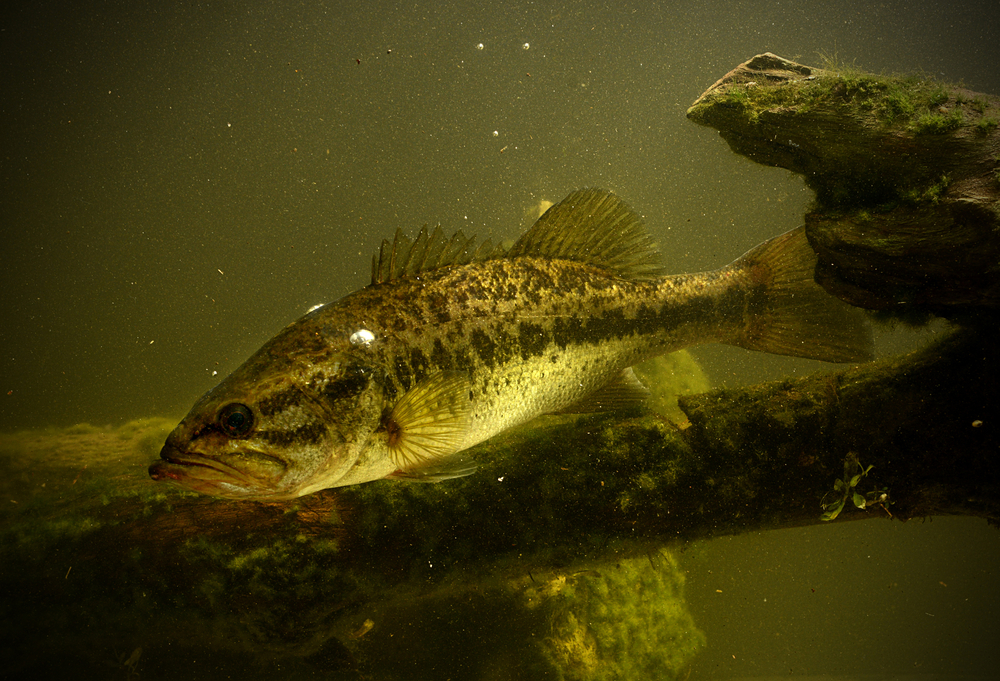
Bass have a swim bladder, a gas-filled organ that helps them control buoyancy and hold position in the water column. Fish can detect pressure changes in their environment. But the claim that a falling or rising barometer directly makes a bass's swim bladder uncomfortable is overstated.
Here is why: a bass moving just a few feet in the water column experiences far more pressure change than the atmosphere produces during a typical weather shift. If a bass can slide from four feet to eight feet without being physically disabled by pressure, a normal barometer change is not hurting the fish.
That does not mean pressure is irrelevant. Bass live in a world of subtle environmental cues, and they almost certainly sense the trend along with light, wind, wave action, temperature change, and prey movement. But the practical explanation is simpler: the barometer marks the stage of the weather pattern, and each stage changes the feeding opportunity in ways that have nothing to do with swim bladder discomfort.
Pressure Trend vs. Pressure Number
The actual number matters less than the direction, speed, and context of the change.
A bass does not behave the same way at 29.80 inHg every time. A stable 29.80 after three calm days is a completely different situation than 29.80 falling fast ahead of thunderstorms. Likewise, 30.10 can fish fine after several stable days, but it can be brutal if it just shot up behind a cold front and the sky turned bright, clear, and windless.
Watch the trend. The number is just a snapshot.
Falling Pressure: The Window Before the Storm
When a storm is approaching, the barometer is falling, and this is often the best feeding window of the entire weather cycle. Not the worst.
The prime window is typically the four to six hours before the weather actually hits. That does not mean fishing through lightning or unsafe conditions. It means getting on the water while the sky is building, the wind is increasing, the light is dropping, and the food chain is still fully active.
Why Bass Feed Hard Before a Front
Several favorable conditions stack up at once ahead of a storm. Cloud cover kills harsh light. Wind breaks up the surface and makes baitfish harder to track. Forage gets pushed onto windblown banks, points, grass edges, and flats. Crawfish and other bottom prey become more active. Bass, as ambush predators, get a temporary advantage over their food.
There may also be a natural urgency to the window. Once the storm arrives, prey tucks into cover, runoff muddies the water, temperature drops, and the easy meal disappears. The pre-storm period is often the last aggressive feeding opportunity before the disruption.
Best Presentations on Falling Pressure
This is the time to be aggressive. Cover water, fish the wind, target ambush points, and make bass react.
A spinnerbait is one of the best pre-storm tools in the box. Use double willow blades in clearer water when shad are the primary forage, and swap to a Colorado or Indiana blade when the water is stained or the sky goes dark and fish need more vibration. Slow-roll it around grass edges, dock corners, laydowns, riprap, and windblown banks.
A bladed jig produces when you need something with vibration that still looks like forage. It works through shallow grass, around isolated wood, and across windblown flats where bait is getting repositioned by the chop.
Lipless crankbaits shine on shallow flats and over grass. Rip them free from vegetation, yo-yo them over submerged grass, or burn them across windblown points. Chrome, red, shad, and craw patterns all have a place depending on water color and the time of year.
Squarebill crankbaits are the call around rock, wood, and shallow cover. In a falling-pressure window deflection is your friend. Bang the bait into stumps, dock posts, and riprap. A lot of pre-front bites happen right after the lure ricochets off something.
Topwater can be exceptional if water temperature and season support it. A walking bait over points and flats, a buzzbait along grass and shoreline cover, a popper around docks, or a hollow-body frog over mats and pads can produce some of the most violent strikes of the year under a building sky.
The key is pace. During a true pre-storm window you are not coaxing a reluctant fish. You are intercepting an active one.
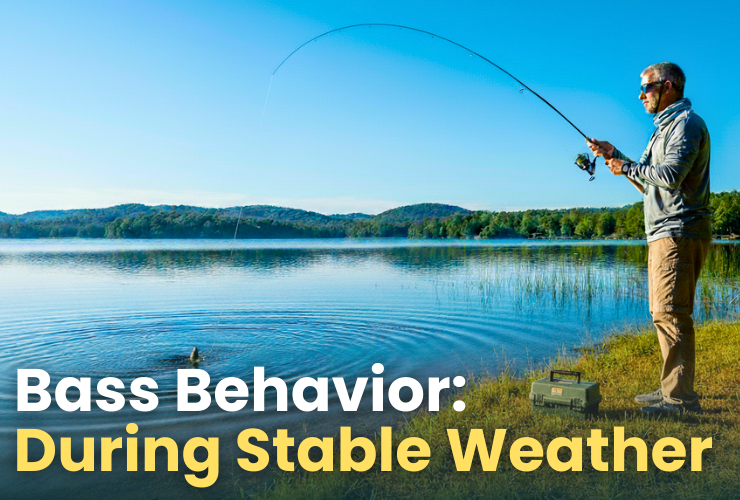
High, Stable Pressure: Consistent but Not Explosive
A high-pressure system that has sat over the area for more than a day or two produces reliable fishing, but it rarely produces fireworks. Bass are comfortable and active, but they're not urgency-feeding. They're hunting on their own schedule.
Why Stable Pressure Produces Steady Fishing
When pressure is high and has been stable for 24 hours or more, bass have fully adjusted. Their swim bladders are calibrated to the current conditions and they're holding position efficiently. They're catchable, but they tend to be position-specific and less likely to chase something that moves fast through their zone.
This is methodical fishing weather. Anglers who work a specific piece of structure thoroughly and time their casts around peak feeding windows will consistently outperform anglers who cover water quickly.
Lean on Feeding Time Windows
Stable high pressure is when solunar timing matters most. Without the urgency of a pressure change to trigger aggressive feeding, bass tend to concentrate their activity into tighter feeding windows -- typically early morning, late afternoon, and around major and minor solunar periods.
Fish the right time of day and you'll find active fish. Fish the wrong time and the lake will feel empty.
The Zoom Trick Worm rigged Texas-style is a reliable producer in stable conditions. A slow, methodical swim along the bottom with occasional pauses gives fish time to track and commit. The Z-Man TRD on a Ned rig is equally effective -- the bait's tendency to stand upright on the bottom does the work for you. Leave it there. Let the fish find it.
For anglers who want to cover more water, the Keitech Fat Swing Impact swimbait on a light head is a good middle ground. Slow enough to stay in the strike zone, realistic enough to produce bites from fish that aren't in chase mode.
After the Storm: Do Not Leave Too Soon
Not every post-storm period is a grind. If the storm passes but the sky stays cloudy, the wind keeps blowing, and the barometer has not yet risen hard, the bite can stay good for a while.
The storm ending is not the same as the front fully passing. There is often a window after the rain when bass still have low light, surface chop, inflow, stained water edges, and disoriented bait to exploit. That can be an excellent time to fish.
Look for fresh inflows, drains, windblown banks, current seams, and shoreline cover near slightly stained water. Avoid dangerous conditions and water that is too muddy or too cold, but do not pack up just because the rain stopped.
Best Presentations After the Storm
If clouds and wind remain, keep reaction baits in hand. A spinnerbait is hard to beat around fresh runoff and windblown shoreline cover. A bladed jig works well where the water has some stain but not total mud. A squarebill can be excellent around newly flooded bushes, riprap, laydowns, and shallow rock. A swim jig is a strong choice around grass and shoreline vegetation where bait has been pushed.
If the water temperature is right and the season supports it, topwater can still produce under clouds after the storm. A buzzbait, walking bait, popper, or frog can call fish from shallow cover while the light stays low.
If the water turns muddy or the wind dies and the sky clears, transition to pitching cover. A jig, Texas rig, black-and-blue creature bait, bulky worm, or compact flipping bait in stained water. The strike zone shrinks when the water goes dirty. Keep the bait close.
Rapidly Rising Pressure: The Post-Front Grind
The hardest bass fishing often comes after the front passes, when the barometer rises quickly and the weather turns bright, clear, and calm. This is the scenario that earns its reputation.
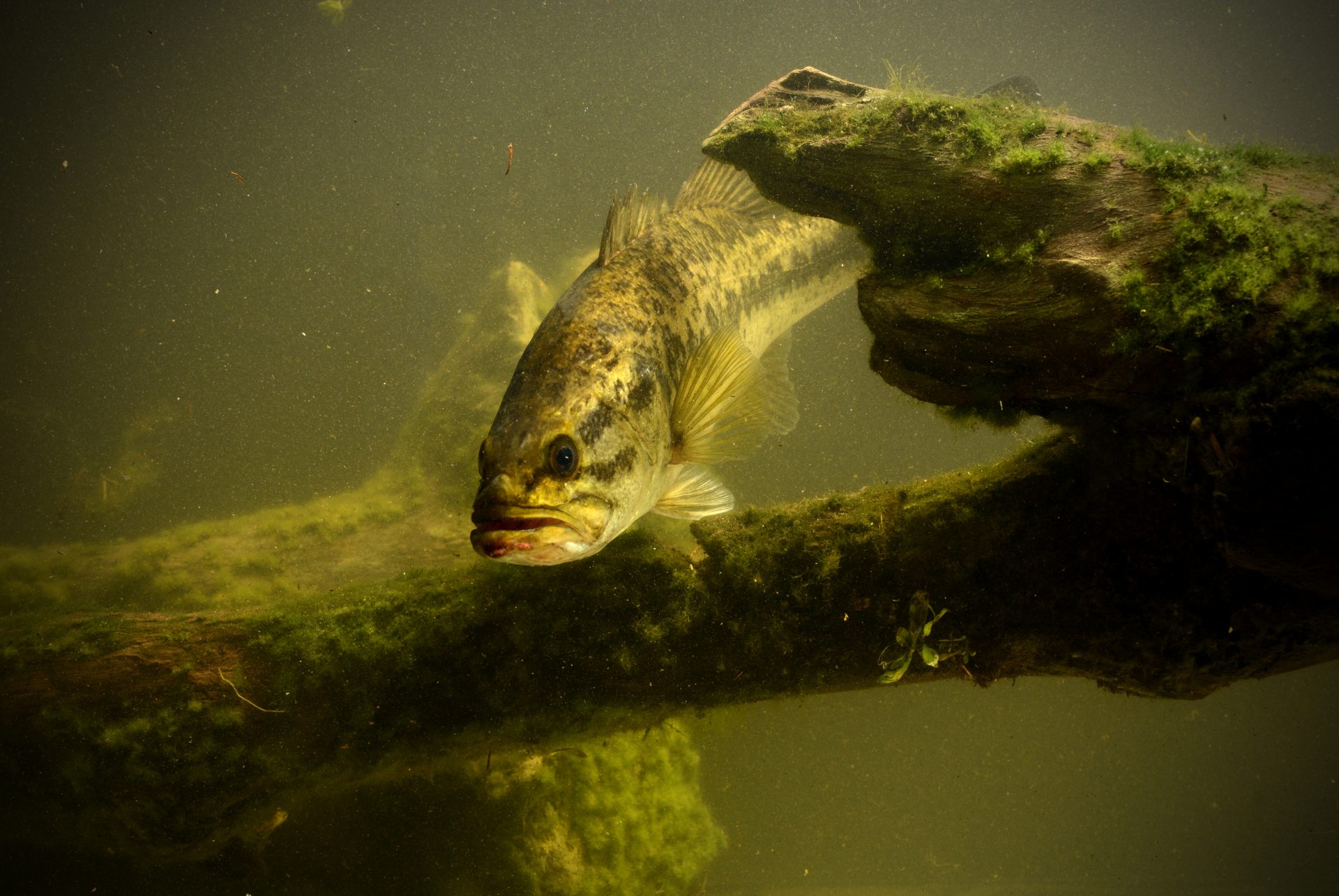
The tough bite is not simply because the pressure is high. It is because conditions changed fast. The cover, light, wind, temperature, and prey behavior all shifted at once. Baitfish scatter or tuck in. Shallow bass that were feeding aggressively before the front slide to the nearest cover, suspend under docks, bury in grass, hold tighter to wood, or drop to the first available break.
The fish are still there. They are just done chasing.
Low Pressure and Post-Front: The Hardest Conditions
After a front passes and pressure is low, fishing is at its most difficult. Add this to spawning behavior in regions currently on beds and the challenge compounds. Honest expectations are worth setting here: you'll catch fewer fish, but you can still catch fish.
Why Low Pressure Post-Front Is Toughest
The combination of rapid pressure change, dropping water temperature from a cold front, and bright post-front skies creates the worst possible set of variables simultaneously. Bass that were already spawn-focused become even harder to trigger. Fish that were in a post-spawn recovery mode retreat further into cover.
There's no hack for this. There's only patience and finesse.
Finesse or Go Home
Downsize everything. Lighter line, smaller profile, slower retrieve, longer pauses.
A Z-Man Finesse TRD on a 1/16 oz. Ned rig head is as light and natural a presentation as you can make. Cast it near the last-known holding area -- the base of a dock, the shaded side of a brush pile, the deepest point of a submerged laydown -- and give the fish time to find it.
A Roboworm Straight Tail Worm on a 6-inch drop shot with a 1/4 oz. weight is another reliable option. Work it vertically rather than dragging it across the bottom. Low-pressure fish often suspend slightly rather than sitting directly on the bottom, and a vertical drop shot keeps the bait at their eye level.
When nothing else is working, a Zoom Finesse Worm on a shaky head with barely enough movement to show life will produce the most stubborn post-front bites. If you think you're moving it too slowly, slow down more.
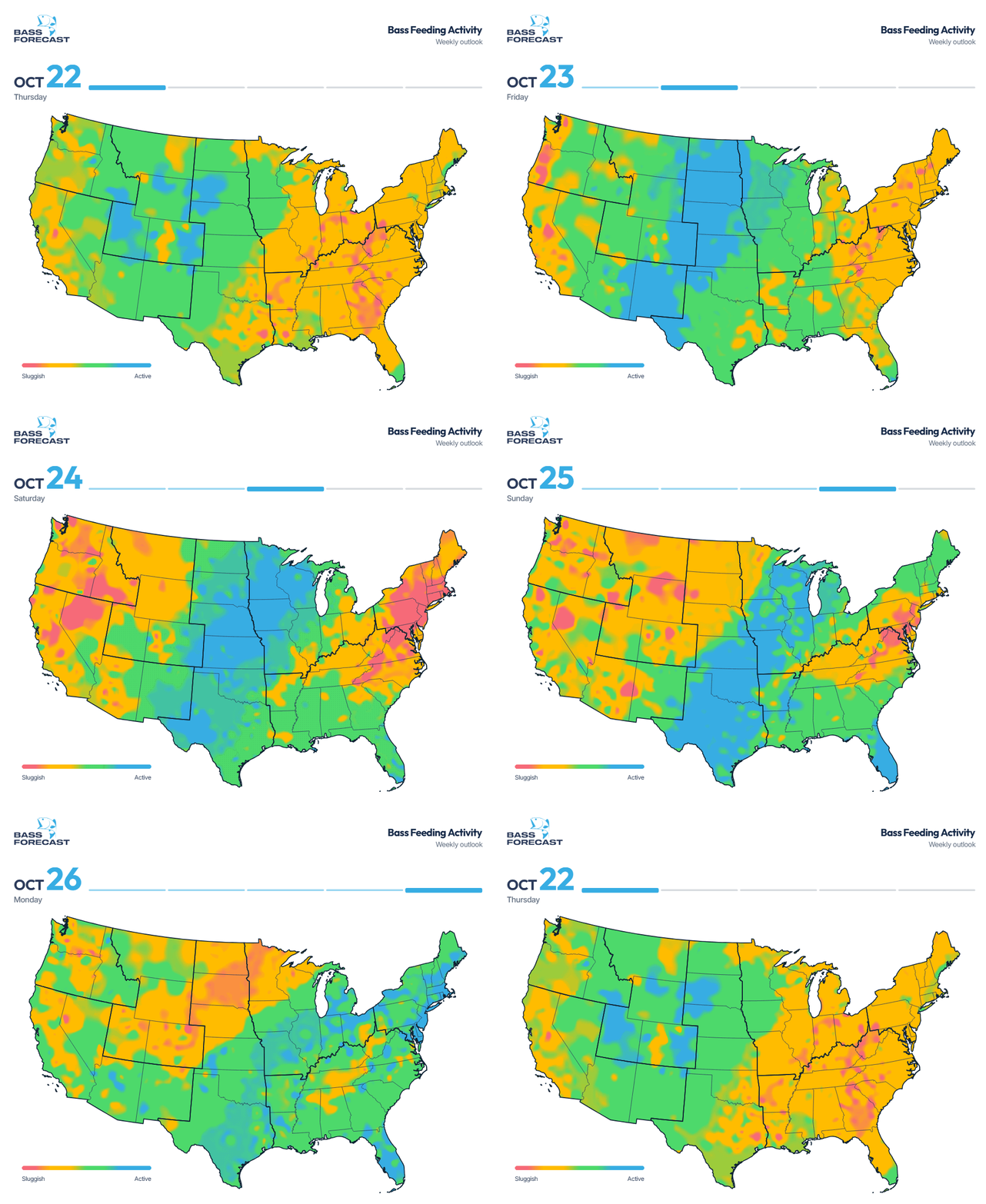
Regional Breakdown: Where Things Stand Right Now
Barometric pressure affects bass everywhere, but what it's layering on top of varies significantly by region in late April. Here's where most of the country sits and how pressure factors in accordingly.
Southeast (Georgia, Alabama, Mississippi, Florida, South Carolina) Largely post-spawn or wrapping up. Females are in recovery mode near the first available depth structure. Pressure drops hit harder on already-lethargic post-spawn fish. The prescription is the same regardless of pressure direction: slow down, go finesse, work structure edges. A drop shot or Ned rig near dock posts and brush piles is the starting point.
Southwest (Texas, Oklahoma, Arkansas, Louisiana) Mid-to-late spawn across most of the region. Texas and Oklahoma reservoirs are right in the thick of it. Note that spawning fish have an added complication: a significant pressure drop can temporarily pull fish off beds entirely. If you approach a bed you've been working and the fish isn't there, check the first break adjacent to the spawning flat before writing off the area.
Mid-South (Tennessee, North Carolina, Virginia, Kentucky) A mixed bag. Some fish still on beds, others already recovering. Pre-spawn fish that haven't moved up yet are the most pressure-responsive -- rising windows produce aggressive feeding from staging fish in 6 to 12 feet of water near spawning flats. Target those fish on rising pressure before they commit to beds.
Mid-Atlantic and Ozarks (Missouri, Illinois, Indiana, Ohio, Maryland, Pennsylvania) Late pre-spawn in most areas. This is the best possible pressure window to be in right now. Fish are actively feeding before the spawn and a rising barometer produces some of the most aggressive spring bites of the year. A pressure drop sends them back to deeper staging areas quickly, but the rebound window is just as productive. Watch the trend and time your trips around it.
Great Lakes and Upper Midwest (Michigan, Wisconsin, Minnesota, Iowa, New York) Early pre-spawn. Water temperatures are just creeping into the 50s and bass are beginning to feed hard ahead of the spawn. Pressure changes drive the biggest behavioral shifts of the entire spring in this region -- fish haven't been feeding aggressively for long and they respond to every favorable window with urgency. A rising barometer in northern Michigan or Wisconsin right now is an event. Don't miss it.
West and Pacific Northwest (California, Oregon, Washington, Nevada, Arizona) Elevation-dependent. Low-elevation California reservoirs like Clear Lake and Folsom are approaching spawn and behave similarly to the Mid-South right now. Higher-elevation lakes are still firmly pre-spawn. Pressure timing matters most at lower elevations where fish are active. Mountain reservoir bass may not respond as dramatically to pressure shifts while water temperatures are still cold.
Angler-Type Breakdown
Bank Anglers
The challenge with a falling barometer from the bank is that you can't follow fish as they drop in depth. The solution is to fish structure-heavy banks where fish can move vertically without leaving the area. Riprap, dock posts, bridge pilings, and deep shoreline cuts all hold fish through pressure swings because the depth is right there.
Work a smaller section of bank far more thoroughly than you think necessary. A light spinning rod, 8 to 10 lb fluorocarbon, and a finesse worm worked slowly through the deepest available shoreline structure will find fish that have moved down but haven't gone far.
Kayak Anglers
Your low profile is a genuine advantage in post-front conditions when fish are spooky and skies are bright. Bass that won't tolerate a trolling motor nearby will often hold tight when a kayak slides in quietly.
Use that access to reach protected backwater coves and tight creek arms where fish retreat after a front. Approach nose-in, cast parallel to the cover, and work the bait back along the deepest edge of whatever structure is available. A Roboworm drop shot fished vertically near the shaded side of dock posts is the most consistent post-front kayak presentation.
Boat Anglers
Use your electronics to watch for depth changes. When pressure drops, look for fish that have moved off shallow flats to the base of the nearest structure break. If they were on a flat at four feet, check the eight to twelve foot contour on the outside edge of that same flat.
Resist the temptation to run. Post-front fish haven't gone to the other end of the lake. They've dropped ten feet from where they were. Hold position quietly with the trolling motor, work the bait slowly, and stay on the area. The fish that weren't biting at 9am will often turn on by noon as pressure begins to stabilize.
Frequently Asked Questions
Does barometric pressure really affect bass fishing? Yes, but not in the way most articles describe it. Pressure does not directly disrupt a bass's swim bladder and suppress feeding. It works as an environmental indicator. A falling barometer signals an approaching weather system with cloud cover, wind, and bait movement that often triggers aggressive feeding. A rising barometer after a front signals clearing conditions that can shut down the shallow bite. The trend tells you which stage you are in.
What is the best barometric pressure for bass fishing? Falling pressure ahead of an approaching storm often produces the most aggressive fishing. Stable pressure over several days produces the most consistent and patternable fishing. Rapidly rising pressure after a cold front typically produces the toughest conditions, especially when it coincides with clear skies and calm water. The number matters less than the direction and context of the change.
Why do bass stop biting when pressure rises fast? It is less about the pressure itself and more about everything that comes with it. A rapidly rising barometer usually means a cold front just passed: bright sky, no wind, calm water, and prey that can see and evade predators more easily. Bass lose their low-light ambush advantage and become less willing to chase. Slow down, downsize, and target the deepest available cover near where fish were holding.
How long does a post-front bite slump last? Usually 24 to 48 hours after a front fully passes, sometimes longer if the weather turns bright, cold, and calm for several days in a row. As pressure stabilizes at the new level, bass recalibrate and start feeding more predictably again. Watch for pressure to stop moving and hold steady. That is often when the bite begins to come back.
Should I fish before a storm or wait until after? Before, if it is safe to do so. The four to six hours ahead of an approaching front are often the most productive window of the entire weather cycle. Get on the water while the sky is building, the wind is picking up, and the light is dropping. Once the storm hits and after the front fully passes, conditions typically become more difficult before they improve again.
What baits work best after a cold front? Finesse presentations dominate post-front fishing. A finesse jig pitched to dock posts and laydowns, a Texas-rigged finesse worm on light tackle, a Ned rig on hard bottom transitions, and a drop shot near suspended fish are all reliable choices. Downsize the profile, lighten the weight, slow the retrieve, and keep the bait in the strike zone longer than feels necessary.
Does the spawn affect how bass respond to pressure changes? It does. Spawning fish are operating under a different set of biological priorities and their feeding drive is already suppressed. The most pressure-responsive fish during spring are pre-spawn fish that are still actively feeding and staging near spawning areas. Those fish respond to pre-front feeding windows with urgency. Fish already on beds are less likely to chase regardless of pressure direction, though significant weather changes can temporarily displace them from nests.
Use the Bass Forecast App
Barometric pressure changes hour by hour, and bass respond in real time. The Bass Forecast app tracks pressure trends alongside water temperature and solunar data so you know what conditions are doing before you load the truck and whether the window you're planning around is opening or closing.
Download Bass Forecast and stop guessing what the bite is going to look like.
Tags: barometric pressure, weather, spring bass fishing, regional fishing, bass biology



.png)
.png)