Water Temperature and November Cold Fronts for Bass
Please share this article with every angler you know!
Water Temperature and November Cold Fronts: The One Number That Decides the Bite
Water temperature is the single variable that decides whether bass feed in November. When it stays in the 55 to 62 degree zone, bass are in a pre-winter feeding push and the bite is strong. When a cold front drops it below 55 degrees, bass metabolism slows meaningfully and the bite shuts down for 48 to 72 hours until the water recovers. This article explains the science, the threshold, and how to read the recovery on your water this week.
Why Water Temperature Decides Everything
Bass are cold-blooded. That is not a figure of speech. Their internal body temperature matches the water around them, and their metabolism rises and falls with it directly. In August when water sits in the mid 80s, bass metabolism runs hot. They need to eat constantly because digestion happens fast. In February when water hits 40 degrees, metabolism crashes. Bass can go days between serious feeds and move only when they absolutely have to.
Every other variable anglers track, including barometric pressure, moon phase, wind direction, and cloud cover, works THROUGH water temperature. A cold front matters because it drops water temperature. A warm rain matters because it raises it. Sunshine on a shallow flat matters because it warms the top foot of water by 3 to 5 degrees over an afternoon. Temperature is the mechanism. Everything else is the trigger.
This is why Bass Forecast builds the daily Bass Forecast Rating around temperature trend alongside pressure and solunar timing. Watching temperature alone tells you more than any other single variable. Watching it combined with the other signals tells you almost everything you need to know about the next 10 days.
Sign up to know the Bass Fishing Playbook every week
Know the Bass Fishing Playbook Every Week
The Temperature Thresholds That Matter
Bass behavior changes at specific temperature breakpoints, and understanding where your water sits on the chart is the single most useful piece of tactical information in November.
Above 72 degrees. Bass are in summer patterns. Deep structure, early and late feeding windows, metabolism running hot. Not relevant to this article.
65 to 72 degrees. Early fall. Bass are transitioning from offshore to the first break lines near creek mouths. Shad are starting to move. Aggressive feeding.
55 to 62 degrees. The November sweet spot. Metabolism high enough to drive aggressive feeding, water cold enough that food takes longer to digest so bass need to eat often and can process bigger meals. This is the pre-winter feeding push where anglers who show up on the right days have the best fishing of the second half of the year. Watch for lake turnover effects in the last weeks of October and first weeks of November that can scramble this zone briefly.
48 to 54 degrees. Transition zone. Feeding windows compress but are still present. Bass shift toward deeper, slower baits. The recovery window after a cold front often lives here.
42 to 47 degrees. Winter patterns begin. Deep, slow, finesse-driven. Bass can still be caught but it is a different sport. Hair jigs, dropshot, suspending jerkbaits with long pauses.
Below 42 degrees. Deep winter. Metabolism minimal. Bass concentrate on specific structure and move very little. Tough fishing even for experienced anglers.
Your water is somewhere on this chart right now. Whichever zone it is in defines what bass are doing and what they will respond to. A lake sitting at 58 degrees fishes nothing like a lake sitting at 51 degrees even though they are only 7 degrees apart. The difference is the difference between the pre-winter feeding push and the transition shutdown.
Search your body of water to get bass fishing intel
Why November Cold Fronts Hit Harder Than September Cold Fronts
Every angler who has fished through September and October has survived cold fronts and caught fish on the back end. Then they try the same approach in November and catch nothing. This is not bad luck. This is the temperature threshold doing what the threshold does.
Here is the mechanism. In September, a cold front might drop air temperature 20 degrees overnight. Water temperature follows slowly because water holds heat far better than air. A September cold front might drop a reservoir from 76 to 72 degrees over 48 hours. Bass notice, but 72 degrees is still well inside the summer feeding zone. They shift deeper for a day, resume feeding on day two or three.
In November, water temperature is already sitting in the critical 55 to 62 zone. A cold front with the same air temperature swing drops water from 62 to 54 or 60 to 52. That is not a shift within a zone. That is a crossing of a zone boundary. The bass that were feeding aggressively on Friday wake up Saturday in water that is in a completely different metabolic bracket. Their systems slow. Feeding windows close. The bite stops.
In-Fisherman and fisheries research both document this threshold effect. Bass metabolic rate drops roughly 50 percent between 60 degrees and 50 degrees. That is not a gradual taper. That is a cliff. A bass that burned through a half pound of shad every three days at 60 degrees burns through the same half pound every 6 days at 50 degrees, which means the feeding frequency drops dramatically. Your odds of hooking a feeding fish on any given cast drop with it.
This is why experienced November anglers watch barometric pressure as a secondary signal to temperature trend. Barometric pressure predicts the cold front. Water temperature trend measures what the cold front actually did. One is forecast. The other is reality.
The Recovery Curve
A November cold front typically takes 48 to 72 hours of air temperature stability before water temperature begins to recover. That recovery is not symmetric. Water drops fast when air drops and recovers slowly when air warms. A front that drops water 7 degrees in 36 hours might take 5 full days to gain back 4 degrees of that drop, especially on larger reservoirs where thermal mass is big.
Three recovery phases matter for picking your day:
Phase 1: Shutdown (Day 0 to Day 2). Water temperature is actively dropping or has just stabilized at the new low. Bass metabolism is adjusting. Bite is minimal. These are the days to skip or to fish very slowly on specific deep structure with finesse presentations.
Phase 2: Stabilization (Day 2 to Day 4). Water temperature holds steady at the new low. Bass adjust to the new baseline. A bite returns but it is slower, more selective, and more structure-oriented than the pre-front bite. Jigs, suspending jerkbaits, and dragged soft plastics on the first drop out from where bass were caught pre-front.
Phase 3: Recovery (Day 4 and beyond). Water temperature begins trending back up as air stabilizes or warms. Bass feeding windows widen. The bite returns toward pre-front intensity but with a slightly deeper, slightly slower character than it had before the front. This is the window to fish hard.
The practical move: when a cold front is forecast and you cannot shift your fishing day, aim for Phase 3 over Phase 1. If Phase 3 is not available because another front is coming, fish Phase 2 with slower baits on the structure you fished pre-front, dropped one contour deeper.
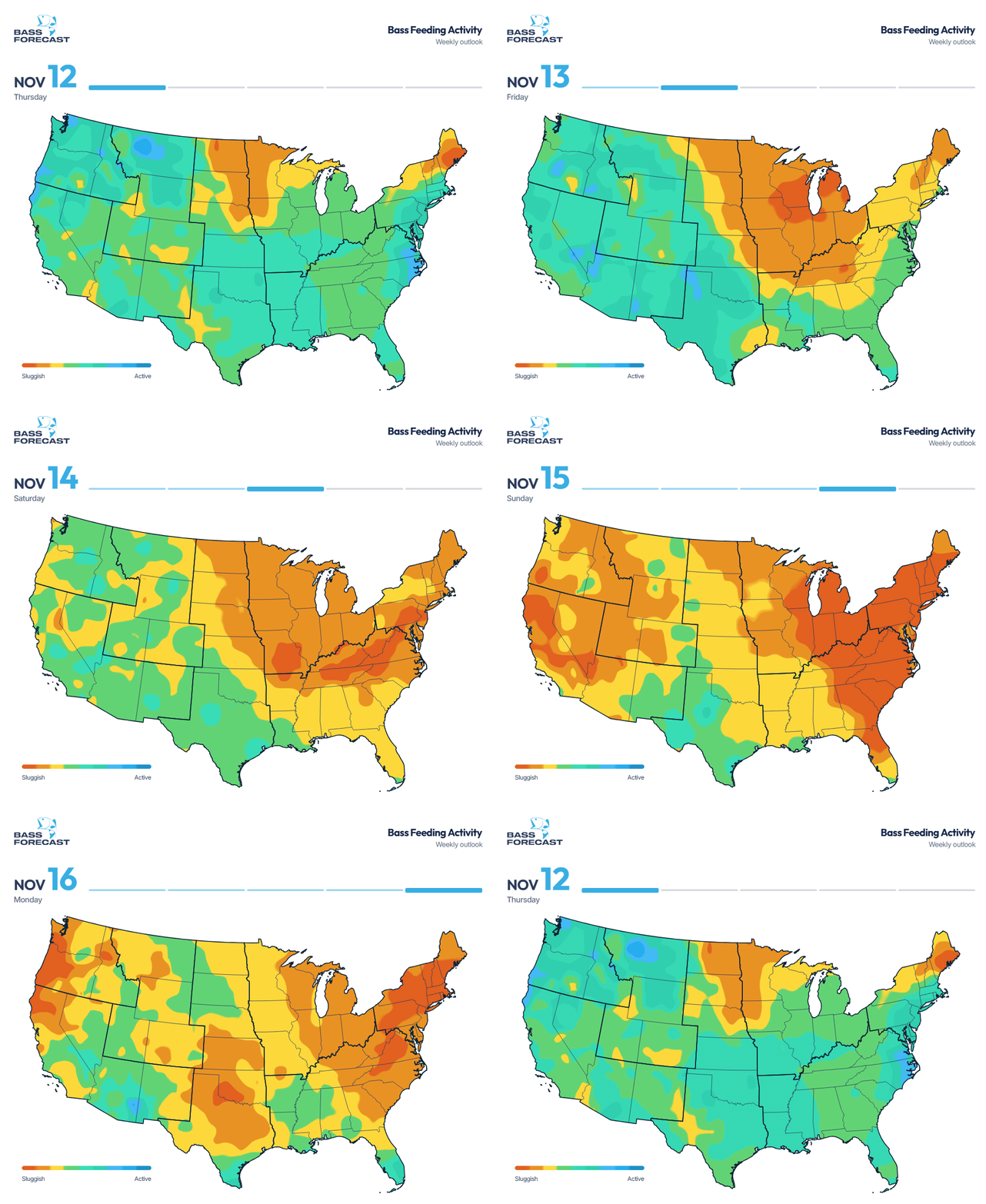
This is where the app earns its value. The 10-day Bass Forecast Rating combines temperature trend, pressure, and solunar timing into a single daily rating. During a cold front week, the app shows you exactly when the recovery phase begins and which day within it has the best combined conditions. Without that data, you are guessing. With it, you are picking the day that will produce.
Reading Water Temperature From a Boat, Bank, or Kayak
The November window serves all three angler access types, but reading temperature accurately changes what each one can do.
Bass Fishing from a Boat
Boat anglers have the biggest temperature advantage because electronics give continuous surface temperature readings as you move. Idle across different sections of the lake and watch the number change. Creek arms, coves, and shallow flats can be 2 to 4 degrees warmer than the main lake on a sunny afternoon, and bass position around those temperature breaks the same way they position around structure.
Fish the warm pockets on recovery days. Bass that have been shut down by cold water are more active in the slightly warmer water first. Even a 2 degree advantage between a windblown shallow flat and the adjacent main lake can mean the difference between a dead spot and a loaded one.
The afternoon advantage is biggest in November. Water in the top foot of a shallow flat can warm 3 to 5 degrees from morning to late afternoon on a sunny day. By 3pm those flats are the warmest water in the system, and bass move up to feed.
Bass Fishing from the Bank
Bank anglers can read temperature with a basic handheld thermometer or a casting bobber with a built-in temperature sensor. Dip, wait 30 seconds, read. Small addition to the tackle bag, big tactical advantage.
The specific question for bank anglers is where to cast. On a cold front recovery day, target spots where sun has been hitting the water longest: south-facing shorelines, shallow rocky pockets, protected coves on the sunny side of the lake. These spots warm fastest and hold bass earliest in the recovery.
Avoid north-facing shore on cold front days. They warm last, hold cold water longest, and produce the least.
Bass Fishing from a Kayak
Kayakers have the stealth advantage during shutdown and recovery days. With no outboard noise, kayak anglers can slip into shallow coves and the backs of creeks where bass are hunting the warmest water they can find without spooking them. On cold front days this matters more than usual because the warm water is often in skinny water where even a low idle from a boat pushes fish off.
Carry a handheld thermometer. Launch into coves rather than main lake to protect yourself from wind on recovery days. Plan trips for Phase 3 of recovery when the bite is most predictable; skip Phase 1 days unless you are specifically targeting the slow jig bite and know the structure well.
How the November Temperature Zones Play Out Across the Country Right Now
Where your water sits on the chart depends on where you fish. Here is roughly where each region's water temperature sits in mid-November 2026, with anchor fisheries and tactical notes per region.
Southeast (Guntersville, Chickamauga, Toledo Bend, Sam Rayburn). Water is still in the 60 to 65 degree range on most of the big reservoirs. Cold fronts here drop water 3 to 5 degrees but rarely push it below 55. The window stays open longer. Fish the pre-front conditions aggressively; shutdown periods are shorter.
Southwest (Lake Fork, Sam Rayburn, Amistad, Falcon). Similar to Southeast with water in the low 60s. Lake Fork anglers are seeing the giant pre-winter feeding push right now. Fronts here matter more than in the Deep South because the daily lows are colder.
Mid-South (Chickamauga, Kentucky Lake, Barkley, Pickwick, Dale Hollow). Water is sitting in the upper 50s on the main reservoirs. This is the prime temperature zone, and the Mid-South is deep in the pre-winter feed window. Cold fronts here are the specific threshold events this article is about. Watch temperature trend carefully.
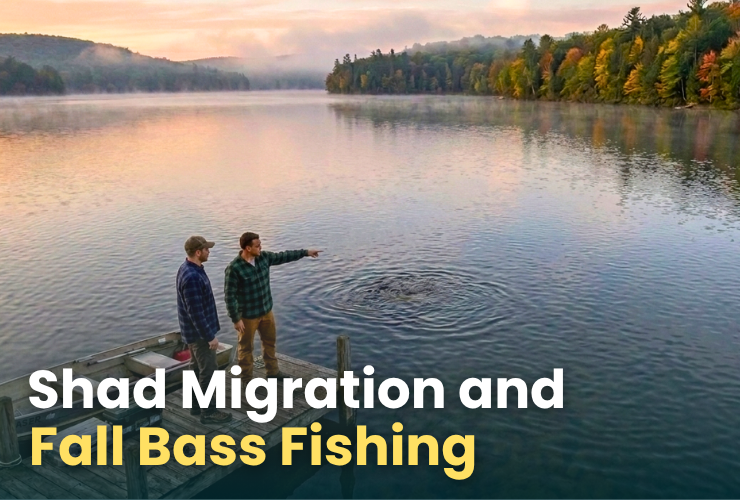
Mid-Atlantic and Ozarks (Bull Shoals, Table Rock, Beaver, Lake of the Ozarks). Water is in the mid to upper 50s. Classic November transition water. Fronts here push the temperature into the 48 to 54 zone where feeding windows compress sharply. Fish the shad migration pattern on recovery days.
Great Lakes and Upper Midwest (Lake St. Clair, Lake Erie, Mille Lacs, Mississippi River pools). Water has dropped into the low 50s and will push into the 40s with the next front. Smallmouth on Lake Erie and St. Clair are shifting to deeper rockpiles and are catchable on blade baits and suspending jerkbaits. The window is closing fast here.
Northeast (Champlain, George, Oneida, Finger Lakes). Water temps are in the upper 40s to low 50s. Transition to winter patterns is actively happening. Deep structure, slow baits, long pauses. The pre-winter feeding push window is effectively closed on most of these waters.
West and Pacific Northwest (Clear Lake, California Delta, Columbia River, Lake Washington). Water in the mid to upper 50s on most waters. Clear Lake and the Delta fish longer into winter than most of the country. Fronts here produce similar shutdown and recovery curves to the Mid-South and Ozarks.
Rocky Mountains (Lake Mead, Mohave, Powell, Elephant Butte). Water in the low to mid 60s on the southern desert reservoirs, cooler on the higher-elevation waters. Mead and Powell anglers are still in the back half of the pre-winter feeding push. Fronts here affect smaller shallow bays more than the main lake body.
The practical takeaway: the Thanksgiving window depends on which region you fish. Southeast and Southwest anglers have 3 more weeks of strong water. Great Lakes and Northeast anglers have days left. The app's regional temperature trend data tells you which zone your water is in right now.
What to Throw by Temperature Zone
The bait choice should follow water temperature, not the calendar.
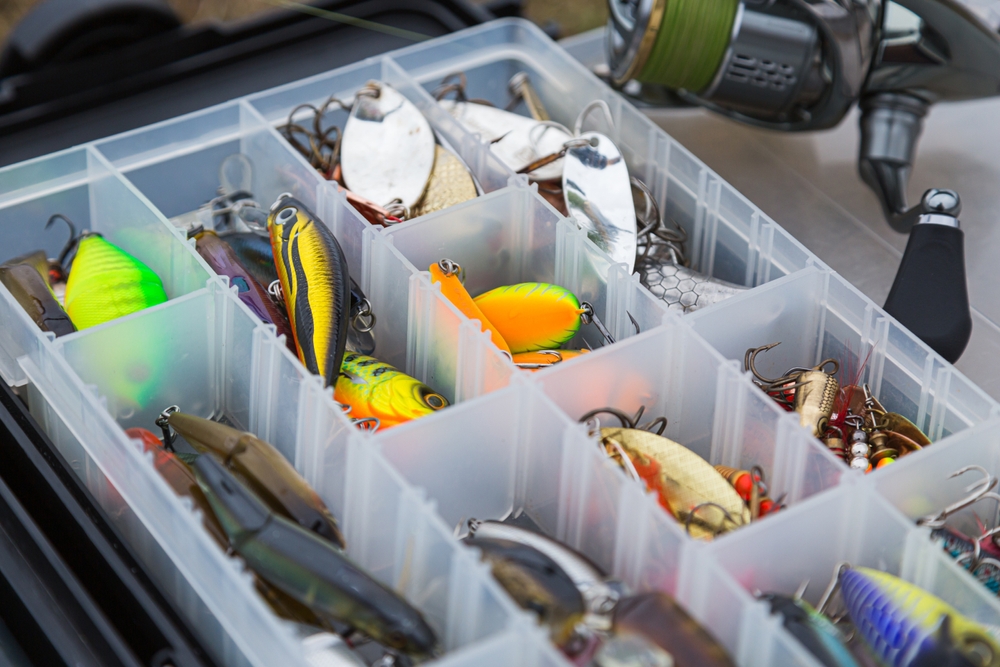
55 to 62 degrees (pre-winter feeding push). Shad-matching moving baits that cover water. The Strike King Red Eye Shad or Bill Lewis Rat-L-Trap in lipless configurations, ChatterBaits in shad patterns around grass edges, and the Strike King 5XD for deeper structure. Fish fast, cover water, find the shad schools.
48 to 54 degrees (transition zone, cold front shutdown and recovery). Slow down significantly. Suspending jerkbaits with long pauses (15 to 30 seconds on each pause) imitate dying shad and get strikes from bass that will not chase. The Rapala Shad Rap worked slowly on the pause is a proven cold-front bait. Jigs with pork or soft plastic trailers dragged on main-lake points. Dropshots with 4 inch worms on the first drop out from where bass were caught pre-front.
42 to 47 degrees (early winter patterns). Finesse-driven approaches. Hair jigs on deep bluff walls. Dropshot with finesse worms. Slow rolled wacky rigged Senkos on slopes adjacent to deep water. This is not typical November water for most regions but applies to Northeast and some Upper Midwest waters right now.
The decision framework: watch the Bass Forecast Rating for your water and read the temperature band displayed. The app matches bait recommendations to live conditions, so during a cold front recovery you see the temperature-appropriate bait category surface in the recommendations rather than the pre-front baits that stopped working.
The Honest Day-Picking Framework
Not every day in November produces. The cold front shutdown and recovery cycles described above create a mix of dead days, slow days, and strong days inside any two-week stretch. Picking the strong days matters more than any bait choice.
Signals that make a November day productive:
Water temperature stable or slightly rising from the day before. Phase 3 of a recovery curve. Barometric pressure stable. Overcast with light wind. These are the days to fish hard.
Afternoon over morning. Shallow flats need sun to warm, and bass need warming water to activate. The afternoon window is almost always better than the morning window in November.
Day 3 or later after a cold front. The initial shutdown is past. Metabolism is adjusting. The bite is building.
Signals that tell you to skip the day or fish a different spot:
Water temperature actively dropping. Day 0 or Day 1 of a cold front. The bite is either dead or extremely slow.
Rapidly rising barometric pressure after a front. Blue sky, high pressure, dead-calm conditions following a cold front. Classic shutdown signal.
Air temperature at or below water temperature overnight. Prevents morning recovery and pushes the useful fishing window into the late afternoon only.
The practical move: open the Bass Forecast app at the start of the week. Look at the 10-day forecast rating. Identify the 2 to 3 days with the highest ratings and best temperature trend. Those are your fishing days. The other days are better used for errands, tackle prep, or watching film.
During a cold front week when the recovery phases matter most, the 10-day forecast is the planning tool that decides whether you have a productive weekend or a wasted one. Bass Forecast PRO shows the full 10-day forecast, the water temperature trend, and the Bass Forecast Rating for your location combined.
THE NUMBER THAT MATTERS MOST RIGHT NOW
Common Questions About Water Temperature and Cold Fronts (FAQ's)
What is the best water temperature for bass fishing in November?
The best water temperature for bass fishing in November is between 55 and 62 degrees Fahrenheit. This range represents the pre-winter feeding push where bass metabolism is high enough to drive aggressive feeding but water is cool enough that food takes longer to digest, forcing bass to eat often and chase bigger baits. Above 62 degrees bass are still in early fall patterns; below 55 degrees feeding windows compress sharply and the bite slows meaningfully.
Why do bass stop biting after a cold front in November?
Bass stop biting after a November cold front because the front drops water temperature across a metabolic threshold. Bass are cold-blooded; their metabolism tracks water temperature directly. When water drops from the 60-degree range to the low 50s, bass metabolic rate drops roughly 50 percent, which means they need less food and feed less often. The bite returns 48 to 72 hours later when water stabilizes and bass adjust to the new baseline.
How much does a cold front drop water temperature?
A typical November cold front drops water temperature 3 to 7 degrees over 24 to 48 hours. The actual drop depends on wind, air temperature, cloud cover, and the thermal mass of the body of water. Large reservoirs change slowly and drop less. Small ponds and shallow flats can drop 7 degrees or more. Air temperature swings of 20 degrees overnight commonly produce 4 to 6 degree water drops within 36 hours.
How long does it take bass to recover from a cold front?
Bass typically take 48 to 72 hours to recover from a cold front once water temperature stabilizes. Recovery happens in three phases: Shutdown (Day 0 to 2), Stabilization (Day 2 to 4), and Recovery (Day 4 and beyond). The best fishing is on Day 3 or later when bass metabolism has adjusted to the new water temperature and feeding windows widen again.
Why are November cold fronts worse than September cold fronts?
November cold fronts are worse because they drop water temperature across the 55 degree threshold where bass metabolism changes significantly. September cold fronts drop water from the mid 70s to low 70s, which is still within summer feeding zones. November fronts drop water from the 60s into the low 50s, crossing a metabolic breakpoint. The bass respond to the threshold crossing, not the size of the air temperature swing.
What baits work best in 55 to 62 degree water?
In 55 to 62 degree water the best baits are shad-imitating moving baits that cover water. Lipless crankbaits, ChatterBaits, medium-diving crankbaits, and spinnerbaits in shad patterns match the pre-winter feeding behavior where bass are hunting shad migrating out of main lake into creek arms. Fish them on a steady medium retrieve across flats and along grass edges. Let crankbaits tick bottom on deeper structure.
What baits work best after a cold front?
After a cold front the best baits are slower, deeper, and more subtle than pre-front baits. Suspending jerkbaits worked with long 15 to 30 second pauses imitate dying shad. Jigs with pork or soft plastic trailers dragged slowly on main-lake points. Dropshot rigs with 4 inch worms on the first drop out from where bass were caught pre-front. Match the slower metabolism with slower presentations.
How can I measure water temperature from the bank?
Bank anglers can measure water temperature with a basic handheld thermometer or a casting bobber with a built-in temperature sensor. Dip the thermometer and wait 30 seconds for an accurate reading. Measure in multiple spots along your bank access to find temperature breaks. Shallow protected pockets and south-facing shorelines often read 2 to 4 degrees warmer than north-facing shoreline, and bass concentrate in the warmer water on cold front recovery days.
What does bass metabolism have to do with water temperature?
Bass are cold-blooded, which means their internal body temperature matches the water around them and their metabolic rate rises and falls with it directly. At 70 degrees bass metabolism runs fast and they need to eat often. At 50 degrees their metabolism is roughly half that rate and they can go days between serious feeds. Every behavior anglers observe, including feeding frequency, aggression, chasing distance, and bait preference, flows from this metabolic reality.
How do I know when a cold front recovery is complete?
A cold front recovery is typically complete when water temperature has stabilized for 2 to 3 consecutive days at or above the new post-front baseline, and ideally when it has begun trending back up. Watch for consistent daily water temperature readings, stable or falling barometric pressure, and daytime highs that match or exceed the previous day. The Bass Forecast Rating captures these signals and shows them as a rating recovery across the 10-day forecast.
Should I fish the morning or afternoon in November?
Afternoon is generally more productive than morning in November. Overnight temperatures drop shallow water several degrees, and bass metabolism needs the shallows to warm before they get active. By early to mid afternoon, shallow flats can be 3 to 5 degrees warmer than morning readings, which is enough to trigger active feeding. On overcast warming-trend days the bite can extend all day, but after a cold front the afternoon window is almost always the better call.
Get the 10-Day Bass Forecast and Water Temperature for Your Water
Water temperature decides November fishing. You either read it and pick the days that produce, or you show up on the wrong days and catch nothing. The next 10 days contain the recovery curves and warming windows this article describes, but they will not announce themselves. You have to check.
Bass Forecast puts water temperature trends, barometric pressure shifts, and the daily Bass Forecast Rating for your exact location in one place. 22 bait types matched to live temperature and conditions. GPS-specific solunar feeding windows accurate to the minute. The 10-day forecast lets you see the next cold front and the recovery window on the other side of it before you commit your weekend.
Free to download. Today and tomorrow's forecast free on the free tier. Bass Forecast PRO unlocks the full 10-day forecast and every bait recommendation every day, which is the version you want for cold front weeks because you need to see past the front to plan your recovery-phase trip.
Download Bass Forecast for iPhone or Android →
Or use the web app at my.bassforecast.com →
Read the water. Read the bite. Fish the recovery.