
Stream and River Bass Fishing: The Late Summer and Fall Regional Guide
Share this article with every angler you know!
Stream and River Bass Fishing: The Late Summer and Fall Regional Guide
You have been fighting reservoir heat all summer.
Water temperatures in the 90s. Productive windows compressed to 45 minutes at dawn. Offshore ledge fishing is hard, hot work. The weekend trip feels harder than it should be. You come home tired, sunburned, and holding one small bass to show for eight hours on the water.
September is here but the reservoir situation is not changing quickly. Southern water temperatures will stay in the 80s and 90s for another 3 to 5 weeks. Northern reservoirs are just starting to signal the fall transition. Peak reservoir fall fishing is still weeks away for most of the country.
There is water within an hour of most reservoir anglers that solves both problems. Streams and small rivers with meaningful current stay in the bass comfort range even during peak heat. They also hold their productive patterns longer into fall than reservoirs do. Stream anglers extend their productive fishing season on both ends.
This article covers why current water beats standing water during late summer and early fall, how to identify productive stream and river fisheries in your region, what tackle changes make sense for smaller water, and the specific waters worth targeting from Georgia to Oregon.
If your reservoir has been letting you down and you have not tried stream fishing, this is the article that changes that.
Sign up to be notified of new bass fishing articles!
Bass Forecast Newsletters
Why Current Water Beats Standing Water in Late Summer
Frame this section with observed pattern language. Current-influenced water has specific physical and biological characteristics that keep bass more active during peak summer heat than standing water does.
Current Keeps Water Temperatures Lower
Flowing water resists thermal warming. Moving water mixes with cooler subsurface layers, contacts shaded bank structures, and often draws from spring-fed or dam-released sources that are significantly cooler than reservoir surface water.
A stream or river within a few miles of a 90-degree reservoir might have surface temperatures in the mid to upper 70s. That temperature difference is enormous for bass metabolism. Bass in 78-degree water are active and feeding. Bass in 91-degree water are stressed and conservation-mode.
Flowing Water Maintains Higher Dissolved Oxygen Levels
Water flowing over rocks, through riffles, and around structure introduces oxygen through mechanical mixing. That oxygenation happens continuously in a stream or river. Standing water in a reservoir depends on wind, plant respiration, and thermal turnover for oxygenation, all of which slow or fail during peak summer heat.
Bass need dissolved oxygen to metabolize efficiently and to feed aggressively. Low oxygen shuts them down. Streams and rivers rarely have oxygen problems during summer that shallow reservoir water can develop.
Bass in Current-Influenced Water Feed Through Midday
The combined effect of cooler water and higher oxygen produces bass that feed through the middle of the day when reservoir bass have shut down. Stream and river bass fishing at noon in August or September can produce as well as reservoir fishing at dawn.
The productive window is inverted from reservoir fishing. Reservoir anglers fight to be on the water at 5 AM for a 45-minute window. Stream anglers can sleep in, arrive at 9 AM, and fish through the middle of the day with consistent results.
The Tradeoff
Stream and river bass average smaller than reservoir bass. Most river bass fisheries produce fish in the 12 to 18 inch range with occasional larger fish. Reservoir bass fisheries produce more consistent 3 to 5 pound fish and occasional trophies.
The tradeoff is average size for consistent action during hours when reservoir fishing is essentially dead. For weekend warriors who cannot commit to dawn-only trips, that tradeoff is often worth taking.
Why Stream Fishing Extends Into Fall
The stream and river advantage over reservoirs continues through the fall transition and often extends the productive fishing season by several weeks compared to reservoir fishing alone.
Rivers Hold Their Patterns Longer Into Fall
Fall reservoir fishing gets complicated by turnover, dropping water temperatures that disrupt summer holding patterns, and shad migration that scatters bass across new water. The transition period between summer and fall patterns can be tough on reservoir anglers who cannot find fish that were predictable a month earlier.
Streams and rivers do not experience turnover the same way stratified reservoirs do. Current continues to oxygenate the water. Bass hold on the same structure they held on all summer. The tactical shift from summer to fall on stream water is smaller and happens more gradually than on reservoir water.
River Bass Feed Aggressively Through Fall
As air temperatures drop into the 60s and 70s during September and October, stream and river water stays in the bass comfort range longer than reservoir surface water. River bass respond with sustained feeding activity through fall that continues well past the point where reservoir fishing becomes inconsistent.
Fall stream fishing is often the strongest fishing of the year on many river systems. The Susquehanna, Delaware, Buffalo, John Day, and other major bass rivers produce peak or near-peak fishing from mid-September through late October.
The Extended Season Advantage
Anglers who add stream and river fishing to their rotation extend their productive bass fishing season on both ends. Streams produce during summer heat when reservoirs are tough. Streams produce during early fall when reservoirs are in transition chaos. That combination adds 6 to 8 weeks of high-quality bass fishing per year compared to reservoir-only anglers.
For weekend warriors who fish 20 to 30 trips per year, that extended season represents a significant portion of the total fishing calendar.
How to Identify Productive Stream and River Water
Not every stream holds bass. The framework below helps you evaluate water in your region.
Water Clarity Requirements
Some stain is fine. Muddy is not. Bass need to see baits to strike them. Water with 12 to 24 inches of visibility fishes well. Water with less than 6 inches of visibility after recent rain events does not.
Post-rain runoff can muddy a stream overnight. Wait 24 to 72 hours after significant rain for water to clear. Check upstream conditions before making the trip.
Depth Minimums
Bass need holding water. Streams with average depths of 6 inches to 2 feet may hold occasional bass but do not produce consistent bass fishing. Streams with pools, holes, and runs of 3 to 8 feet deep hold bass reliably. Small rivers with holes 6 to 15 feet deep hold larger populations.
The minimum useful depth varies by water body. A shallow stream with occasional deep pools can produce despite the average depth. A uniformly shallow stream typically does not.
Structure and Cover Requirements
Bass need places to ambush prey. Rock structure, submerged wood, undercut banks, boulder fields, and vegetation edges all work. Streams and rivers without meaningful structure hold fewer bass.
The best stream and river water has visible structure at regular intervals along the stretch. Every 50 to 100 yards should offer another target. Long featureless stretches do not produce.
Current Speed and Eddies
The best stream and river bass water has moderate current with defined eddies and slack water where bass can hold without expending constant energy. Fast pipe-flow current with no breaks pushes bass out. Dead pools without current produce reservoir-style patterns rather than stream patterns.
Look for the seams between fast and slow water. Bass position on the slow side of the seam and dart into the fast water to feed.
The Stream and River Bass Angler's Tackle Setup
Reservoir tackle does not translate directly to stream and river fishing. A few adjustments make the transition significantly more productive.
Lighter Rods and Lines
Medium-light spinning rods in the 6'6 to 7 foot range replace medium and medium-heavy baitcasting setups. Fluorocarbon line in 6 to 10 pound test replaces 15 to 20 pound reservoir line. Braid with fluorocarbon leaders works for anglers who prefer braid.
The lighter tackle detects subtle stream bass bites, presents smaller baits naturally in current, and matches the average fish size you will catch.
Downsized Baits
Match bait size to stream forage. A 3 inch swimbait produces where a 5 inch swimbait fails. A 3.5 inch tube produces where a 4.5 inch tube gets ignored. Stream and river bass eat smaller baitfish, smaller crawfish, and smaller insects than their reservoir cousins.
Compact creature baits, finesse worms, small tubes, and small swimbaits all outperform their reservoir-sized equivalents in stream water.
Different Terminal Tackle for Current
Current changes how weights and hooks perform. Bullet weights slide down the line and hang in current. Split-shot weights and pegged tungsten weights hold position better. Jigheads sized correctly for the current speed keep baits in the strike zone.
Lighter weights work in stream fishing than in reservoir fishing because current provides some of the presentation work. A 1/8 ounce weight in stream water often outproduces a 3/8 ounce weight in the same conditions.
What Stays the Same
Fundamental bass fishing skills transfer. Read the water. Cast to specific targets. Present the bait naturally. Detect the bite. Set the hook. Fight the fish. The mechanics of catching bass are the same regardless of water type.
The Best Baits for Stream and River Bass in Late Summer and Fall
Named products across the categories that produce reliably in smaller water.
Tube Baits
The classic river smallmouth bait. Still one of the most productive stream and river techniques.
Strike King Coffee Tube in green pumpkin or brown craw. Rig on an internal jig head sized to the current speed. Bounce along rocky bottom with short hops. The tube skirt flares on the drop and pulses on the pause, imitating crawfish behavior.
Berkley PowerBait Tubes in smoke or watermelon as an alternative color range.
Small Swimbaits
Match baitfish sizes in stream water.
Keitech Fat Swing Impact 2.8 or 3.3 in hot minnow, green pumpkin shad, or pro blue. Rig on a small jig head or a swimbait head. Steady retrieve with occasional pauses. Vary retrieve speed to find what bass want.
Ned Rigs
Universal producer across every water type including streams and rivers.
Z-Man Finesse TRD in Green Pumpkin or Coppertreuse on a Z-Man ShroomZ jig head in 1/10 to 1/6 ounce. Drag along rocky bottom with occasional hops. The buoyant ElaZtech material stands the bait tail up which stream bass find irresistible.
Small Topwater Baits
Compressed windows still exist but the topwater opportunity is real. Fall topwater on stream water can be exceptional as cooling temperatures energize fish into aggressive surface feeding.
Rebel Pop-R in the small size for stream bass. Classic small popper that produces from spring through fall on stream water.
Booyah Pond Magic buzzbait for compact buzzbait applications on smaller streams.
Yellow Magic popper as an alternative small popper that some anglers prefer for its distinctive action.
Wacky-Rigged Worms
For pools and slack water areas.
Yamamoto Senko in 4 inch size for wacky rig applications in stream pools. Green pumpkin, watermelon, or black-blue colors. The natural fall of a wacky-rigged Senko produces bites from bass holding in current breaks.
Small Jigs
Finesse jig applications for stream bass. Fall jig fishing on stream water produces some of the largest smallmouth of the year.
Dirty Jigs Finesse Football Jig in 1/8 to 3/16 ounce for rocky stream bottom.
Missile Jigs Ike's Micro HD Football Jig in the smaller sizes for pressured stream fish.
How to Fish Specific Stream and River Structure
Different structure types in streams and rivers produce different bass. Match your approach to the structure.
Current Seams and Eddies
The single most productive stream structure. Where fast current meets slow water, bass position in the slow water and ambush prey coming through the fast water.
Cast into the fast water and let the current bring your bait through the seam. Alternatively, cast into the slow water and work your bait toward the seam. Both approaches produce. Try both on the same structure to find which the fish prefer.
Rock Structure and Boulder Fields
Bass position behind boulders, in the slack water below rocks, and in the small eddies rocks create in current. Every rock in current is a potential holding spot.
Work each boulder individually. Cast upstream of the rock, let your bait drift down past the rock, and be ready for bites as the bait passes through the eddy. Multiple casts to the same rock from different angles produce more consistently than one cast per rock.
Submerged Wood and Laydowns
Fallen trees, root wads, and submerged logs hold bass reliably. The wood provides both structure and cover. Bass position in the shade and eddies wood creates.
Pitch or flip a compact bait tight to the wood. Work the deepest and shadiest sections of the structure. Multiple presentations to the same log often produce multiple fish because different bass hold at different positions within the structure.
Bridge Pilings and Culverts
Concrete and metal structure in streams and rivers concentrates bass through summer and fall. The structure provides shade, cover, and current breaks all in one location.
Fish the pilings from all four angles when possible. Bass often hold on the downstream side but sometimes hold on the upstream side or in the eddies at the base. Work the entire structure rather than assuming one position.
Deep Holes and Pools
The refuge structure for large stream bass. Deep holes in otherwise shallow streams concentrate the largest fish in the system.
Fish deep holes methodically. A drop shot, wacky-rigged Senko, or small jig on the bottom of a stream pool often produces the biggest fish of the day. Slower presentations. Longer casts. Multiple angles.
Riffles and Runs
Where shallow fast water meets deeper slower water. The transition zone holds bass positioned at the bottom of the riffle where prey concentrates as it comes through.
Cast to the tail of the riffle where the fast water slows into the pool. Let the bait drift naturally through the transition. Small swimbaits and Ned rigs both produce in these zones.
Regional Stream and River Bass Fishing Right Now
Regional breakdown covering the strongest stream and river fisheries in each region as we head into September.
Southeast (Florida, Georgia, Alabama, Mississippi, South Carolina, Louisiana)
Chattahoochee River in Georgia and Alabama produces excellent shoal bass and spotted bass fishing. Suwannee River system in Florida holds Suwannee bass. Coosa River tributaries in Alabama produce spotted and shoal bass. Alabama river systems including the Cahaba offer legitimate summer alternatives to hot reservoirs.
Southern stream and river fishing continues at peak through September as reservoirs stay hot. If you fish southern water, the river option remains valuable well into October.
Southwest (Texas, Oklahoma, Arkansas)
Guadalupe River in Texas holds Guadalupe bass and largemouth in the Hill Country stretches. Devils and Frio Rivers offer clear-water bass fishing. Ouachita River system in Arkansas produces smallmouth bass. Cossatot River in Arkansas is an underutilized smallmouth fishery.
Southwest river fishing is especially valuable during the extended heat weeks when Texas and Oklahoma reservoirs remain brutal through September. The rivers hold up.
Mid-South and Ozarks (Tennessee, North Carolina, Virginia, Kentucky, Missouri, Arkansas)
Tennessee River tributaries including the Duck, Elk, and Sequatchie hold smallmouth. Buffalo National River in Arkansas is a premier smallmouth stream. Current River in Missouri produces trophy smallmouth. Ouachita River system produces across Arkansas and Louisiana.
Mid-South and Ozark river fishing is at peak through September and continues strong into October. Cool spring-fed water and consistent current maintain productive conditions well past the summer transition.
Mid-Atlantic (Susquehanna, Potomac, James, Shenandoah systems)
The Susquehanna River in Pennsylvania and Maryland is one of the premier smallmouth fisheries in America. Potomac River in Maryland and Virginia produces both smallmouth and largemouth. James River in Virginia offers exceptional smallmouth fishing. Shenandoah River system in Virginia holds smallmouth in the North and South Forks.
Mid-Atlantic river fishing is entering its strongest window right now. September and October produce peak smallmouth fishing on the Susquehanna and neighboring rivers. This is the four-week window Mid-Atlantic anglers should prioritize.
Great Lakes and Upper Midwest (St. Louis, Chippewa, Wolf, Menominee systems)
St. Louis River in Minnesota and Wisconsin holds smallmouth. Chippewa and Flambeau Rivers in Wisconsin produce excellent smallmouth. Wolf River in Wisconsin offers walleye and smallmouth. Menominee River in Wisconsin and Michigan holds smallmouth.
Upper Midwest river fishing is at peak season with cool water temperatures maintaining consistent action. September fishing on these systems is often the strongest of the year as air temperatures drop but water stays productive.
Northeast (Delaware, Housatonic, Farmington, Battenkill systems)
Delaware River in Pennsylvania, New Jersey, and New York produces smallmouth throughout the summer. Housatonic River in Connecticut holds smallmouth. Farmington River in Connecticut is an underrated smallmouth fishery. Battenkill River in Vermont and New York produces both trout and bass.
Northeast river fishing is entering peak season. September through early October is the strongest smallmouth window of the year on these systems. Prioritize river trips over reservoir trips through October in the Northeast.
West and Pacific Northwest (John Day, Umpqua, Columbia tributaries)
John Day River in Oregon is one of the finest smallmouth rivers in America. Umpqua River system produces smallmouth in specific stretches. Columbia River and its tributaries hold smallmouth throughout Oregon and Washington. Snake River tributaries produce smallmouth in Idaho and Washington.
Western river fishing is at absolute peak right now and continues through October. Cool water and long stretches of quality smallmouth habitat make this some of the best bass fishing in America during September and early October.
Rocky Mountains (Green, Yampa, Snake tributaries)
Green River in Utah and Colorado holds smallmouth. Yampa River in Colorado produces smallmouth in specific stretches. Snake River tributaries in Idaho and Wyoming hold smallmouth. Bighorn River tributaries in Wyoming and Montana offer legitimate smallmouth fishing.
Rocky Mountain river fishing depends heavily on elevation. Lower elevation river stretches fish well now through October. Higher elevation stretches with colder water transition to fall patterns earlier.
The Wade Fishing Advantage
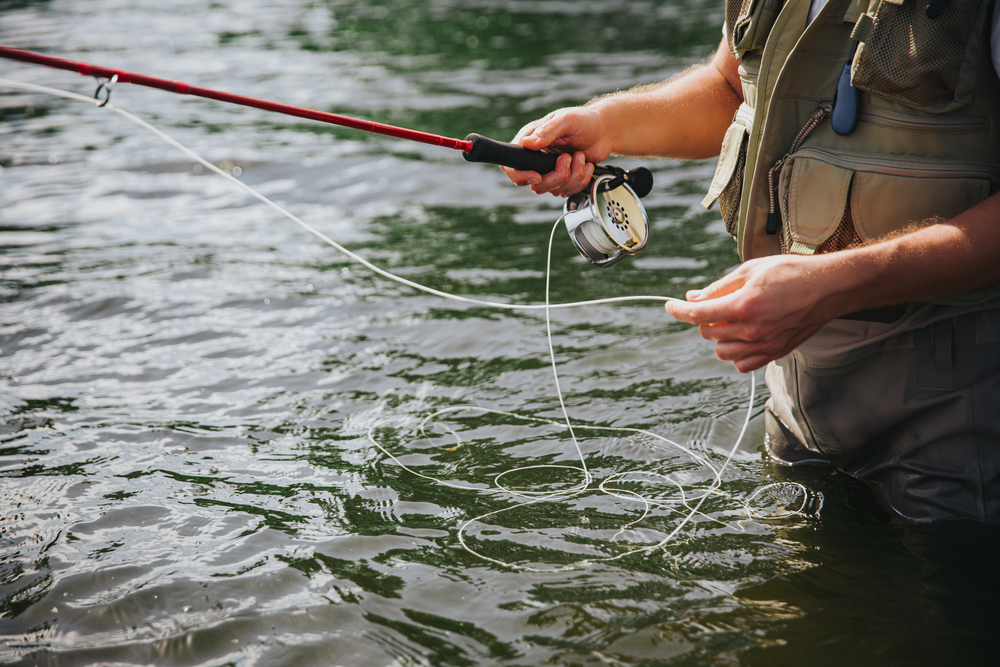
Wading is often the most effective way to fish stream and river bass. The stealth approach lets you get closer to bass than boat access allows.
How to Wade Safely
Wear appropriate footwear. Wading boots with felt or rubber soles depending on state regulations regarding felt sole restrictions. Bring a wading staff for stability on rocky bottoms. Wade upstream rather than downstream so disturbed sediment flows away from your fishing water. Never wade water that pushes above your knees in significant current.
Read the water before you step. Deep holes, current changes, and slippery rocks all cause wading incidents. Slow deliberate movement beats confident fast movement every time.
What to Wear and Carry
A compact tackle bag with a limited bait selection. Wading boots or shoes. Quick-dry pants or wading pants. A hat and polarized sunglasses. A phone in a waterproof case. Water and food if the trip is longer than 2 hours.
Do not bring the reservoir tackle box. A small selection of tubes, Ned rigs, swimbaits, and small topwater covers most stream fishing situations. Rotate baits based on what you observe on the water rather than bringing everything.
Reading Water From the Wade Angler's Perspective
Wading puts you at eye level with the water surface. You see current breaks, seams, and structure clearly from that position. Walk stretches slowly, identifying targets, and fish each target methodically before moving to the next.
Wade to the correct casting position for each target. Do not cast from where you happen to be standing. The extra effort of repositioning produces significantly more fish over the course of the day.
The Stealth Advantage Over Boat Access
Kayaks and boats cannot access many productive stream stretches. Even where they can, the motor noise, hull slap, and shadow from a boat spook stream bass in shallow water. Wading eliminates these disturbances.
The best stream fishing often happens in stretches boats cannot reach. Waders access those stretches and often outfish boat anglers on the same water.
Angler-Type Breakdown
Bank Anglers
Streams and small rivers are the great equalizer for bank-only anglers. Reservoirs favor boats. Streams and rivers are accessible from shore with equal or better productivity than boat access.
Bank anglers who add stream fishing to their rotation gain access to productive water that was previously out of reach. Local streams within a half hour of most reservoir anglers are underutilized fisheries.
Kayak Anglers
Perfect equipment match for river fishing. Kayaks navigate stream and river water that boats cannot access. They provide stealth reservoir kayaks match. They offer mobility that wade anglers cannot match.
Kayak river fishing is one of the fastest-growing segments of bass fishing for good reasons. If you own a kayak and have been fishing reservoirs only, add river trips to your rotation.
Wade Anglers
Dedicated technique that deserves its own attention. Wade fishing is the most productive stream fishing approach for anglers willing to invest in the gear and technique.
Start with a smaller familiar stream close to home. Learn to read water at wader level. Develop the stealth movement that produces consistent bites. The skills transfer across every stream and river you fish for the rest of your life.
Boat Anglers
Larger rivers accommodate boats. Bass boats with shallow-water capability work on the Susquehanna, Delaware, Ohio, and other larger river systems. Jet-drive boats reach shallow stretches conventional outboards cannot navigate.
Smaller rivers require different craft. Aluminum jon boats, canoes, and rafts all fit specific river types. Match your craft to the water rather than trying to force a bass boat into water it was not designed for.
BEFORE YOU HIT THE WATER
Frequently Asked Questions - Common Questions About Stream and River Bass Fishing
Do bass live in streams and rivers?
Yes. Largemouth bass live in slower stream and river sections and backwater pools. Smallmouth bass thrive in moving water and dominate most stream and river bass fisheries across the northern range. Spotted bass appear in southern river systems. Almost every stream and river with adequate depth, clarity, and structure holds bass.
Why do bass in streams and rivers keep biting when reservoir bass shut down?
Current maintains cooler water temperatures and higher dissolved oxygen levels than standing water during peak summer heat. Bass in current-influenced water can feed through midday when reservoir bass have shut down due to heat and low oxygen. Streams and rivers also concentrate forage in specific holding water, which makes feeding more efficient for bass.
When is fall stream bass fishing best?
September through late October produces peak fall stream and river bass fishing across most of the United States. Cool air temperatures drop water temperatures into optimal ranges while current keeps oxygen levels high. River bass feed aggressively through fall in ways that continue past the point where reservoir fishing becomes inconsistent due to turnover and shad migration.
What is the best bait for stream and river bass fishing?
Tube baits are the classic river smallmouth bait and produce reliably. Small swimbaits like the Keitech Swing Impact 2.8 or 3.3 match the baitfish sizes bass eat in current. Ned rigs work exceptionally well for both largemouth and smallmouth in stream water. Small topwater like the Rebel Pop-R produces during low light windows and during fall feeding activity.
How do I find productive stream and river bass fishing water?
Look for streams with adequate depth (typically 3 feet minimum for holding water), reasonable water clarity, meaningful current with defined structure, and rocky or wooded cover. Search Google Maps for streams and small rivers within an hour of your home. State fisheries department websites often list stocked and native bass fisheries. Local kayak shops and fly fishing shops are excellent sources of local intelligence.
What tackle should I use for stream and river bass?
Lighter tackle than reservoir fishing. Medium-light spinning rods in the 6'6 to 7 foot range. Fluorocarbon line in 6 to 10 pound test. Smaller hooks and baits than reservoir setups. A compact tackle bag with a limited bait selection is more practical than a full tackle box when wading or fishing from a kayak.
Can I wade for stream bass?
Yes. Wading is often the most effective way to fish stream bass because it allows quiet approaches to holding water that boat anglers cannot access. Wear appropriate footwear (wading boots with felt or rubber soles depending on regulations), carry a compact tackle setup, wade upstream, and cast to specific holding water rather than blindly.
Where are the best stream and river bass fisheries in the United States?
The Susquehanna and Delaware in the Mid-Atlantic. The Chattahoochee and Suwannee in the Southeast. The Guadalupe and Devils in the Southwest. The Buffalo and Current in the Ozarks. The John Day and Columbia tributaries in the Pacific Northwest. Great Lakes tributaries in the Upper Midwest. See the regional section for waters in your area.
Do stream bass get as big as reservoir bass?
Generally no. Stream and river bass average smaller than reservoir bass because the water body cannot support the same population density or maximum sizes. Exceptions exist in larger rivers with significant deep pool structure. The tradeoff is more consistent action during peak summer heat and continuous fall fishing when reservoir bass are hard to catch.
When should I fish streams and rivers instead of reservoirs?
When your reservoir surface temperatures exceed 85 degrees during summer heat, or when your reservoir is in the middle of fall turnover chaos that scatters bass. Streams and rivers produce more consistent action during both situations. Weekend anglers who cannot commit to dawn-only trips during summer or who want to skip the turnover disruption during fall benefit especially from the stream and river option.
Do stream bass keep biting during fall?
Yes, often more aggressively than during summer. Cooling water temperatures in September and October push river bass into sustained feeding activity. Unlike reservoirs, streams and rivers do not experience thermal turnover the same way, which means bass hold on predictable structure through the fall transition. Many river systems produce peak or near-peak bass fishing during September and October.
Use the Bass Forecast App and Web App
Streams and small rivers produce best when reservoir bass fishing gets tough. Bass Forecast tracks water temperature and conditions for both your home reservoir and nearby stream and river fisheries. On the days when your reservoir is unlikely to produce, get the forecast for your backup water and skip the wasted trip.
Bass Forecast also recommends baits from 22 categories based on your current water conditions, including the finesse categories that dominate stream and river bass fishing.
Download Bass Forecast to plan smarter trips across every water type in your region.


-1739275914.jpg)
.jpg)
.jpg)
.png)
.png)