November Bass Fishing: The 3-Week Window Nobody Fishes
Please share this article with every angler you know!
November Bass Fishing:
The 3-Week Window Nobody Fishes
Walk down to any public boat ramp in the central or eastern United States on Saturday morning. Count the trucks. Then compare to what you'd see in May.
You will see a fraction. Maybe a quarter. On some lakes, a tenth.
Deer rifle season just opened across most of the Midwest and the South. Minnesota and Arkansas opened Saturday November 7. Kentucky and Missouri open this coming Saturday. Michigan opens the 15th, Wisconsin the 21st, Pennsylvania the 28th, Ohio the 30th. For the next three weeks, hundreds of thousands of anglers who normally fish every weekend will be sitting in tree stands instead.
The bass don't know that. They just know the water is quieter, the pressure dropped overnight, and nobody has been slinging lures at them for days. Combine that with the pre-winter feeding push bass are already in, and you have the rarest combination in fishing: hungry fish that haven't seen tackle in a week.
This is the most underrated window of the entire year. It's also the shortest. Three weeks, maybe four, and it closes the day after Thanksgiving when the deer tags are filled and the boats come back out for one last weekend before winter.
Here is how to fish it.
Sign up to know the Bass Fishing Playbook every week
Know the Bass Fishing Playbook Every Week
Why Empty Lakes Fish Differently
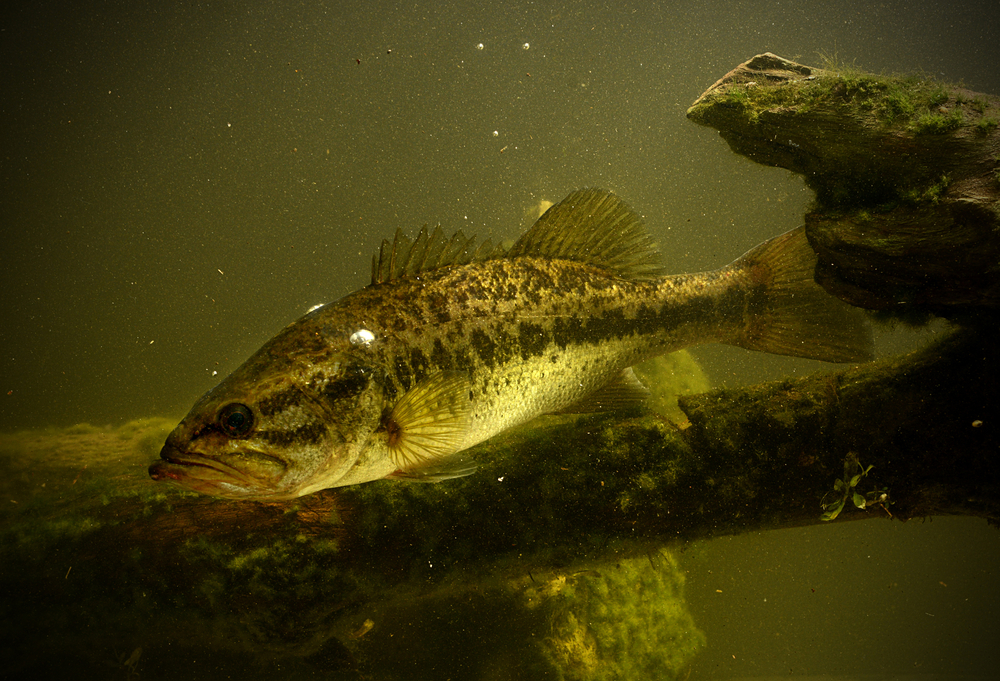
Fishing pressure matters more than most anglers want to admit. Bass are not goldfish. They learn. They see lures day after day, get stung by hooks, watch other bass get caught, and by late spring on any pressured public water they are measurably harder to catch than they were two months earlier.
This is not folklore. It's been documented by tournament pros for decades. Bassmaster Elite angler Tommy Biffle has gone on record describing deer-season weekends as the days when "everybody's deer hunting, and nobody's fishing," and the lakes go "virtually empty." Mike Iaconelli has said the November drop in pressure is one of the reasons he keeps a rod in the truck through hunting season. Matt Herren has pointed to the same pattern on Lake Champlain, where he says the fall bite becomes "dynamite" specifically because of reduced angling pressure. Kentucky Department of Fish and Wildlife has published guidance telling anglers that November is "overlooked and highly productive" on smaller state lakes precisely because deer hunters abandon them for the woods.
The takeaway isn't that bass become stupid during deer season. It's that bass that have been pressured heavily by boat traffic, tournament fishing, and recreational anglers for eight months suddenly get a week or two of quiet water. Their behavior shifts. The ones that had been hiding in cover come out. The ones that had been refusing fast-moving baits start reacting to them again. The ones holding on offshore structure get bolder about committing to a lure.
It takes about seven to ten days of light pressure before the shift becomes obvious. We're hitting that window now, and we're staying in it through Thanksgiving.
Search your body of water to get bass fishing intel
Why They're Also Hungry
The pressure drop would be useful on its own. Combined with what November does to bass metabolism, it becomes something bigger.
Bass are cold-blooded. Their body temperature matches the water around them, and their metabolism rises and falls with it. In August when water temperatures are in the mid 80s, bass metabolism runs hot and they feed in short compressed windows because digestion happens fast. In February when water hits 40, metabolism crashes and bass can go days between serious feeds.
November sits in the sweet spot. Water temperatures across most of the country are in the mid 50s to low 60s. Bass metabolism is still high enough to drive aggressive feeding, but the water is cold enough that food takes longer to digest. The result is bass that need to eat often AND can process bigger meals. They're not picking at small baits. They're hunting shad.
On top of that, bass know what's coming. Shortening days and dropping water temperatures trigger a pre-winter feeding push. The fish are literally building fat reserves for the lean months ahead. A bass that catches a half-pound shad in November is earning two weeks of winter survival, and they behave accordingly.
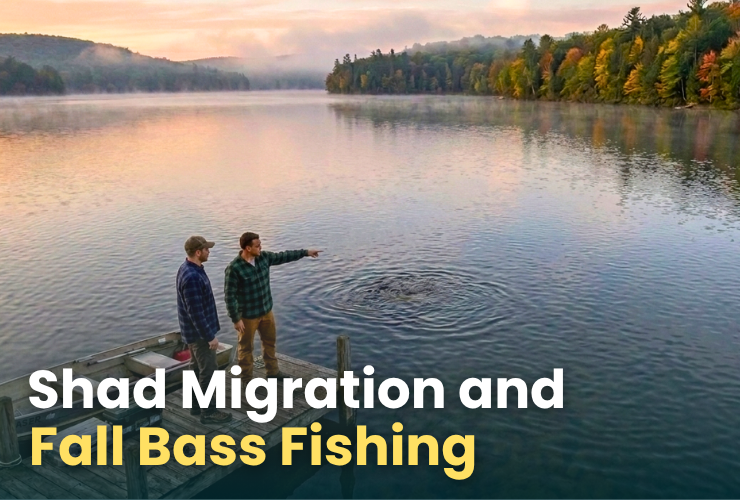
The shad are helping. Threadfin and gizzard shad migrate out of main lake into creek arms and pockets through October and November, which concentrates bait AND concentrates bass. Shad schools in the back of a creek with bass busting underneath is one of the most visible fish-finding opportunities of the entire year. You can see it from 100 yards away on a calm morning.
The one wrinkle: this isn't every day. The bite during this window is on strong, productive days and completely off on the days when a cold front has just passed and the pressure is still falling. November bass eat hard when conditions align and shut down when they don't. The anglers who do well in November are the ones who watch the conditions and pick their days. The anglers who show up because "it's Saturday" catch very little.
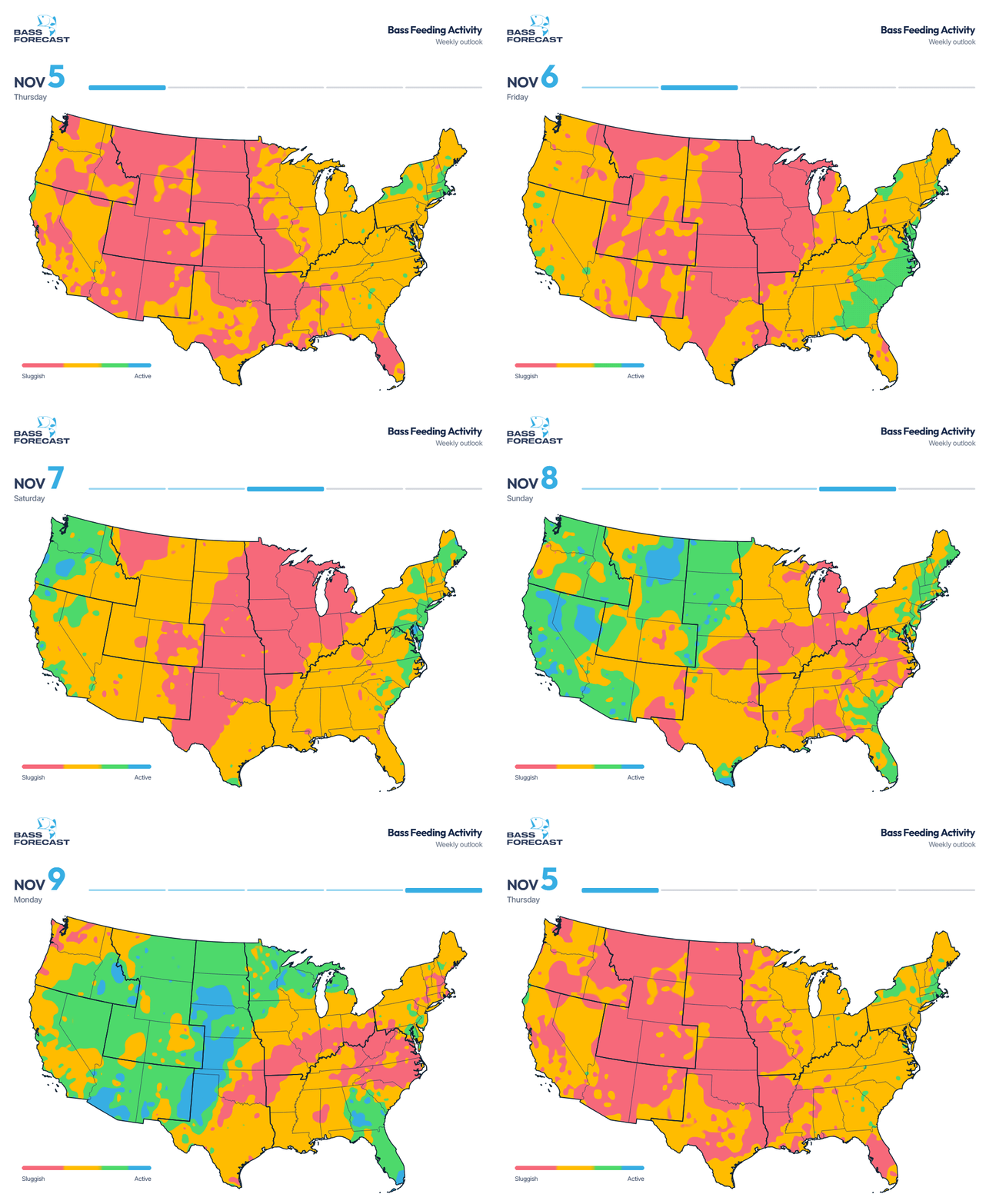
This is where checking the app actually changes outcomes. The three-week deer-season window contains maybe six to eight genuinely good fishing days scattered across it. The other days are tough or flat. Opening the Bass Forecast app each morning and seeing the Bass Forecast Rating for your water is the difference between burning a Saturday on a dead lake and burning it on a lake where the bass are stacked and feeding. Over a three-week window with that few good days in it, that difference is enormous.
Where the Bass Are Right Now
November bass position differently than they did in October. The transition is driven by water temperature and shad movement, and the pattern varies by region, but the overall framework is consistent across most of the country.
Creek mouths and major cove entrances. As shad pull out of the main lake and into the backs of creeks, bass stage at the transitions. The mouth of a major creek arm where main lake current meets cove water is one of the most productive zones of the season. Bass sit on the first break line out from the creek mouth and ambush shad moving in and out.
Secondary points inside creeks. Once bait moves into the creek arm proper, bass follow and set up on the first secondary point inside the creek. These spots get fished less than main lake points because they require navigating the creek, which pleasure boat traffic normally interferes with. In November with deer hunters off the water, these secondary points go quiet and the bass that use them get easier to catch.
Shallow flats adjacent to deep water. Classic late-fall structure. Bass move up onto shallow flats in the afternoon as the sun warms the shallows, feed, and retreat to adjacent deep water as light fades. The flat doesn't have to be deep structure; two to six feet of water with a defined channel edge within 50 yards works everywhere.
Grass edges and remaining vegetation. Grass lines are still holding bass in November across the South and Mid-South. North Carolina guide service operators have specifically noted that grass-line fishing stays productive through November because the grass retains baitfish while the open water starts to feel sterile.
Rocky points and bluff ends on highland reservoirs. For Tennessee, Kentucky, Arkansas, and Missouri highland reservoir anglers, the transition period moves bass onto main-lake rocky points and the ends of bluff walls. Smallmouth especially stack on these spots as water cools into the upper 50s.
Your water will have its own version of these. The challenge for most anglers is not knowing the structure; it's knowing which type of structure is holding fish THIS WEEK on YOUR water, because the pattern shifts as water temperature drops. A spot that was loaded with bass last Saturday may be empty this Saturday because the water dropped another five degrees and the bass moved deeper.
The only way to stay ahead of that shift is to check conditions and recent reports before every trip. Bass Forecast surfaces water temperature trends and the daily Bass Forecast Rating for your specific location, which lets you see if the pattern is still holding or if it's already shifted. Anglers who open the app once a week in November miss the shifts between trips. Anglers who open it daily catch them as they happen.
What to Throw
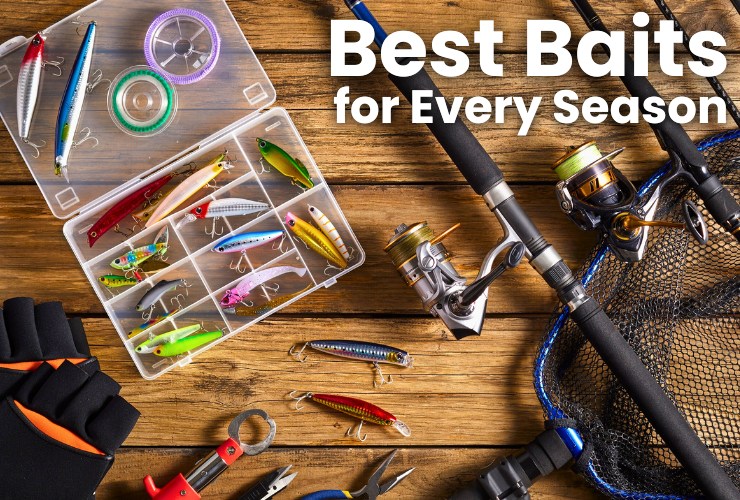
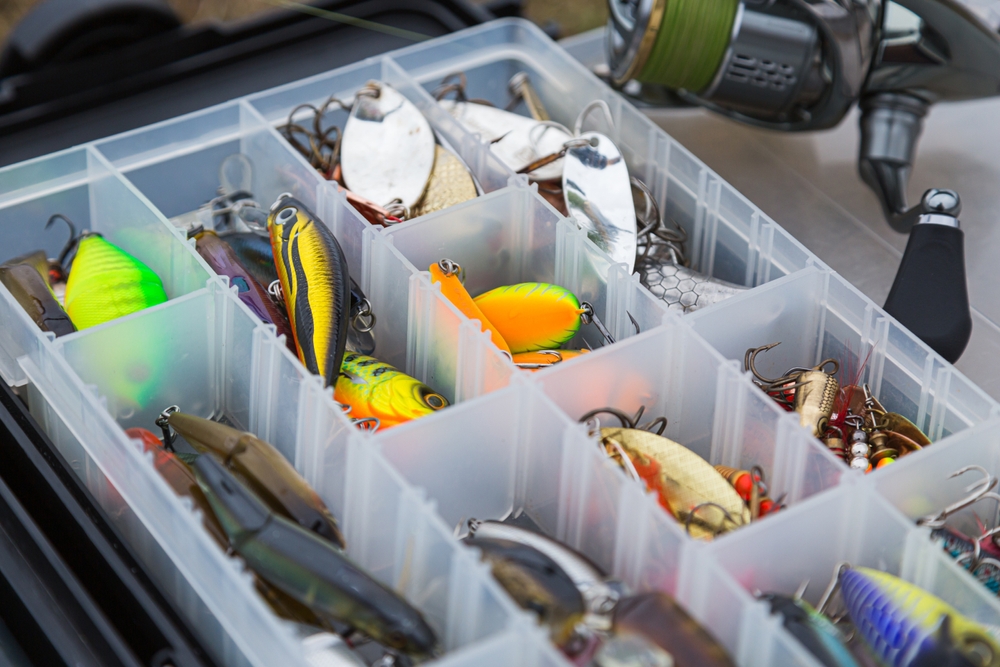
November bass want baits that match the shad they're eating and cover enough water to find scattered fish. Keep the tackle box simple. Four categories handle almost every situation.
Lipless crankbaits. The most-cited November bait across every pro quote and every regional publication. The Strike King Red Eye Shad and the Bill Lewis Rat-L-Trap in chrome, blue chrome, and red-shad patterns imitate the gizzard and threadfin shad bass are chasing. Fish them on a steady medium retrieve across flats and along grass edges. Let them tick the bottom on deeper structure.
Medium-diving crankbaits. Shad-pattern squarebills and 1.5-sized crankbaits work shallow flats and the first drop. Deeper-diving crankbaits like the Strike King 5XD or 6XD work main lake points when fish push out to 10 to 15 feet.
Spinnerbaits and ChatterBaits. Double willow blades in shad patterns worked slow around grass edges and cover. In stained water and overcast conditions, bump up to a Colorado blade combo for more thump.
Soft plastics for bass that won't commit. A Texas-rigged plastic worm, a wacky-rigged Yamamoto Senko, or a jig and craw trailer for bass holding tight to cover and refusing moving baits. Natural colors (green pumpkin, junebug, black-blue) work best. Fish them slow and let them sit.
What to leave in the box: topwater through most of the day (short early and late windows only), finesse baits designed for clear summer water, and anything flashy that doesn't resemble a shad.
The Honest Day-Picking Framework
Not every day in November is a fishing day. The three-week window contains a mix of fire-hot bite days, dead days following cold fronts, and transition days that could go either way. The anglers who catch fish in November are the ones who pick correctly.
The signals that make a November day productive:
Water temperature stable or slightly warming from the day before. A warming trend after a cold front, especially on day two or three of post-frontal recovery, is prime.
Barometric pressure stable or falling. Rising barometer after a cold front crushes the November bite. Falling or stable pressure gets bass feeding.
Overcast or partly cloudy, light wind. Bluebird skies with high pressure after a cold front are the worst November days. Overcast with a light to moderate breeze is ideal.
Afternoon over morning. November mornings can be too cold for active feeding. The afternoon bite when shallow water has warmed by a few degrees is often the better window.
Signals that tell you to skip the day or fish a different spot:
Day one after a cold front with high pressure and bluebird sky
Water temperature dropping fast from the day before
Dead-calm, high-pressure conditions
Pre-frontal windows with falling pressure that have already turned into rising-pressure post-frontal conditions
Picking the day correctly matters more in November than in almost any other month. Spring anglers can show up on random days and still catch fish because bass are aggressive across a wider range of conditions. November bass are more selective. Fish a bad day and you'll catch nothing. Fish a good day and you'll catch more than you did in summer.
The practical move: open the Bass Forecast app at the start of the week, look at the 10-day forecast rating for your water, and plan your fishing days around the best two or three ratings in the window. Bass Forecast PRO shows the full 10-day forecast, which is the planning tool that matters most during this specific season because it lets you see the next prime day coming before the weather cycle changes.
What Happens After Thanksgiving
The window closes the day after Thanksgiving.
Hunters tag out, hunters get tired, hunters go back to work. The weather gets consistently colder. Water temperatures drop into the low 50s and 40s. Bass metabolism slows meaningfully. The pre-winter feed shifts from aggressive reaction bites to a slower, deeper, winter pattern.
Fishing is still good in December in much of the country, but it's a different kind of good. Slower. More deliberate. More finesse-oriented. The specific combination of empty lakes AND aggressive feeding that defines November disappears, and the empty lakes become merely empty.
Which is why the next three weeks matter. If you have a free weekend between now and Thanksgiving, spend it on the water. If you have two, even better. If deer season doesn't pull you out of bass fishing, this is the window when the water finally pulls back from the people who've been pressuring it all year, and the bass respond.
Check conditions. Pick your day. Go fish.
THE WINDOW THAT CLOSES AT THANKSGIVING
Common Questions About November Bass Fishing (FAQ's)
Is November a good time to bass fish?
November is one of the most underrated bass fishing windows of the year. Water temperatures in the mid 50s to low 60s have bass feeding aggressively ahead of winter, and the start of deer rifle season pulls hundreds of thousands of anglers off the water across the Midwest, Mid-South, and Southeast. The combination of hungry fish and reduced angling pressure produces some of the best fishing of the year, especially on smaller lakes and public waters that normally see heavy pressure.
Why do bass bite better during deer season?
Two factors stack up. First, fishing pressure drops dramatically as anglers switch from fishing to hunting, which means bass see fewer lures and recover from months of pressure. Second, November water temperatures trigger a pre-winter feeding push where bass build fat reserves for the lean winter ahead. Together, these create a window of unpressured, hungry bass that respond aggressively to properly presented baits.
What is the best time of day to bass fish in November?
Afternoon is often the best window in November. Morning water is cold after an overnight temperature drop, and bass metabolism needs the shallows to warm up before they get active. Early afternoon through late afternoon, when sunlight has warmed shallow flats by a few degrees, is prime. On overcast warming-trend days, the bite can extend across the whole day.
Where do bass go in November?
November bass position around shad migration patterns. Look for them at creek mouths and major cove entrances where main lake water meets creek water, on secondary points inside creek arms, on shallow flats adjacent to deep water, along remaining grass edges, and on rocky main-lake points for smallmouth on highland reservoirs. The specific spot shifts as water temperature drops, so patterns that worked last weekend may not work this weekend.
What baits work best for November bass?
Shad-imitating baits that cover water are the core of November tackle. Lipless crankbaits, medium-diving and squarebill crankbaits in shad patterns, spinnerbaits and ChatterBaits with double willow blades, and Texas-rigged or wacky-rigged soft plastics for bass holding tight to cover. Keep natural colors for the plastics and chrome or shad patterns for the moving baits.
Why is fishing pressure lower in November?
Deer rifle season opens across most of the central and eastern United States between early November and early December. Millions of multi-sport outdoorsmen switch from fishing to hunting for the duration of rifle season, which runs roughly 2-4 weeks depending on the state. Lakes that normally see 50-100 trucks at the ramp on a Saturday morning in May may see 5-15 during deer season. Recreational boat traffic also drops as cold weather arrives, further reducing noise and disturbance on the water.
How cold does water temperature need to be before bass stop biting in November?
Bass stay actively feeding into the upper 40s on most waters, with the most aggressive November bite typically occurring between 55 and 62 degrees. Below the low 50s, feeding windows compress and anglers need to slow presentations significantly. By the time water drops into the low 40s in late November or December, bass shift into winter patterns that require entirely different tactics.
Do I need a boat to catch bass in November?
No. November is one of the best bank-fishing months of the year because bass pull into shallow pockets and shoreline cover as they follow shad migration. Smaller lakes and pond fishing from the bank can be exceptionally productive, and the pressure drop from deer season means bank spots that were crowded in summer are often empty. Focus on windblown shores, creek mouths with shoreline access, and any shallow cover near deep water.
What should I do if there's a cold front during my November fishing trip?
Cold fronts in November hit bass harder than cold fronts in September because water temperatures are already dropping and bass are more sensitive to additional cooling. The day of and day after a November cold front are often dead. Day two or three of post-frontal recovery, when water stabilizes and begins warming slightly, is often the most productive day of the week. If you can shift your fishing day based on the forecast, aim for the warming trend after a front rather than the front itself.
Should I fish mornings or afternoons in November?
Afternoons are generally more productive in November than mornings. Overnight temperatures drop shallow water into the low 50s or below, and bass metabolism doesn't fire up until the sun warms the shallows. By early to mid afternoon, shallow flats can be several degrees warmer than morning readings, which is enough to trigger active feeding. The exception is overcast warming-trend days when the bite can extend all day.
How do I know when conditions are right for a November fishing trip?
The combination that produces the best November fishing is stable or warming water temperature, stable or slightly falling barometric pressure, overcast or partly cloudy skies, and a light to moderate breeze. The combination that kills the bite is day-one post-frontal conditions with bluebird sky, high pressure, and dropping water temperature. Bass Forecast combines these signals into the daily Bass Forecast Rating for your location, which lets you see at a glance which days in the next week will produce. During the deer season window when good fishing days are scarce, picking the right day matters more than any bait choice.
Get the 10-Day Bass Forecast for Your Water
The three-week deer season window is already running. The best days inside it are the ones where water temperature, barometric pressure, and solunar timing line up, and those days do not announce themselves. You have to check for them.
Bass Forecast puts the next 10 days of fishing intelligence for your exact location in one place. Water temperature trends. Barometric pressure shifts. The daily Bass Forecast Rating that tells you which days in the next week are worth your time and which days to stay home. 22 bait types matched to live conditions. GPS-specific solunar feeding windows accurate to the minute.
Free to download. Today and tomorrow's forecast free forever on the free tier. Bass Forecast PRO unlocks the full 10-day forecast and every bait recommendation every day, which is the version you want for this specific window because you need to see past the next cold front to plan the next trip.
Plus Bass Forecast PRO comes with the Partner Perks bundle: $20 Tackle Warehouse gift card, $25 Omnia Fishing gift card, free Bass University membership, free Mystery Tackle Box, and discounts at MTN OPS, Grundens, and Hobie Eyewear. The perks pay for the subscription on day one.
Download Bass Forecast for iPhone or Android →
Or use the web app at my.bassforecast.com →
Three weeks. Empty lakes. Hungry bass. Open the app, see what tomorrow looks like on your water, and go.