Fall Glide Bait Fishing for Big Bass: The Complete Playbook
Share this article with every angler you know!
Fall Glide Bait Fishing for Big Bass: The Complete Playbook
Most anglers never throw a glide bait.
The handful who do catch some of the biggest bass of the year.
Fall is the window when that math gets even more lopsided. Water temperatures drop into the range where big bass hunt bigger prey. The fall shad migration pushes mature shad into predictable staging areas and lets them grow to their largest profile of the year, which is exactly the profile glide baits imitate. Clear water conditions return after turnover on most reservoirs. Trophy season aligns with trophy technique.
If you have been curious about glide baits but hesitant to commit, the next 6 to 8 weeks are the window to start.
This article is honest about what glide bait fishing actually is. It is not numbers fishing. It is trophy fishing. You will catch fewer bass with a glide bait than with a jig or a worm. You will also catch the biggest bass of your year if you commit to the technique. If you want to catch 20 fish Saturday, skip this article. If you want to catch one giant, keep reading.
What follows covers what glide baits are, which specific baits produce, how to actually fish them, the tackle setup that makes them effective, and what to expect when you put one on your line.
Sign up to be notified of new bass fishing articles!
Get the Bass Fishing Playbook Every Week
What Is a Glide Bait?
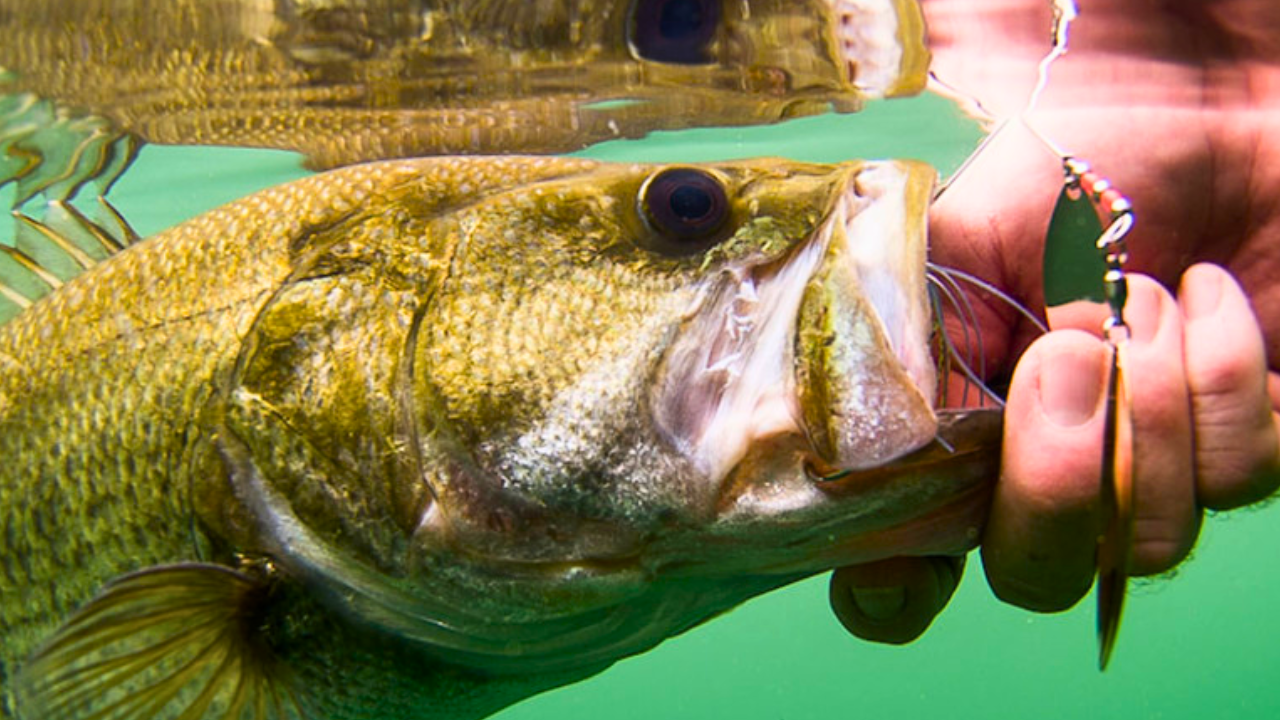
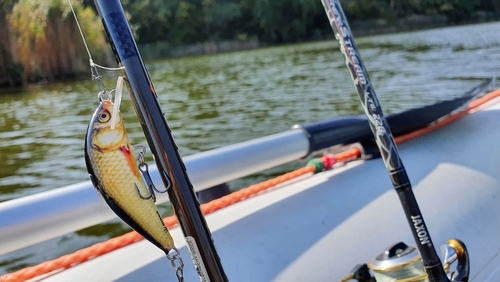
A glide bait is a hard-bodied swimbait designed to swim with a side-to-side motion when retrieved. Within the broader swimbait category, glide baits are the specific sub-type that "glides" through the water in long sweeping arcs rather than swimming straight ahead like a crankbait or wobbling like a lipless. The bait's distinctive side-to-side action is why dedicated anglers treat them as their own discipline rather than lumping them in with paddle tails or jointed swimbaits.
Most glide baits measure 5 to 10 inches. Some fish single-piece construction with weighted bodies that create the glide action. Others use jointed construction with a central hinge that produces similar movement. Both styles produce.
The visual target is larger forage. Gizzard shad in the 5 to 10 inch range. Mature bluegill. Juvenile trout in waters that hold them. Any forage species large enough to interest a trophy-class bass.
Why bass eat them: the profile matches the big meal bass hunt in fall. The action triggers predation response from fish conditioned to chase larger prey. The size filters out small fish and attracts only the bass large enough to attempt a serious meal.
Glide baits are visual baits. Bass see them, follow them, and commit to them. This is why water clarity matters so much for the technique.
Why Fall Is Prime Glide Bait Season
Four conditions align in fall that make glide bait fishing more productive than any other season.
Big bass are feeding on larger profile forage. Fall is the pre-winter feeding window when bass build reserves for the cold months ahead. Larger bass target larger prey because the calorie return per effort is higher. Glide baits match that feeding behavior directly.
Water clarity typically improves. Fall turnover disrupts clarity temporarily but settles into some of the clearest water conditions of the year by mid to late October. Clear water allows bass to see glide baits from distance, which is critical for a technique that relies on visual trigger.
Suspended bass become reachable. Summer thermocline conditions push many big bass to specific depth bands where they suspend over structure. Fall mixing eliminates the thermocline and allows bass to position at depths where glide baits worked through the mid-water column intersect them.
Trophy season timing aligns with trophy technique. Fall produces more trophy bass catches than any other time of year across most of the country. Glide baits are built to catch exactly those fish, which puts them in the same big-bass fall category as the umbrella rig, another large-profile presentation that produces during this same seasonal window.
The Best Glide Baits for Bass
Trophy Specialists
The Deps Slide Swimmer 175 is the gold standard among serious glide bait anglers. The size covers most trophy applications and the action has produced more giant bass than any other glide bait on the market.
The Deps Slide Swimmer 250 is the magnum version for the biggest waters and the biggest fish. 5 ounces of slow-sinking profile designed specifically for giants.
Proven Workhorses
The River2Sea S-Waver is one of the most proven glide baits on the market. Available in multiple sizes (120, 168, 200). The S-Waver has caught enormous bass across every region and remains a reliable producer with a long track record. Start here if you are testing the technique.
The SPRO KGB Chad Shad 180 is American-made with proven productivity. One of the most consistent producers in the category.
The Gan Craft Jointed Claw 178 provides premium Japanese jointed construction with proven action.
Soft Body Options
The Berkley PowerBait Nessie Soft Glide Bait is a widely available soft body glide bait with proven color patterns for shad and bluegill matching.
The Molix Glide Bait 178 Slow Sinking uses a durable resin material with 3D fins and UV coating that holds up to repeated use.
Tackle Setup for Glide Bait Fishing
Right tackle is not optional. Light tackle kills the bait's action and loses fish.
Rod. A 7 foot 6 inch to 8 foot heavy or extra heavy swimbait rod handles glide baits properly. The length provides casting leverage. The power drives hooks into bone and controls big fish. The Shimano SLX A Swimbait Rod is a dependable choice. The Phenix M1 Swimbait Rod steps up to a solid one-piece blank with 36-ton Toray graphite for serious glide bait applications.
Reel. Low-gear baitcaster in 300 size or larger. Gear ratios between 5.1:1 and 6.3:1 give you the power to work heavy baits all day. The Shimano Tranx 300 B is the standard choice for serious glide bait anglers.
Line. 20 to 25 pound fluorocarbon is the standard choice. Fluorocarbon disappears in clear water (which matters for a visual bait) and has the sink rate that lets glide baits swim at natural depths. Alternative: 65 to 80 pound braid with a 20 to 25 pound fluorocarbon leader when you want longer casting distance or you are fishing heavy cover.
Hooks. Factory treble hooks on most glide baits are adequate but not optimal. Upgrade to premium Owner or Gamakatsu treble hooks for big fish insurance. Upgraded hooks are easy insurance against losing a 10-pound bass on a bent factory hook.
How to Fish a Glide Bait
Multiple techniques produce depending on conditions and fish behavior. Learn all of them. Switch between them until you find what the fish want on a given day.
Steady retrieve. The baseline presentation. Cast beyond your target, let the bait sink to the depth you want, and retrieve at moderate speed. Let the bait's built-in action do the work. Use this to cover water and locate active fish.
Walk-the-dog cadence. Twitch the rod tip in a rhythmic pattern during the retrieve. The bait sweeps wider from side to side. More effective on specific structure where you want extended visibility to call fish out of cover.
Burn and kill. Rip the bait with fast retrieve bursts followed by abrupt stops. The sudden speed change triggers reaction strikes from bass that have been following without committing. Peak application when you see follows that are not converting.
Count-down presentation. Cast, count the bait down to a specific depth, then retrieve at that depth. Use this when you have located suspended bass on sonar at a known depth. Match the retrieve depth to the fish depth.
Dead-sticking on pauses. When you see a follow, stop the retrieve completely and let the bait sit. The sudden stop often triggers the strike. Patience here is critical. The bass may stare at a dead bait for several seconds before committing.
Where to Throw Glide Baits in Fall
Water selection matters as much as technique. Glide baits produce on specific water types.
Main lake points with deep water access. Points that extend into deeper water hold trophy bass staging on structure. Cast parallel to the point and work the bait through the strike zone.
Bluff walls and vertical structure. Bass hold vertically on bluff walls, especially where the wall has indentations, laydowns, or breaks. Work the bait along the wall at various depths.
Dock structure with 8 to 15 feet of water underneath. Not every dock. Specifically docks with real depth. Glide baits produce on dock corners and shade lines where bass ambush baitfish.
Grass edges adjacent to deep water. The transition from grass to open water concentrates both shad and bass. Cast glide baits over the grass edge and work them through the drop.
Over schooling bass visible on sonar. When you see shad schools on your electronics with bass below, glide baits produce by matching the profile and depth of the forage.
Known trophy water. Lakes and sections of lakes with documented trophy history produce glide bait strikes more consistently than water that holds mostly smaller fish. Prioritize water with real trophy pedigree.
When Glide Baits Work and When They Do Not
Glide baits are not an every-day technique. Specific conditions dramatically affect productivity.
When they work. Clear to moderately stained water. Water temperatures between 48 and 68 degrees. Overcast or moderate light conditions. Pre-front weather patterns. Falling barometric pressure. Mild wind that puts chop on the surface without being extreme.
When they do not work. Muddy water (visibility too limited for the technique to trigger). Water temperatures below 48 degrees (bass metabolism drops below the aggression threshold). Bluebird sky with dead calm water on pressured fish (bass become too selective to commit). Severe post-front conditions (24 to 48 hours of inactivity following major fronts).
The best glide bait days are overcast fall days with moderate wind, falling or stable pressure, water clarity in the 2 to 6 foot visibility range, and water temperatures in the mid 50s to low 60s. When those conditions align, prioritize glide bait trips over anything else.
Common Mistakes That Kill the Glide Bait Bite
Most anglers who try glide bait fishing fail for predictable reasons.
Wrong tackle. Trying to throw a 3-ounce bait on a medium-heavy bass rod kills the bait's action and your casting accuracy. If you cannot invest in dedicated tackle, do not start with glide baits.
Wrong cadence. Fishing too fast is the most common technique mistake. Big bass need time to see the bait, follow it, decide, and commit. Slow down significantly from your other presentations.
Setting too early. Visual follows do not mean the fish committed. Many giant bass follow glide baits for extended distances before striking or turning away. Setting the hook on visual follows almost always misses the fish.
Not committing enough casts. Glide bait fishing can require 30, 50, or 100 casts before the first bite. Anglers who throw 10 casts and give up never experience the pattern.
Wrong water selection. Fishing glide baits in muddy water, over empty structure, or on numbers-focused water wastes trips. Match the technique to water that holds trophy bass.
Lack of confidence. Confidence is a real factor in glide bait fishing because the technique rewards persistence. Anglers who doubt the bait quit before the pattern develops.
Realistic Expectations
This section separates glide bait fishing from almost every other bass technique.
Few bites, big bites. You will not catch a limit of 2-pound bass on a glide bait. You will catch one 5-pounder, or one 7-pounder, or possibly one 10-pounder if you commit to the technique on the right water.
One giant can define your fall. A single glide bait trip that produces an 8-pound bass has justified every cast you made that did not get bit. The math is not about catch count. It is about peak catches.
Follows are common. Strikes are rare. Seeing a 6-pound bass follow your glide bait and turn away without committing is a normal glide bait experience. The follows are the proof of concept. Converting them is the challenge.
Patience and persistence are mandatory. The anglers who catch big bass on glide baits consistently are the ones who commit to the technique for extended periods. There is no shortcut.
Why trophy anglers commit anyway. The giant bass you catch on a glide bait is often the biggest fish of your year. For trophy-focused anglers, that single fish is worth the hours of casting that preceded it.
US Regional Notes for Bass Anglers
Southeast. Guntersville, Chickamauga, Toledo Bend, Sam Rayburn, Okeechobee, and Kissimmee all in prime glide bait window. Water temperatures dropping into the 60s. Grass still producing cover for trophy bass. Georgia and Alabama reservoirs including Lake Seminole and Lake Martin producing on main lake points and bluff walls.
Southwest. Lake Fork, Sam Rayburn, Toledo Bend, Lake Amistad, and Falcon Lake entering prime window. Beaver Lake and Lake Ouachita in Arkansas producing on offshore structure. The next 4 to 6 weeks produce most Texas and Oklahoma trophy glide bait catches each year.
Mid-South. Tennessee River reservoirs transitioning into peak glide bait window. Chickamauga, Kentucky Lake, Lake Barkley, and Pickwick all producing. Dale Hollow smallmouth responding to glide baits on bluff walls and main lake points.
Mid-Atlantic and Ozarks. Bull Shoals, Table Rock, Beaver Lake, and Lake of the Ozarks producing on main lake structure and bluff banks. Susquehanna, James, and Potomac river systems in peak fall smallmouth window for anglers throwing smaller profile glides.
Great Lakes and Upper Midwest. Lake St. Clair, Lake Erie, and smaller Great Lakes tributaries producing smallmouth on glide baits over main lake points at 10 to 18 feet. Mille Lacs, Lake Minnetonka, and Mississippi River pools producing largemouth in protected bays. Window closing in the next 3 weeks as water drops into the low 50s.
Northeast. Lake Champlain, Lake George, Oneida Lake, and the Finger Lakes (Cayuga, Seneca, Keuka) producing. Candlewood Lake and Quabbin Reservoir in Connecticut and Massachusetts producing on main lake points. Window closes faster than southern waters as temperatures drop into the low 50s.
West and Pacific Northwest. California reservoirs in peak glide bait season. Clear Lake, California Delta, Diamond Valley, Lake Casitas, and San Vicente all producing trophy-class fish on glides. Columbia River system and Lake Washington producing in the Pacific Northwest on cooling water.
Rocky Mountains. Elevation-dependent. Lake Mead, Lake Mohave, Lake Powell, and Elephant Butte producing on lower-elevation reservoirs through late October. Lake Pueblo and Blue Mesa transitioning out of glide bait window as high-elevation water drops below the activity threshold.
BEFORE YOU TIE ON A GLIDE BAIT
Common Questions About Fall Glide Bait Fishing (FAQ's)
What is a glide bait?
A glide bait is a hard-bodied swimbait designed to swim with a side-to-side motion when retrieved. Glide baits typically measure 5 to 10 inches and imitate larger forage like gizzard shad, bluegill, and trout. They produce best for trophy bass fishing because their profile matches the larger prey big bass target.
When is the best time to fish glide baits for bass?
Fall and early winter produce the strongest glide bait fishing on most waters. Water temperatures from the upper 40s through mid 60s align with peak glide bait productivity. Big bass are feeding on larger profile forage to build winter reserves, and glide baits match that feeding pattern.
What is the best glide bait for bass?
The Deps Slide Swimmer 175 and 250 are considered the gold standard among serious glide bait anglers. The River2Sea S-Waver produces similar results at a more accessible price point. For anglers testing the technique, the Berkley PowerBait Nessie offers glide bait action at a lower cost.
How much do glide baits cost?
Glide baits range from around $9 for entry-level options to over $250 for premium Japanese models. The Berkley PowerBait Nessie sits around $9 to $30, the River2Sea S-Waver around $16 to $46, the SPRO KGB Chad Shad 180 around $68, the Gan Craft Jointed Claw 178 around $40 to $79, and the Deps Slide Swimmer 250 around $170.
What rod do you use for glide baits?
A 7 foot 6 inch to 8 foot heavy or extra heavy swimbait rod handles glide baits properly. The rod needs backbone to cast heavy baits and the length to work them effectively. The Shimano SLX A Swimbait Rod is a strong value starting point and the Phenix M1 and Okuma Guide Select "B" are both excellent purpose-built options.
What line do you use for glide bait fishing?
20 to 25 pound fluorocarbon line is the most common choice because it allows the bait to work properly and provides stealth in clear water. Some anglers use 65 to 80 pound braid with a fluorocarbon leader when fishing heavy cover or when they want longer casting distance.
How do you fish a glide bait?
Multiple techniques work depending on conditions. A steady retrieve covers water efficiently. A walk-the-dog cadence targets specific structure. Burn-and-kill retrieves trigger reaction strikes. Count-down presentations reach suspended bass at specific depths. Dead-sticking on pauses triggers follows into committed strikes.
Where do you throw glide baits for bass?
Main lake points with deep water access. Bluff walls and vertical structure. Dock structure with 8 to 15 feet of water underneath. Grass edges adjacent to deep water. Over schooling bass visible on sonar. Known trophy water that holds big bass year-round.
Do glide baits catch big bass?
Yes. Glide baits produce some of the biggest bass caught each year across major fisheries. The technique is specifically designed for trophy fish rather than numbers. Anglers committed to glide bait fishing often catch fewer bass overall but higher average sizes.
Are glide baits worth the money?
For trophy anglers and serious fall bass fishermen, yes. The highest-end glide baits over $150 produce consistently when fished correctly. For anglers testing the technique, mid-range options from $40 to $80 like the SPRO KGB Chad Shad 180 and Gan Craft Jointed Claw 178 perform well enough to establish whether glide bait fishing fits your style before committing to premium baits.
How do you set the hook on a glide bait?
Wait until you feel weight before setting. Many bass follow glide baits and swipe at them without committing. Setting on visual follows often misses the fish. Fish into the strike with a sweeping rod set rather than a vertical hook set to drive the hooks into bone.
Can you fish glide baits in muddy water?
Glide bait fishing produces best in clear to moderately stained water where bass can see the bait from distance. Muddy water significantly reduces glide bait effectiveness because the technique relies on visual trigger. Switch to vibration-based baits like Chatterbaits or lipless crankbaits in muddy conditions.
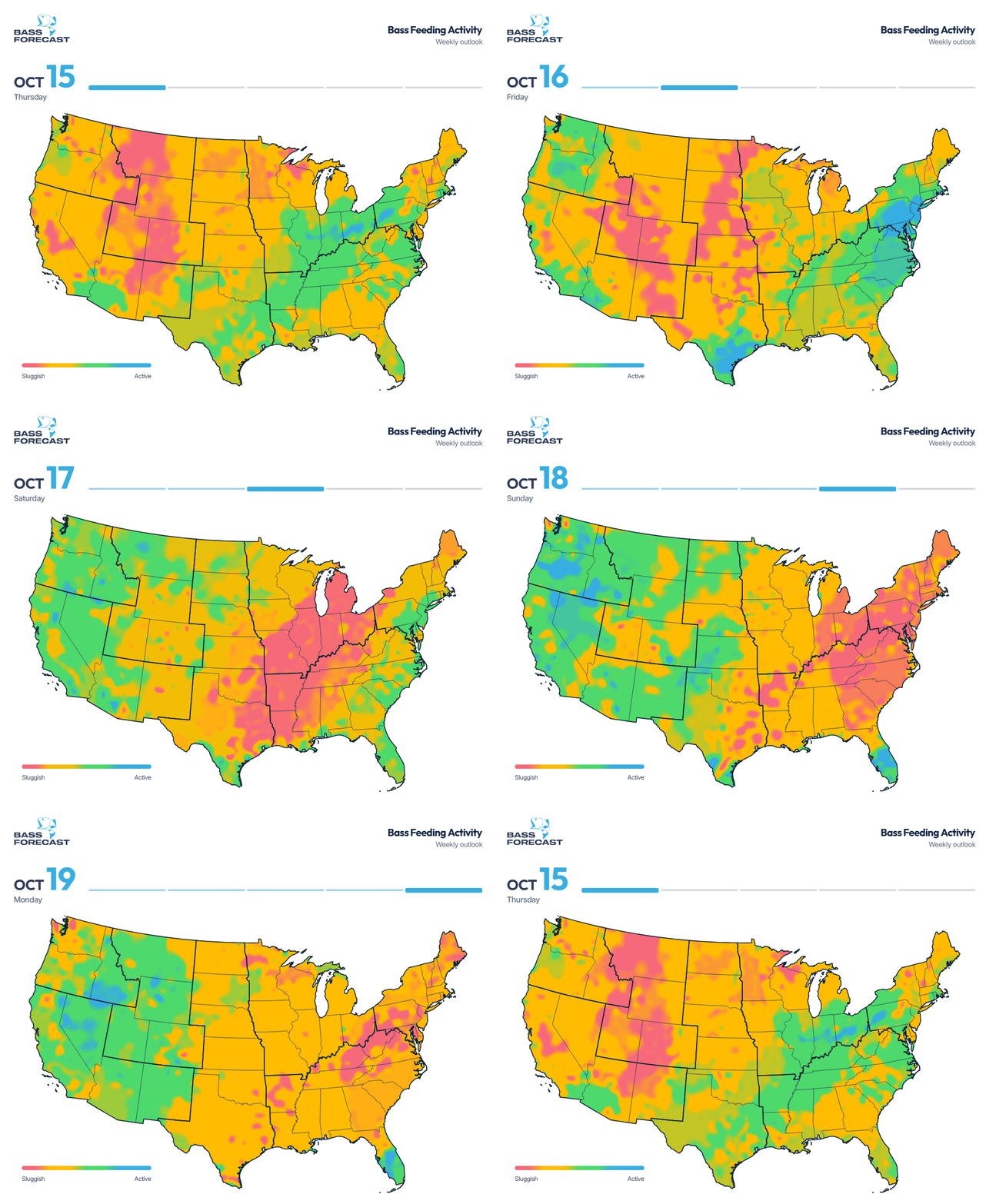
Use the Bass Forecast App and Web App to know the exact baits to throw
Glide bait fishing rewards anglers who read conditions correctly. Bass Forecast tracks water temperature trends, barometric pressure, wind direction, and solunar timing for your exact location. Know when conditions favor large profile reaction baits and when to switch to finesse approaches.
Bass Forecast PRO users see the full 10-day forecast with specific days that favor larger profile baits versus days that favor downsized presentations. Plan trips around the strongest glide bait windows and skip the days that would waste the hours required for the technique.
Download Bass Forecast or use our web app to catch the fall glide bait window on your water.