
Winter Jig Fishing for Bass: Trailers, Weights, and Bottom Contact Secrets
Share this bass fishing article with every angler you know!
Jig fishing is one of the top methods for getting stubborn winter bass, and if you want to test your skills in the coldest weather, you’ll have to master this technique.
A lot more goes into a jig than simply tying it on and letting it sink. You have to consider each part of the jig and your retrieval method to maximize your chances.
The team at Bass Forecast is going to walk you through the winter jig fishing for bass, including the right trailers to use, best weights for different situations, and some tactics that’ll help you exploit the bottom of the lake.
Be notified of new bass fishing articles, tips and tricks!
Bass Forecast Newsletters
Choosing the Right Weight of Jig for Winter Bass Fishing
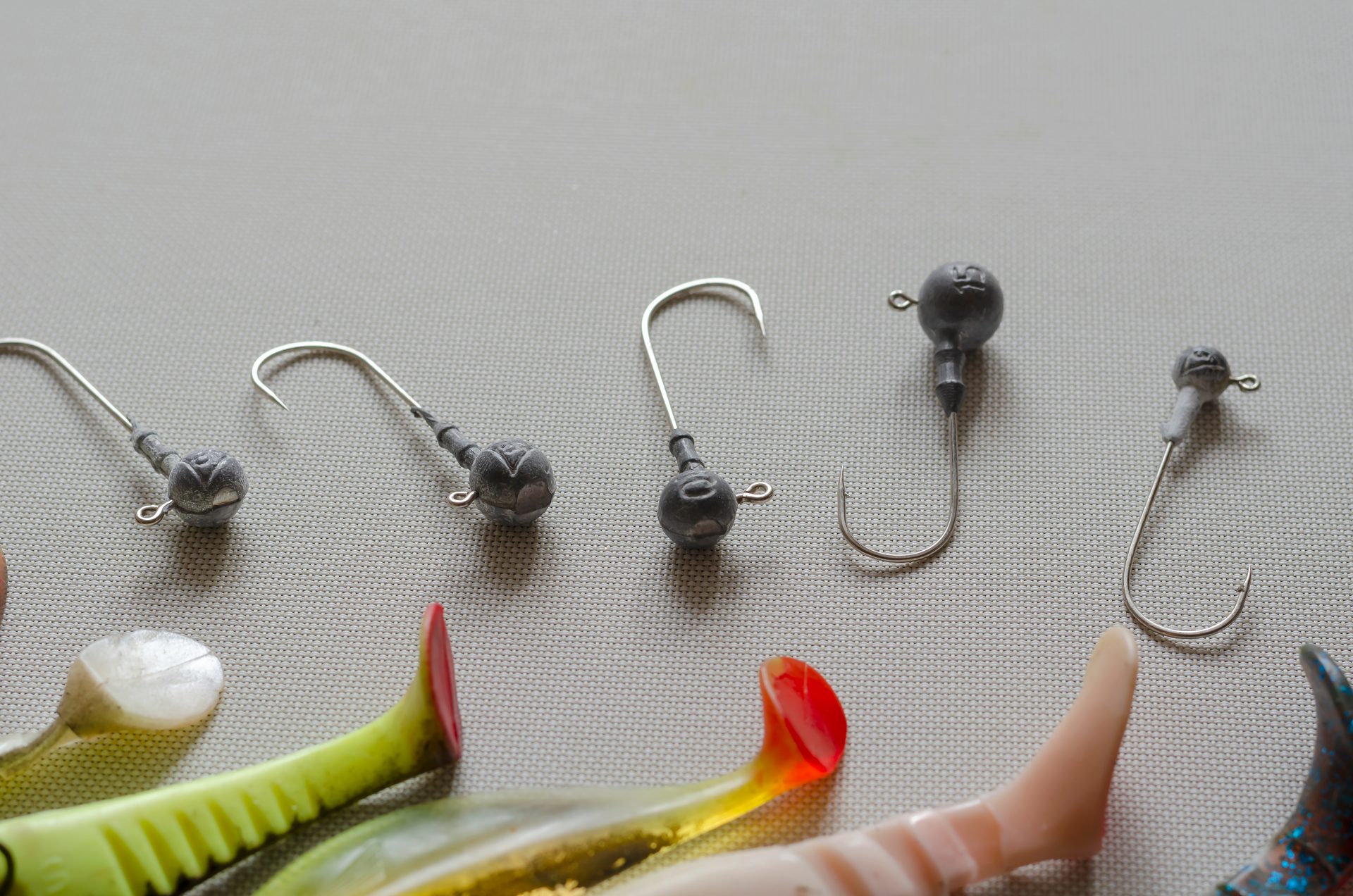
The jig is the core of this entire fishing method. So, we’re going to cover jig selection first. This is split into two categories. First, there’s the type of jig, and then there’s the weight. Various head shapes affect the jig's underwater behavior, and the weight influences several aspects of your experience.
1. Choosing a Jig Type
Jigs come in various head shapes that dramatically change their behavior. For winter fishing, we really only like two of them.
First, there’s the football jig. This is our go-to option for most situations.
A football jig has a head that is shaped like an American football. This design allows the jig to be dragged across the bottom without getting snagged, and it creates a subtle lift action as the bottom material causes it to roll. It works perfectly with craws.
The other option is a finesse jig. Rather than having a fancy head shape, a finesse jig is simply a super compact version of a traditional jig. The head is very small, the hook is also small, and the skirt is trimmed extra short.
We recommend getting at least a couple of each type. If you do that, you can successfully handle pretty much any bottom fishing situation in the winter. The brand you choose isn’t too important. We like Strike King, but almost every brand that makes jigs is going to make football and finesse jigs.
The two most important factors for jig fishing for bass in winter are the build quality and the quality of the hook. You don’t want a jig that falls apart, and you definitely don’t want your hook to straighten out, especially not in the winter when you’re fighting for every bite. That’s usually a problem with extremely cheap versions.

2. Choosing a Jig Size
The size is a little more straightforward. If you want to use one rod with both of the jig types we mentioned, go with a medium rod.
For your football jig, choose one that is at the higher end of your rod’s weight limit. This is usually going to be around ¼ ounce. You don’t want to max it out, though. You’ll be using a trailer, and that adds a little weight.
The finesse jig is typically around 1/16 ounce. That is harder to throw on a standard medium spinning rod. It’s easier with a baitcaster. You can either use a baitcaster and have to reset your settings each time you switch between jigs, or you can use a chunkier trailer to give it just enough weight to cast far.
You can also add a split shot a few inches before the finesse jig to give it casting distance without affecting its action too much on the bottom.
The weight will impact how the lure operates. A heavier jig will sink faster, and its action will be a little less subtle. This is perfect for craw presentations. In comparison, a smaller jig weight will sink slowly.
Finesse jigs don’t just have their weight impacting their actions. Since the skirts are cut extra short, they have more of a subtle vibration type of action rather than the slow elongation that full-sized skirts do. This is extremely small and hard to notice. That’s what makes it such a great finesse option for jig fishing for bass in winter.
Choosing a Trailer for Your Winter Jig Bass Fishing
A trailer isn’t essential. Plenty of anglers work jigs with nothing more than the included skirt, and they catch bass. However, a trailer does greatly enhance the action and profile of the jig presentation.
We have two types of trailers to recommend. One for a football jig, and one for a finesse jig.
1. Chunk Trailer
A chunk trailer is designed to look like a crawfish. If you’ve ever eaten one, it’s essentially a replica of the fat body portion of the craw, and it has some flimsy claws at the front. It’s not very detailed; it’s extremely short, and it works great in the winter.
The reason we prefer chunk-style trailers on our football jigs is that a football jig and a chunk complement each other to create a convincing sluggish craw presentation, which is a perfect winter bass bait.
Since a chunk is shorter and less detailed, it doesn’t move much. The football jig is dragged across the bottom rather than hopped. This makes the action slower and far less lively.
That less-lively presentation mirrors how living crawfish slow down and just kind of scoot around the bottom. They’re not taking massive backward leaps as they do in the late summer. It also creates the appearance of an easy meal. A lethargic bass is more likely to go after a craw that can barely move than one that is jumping all over the lake.
There are all kinds of chunk trailers on the market. We like the Zoom Small Salty Chunk. It’s 2 ½ inches long, features a very rigid body to keep the action toned down, and it has a salty flavor additive that keeps the bass locked on for as long as possible. Not to mention, Zoom’s plastic formula tends to be pretty durable. You can toss a 5-pack into your tackle box, and it will likely last the entire day.
However, there are other options we’re very fond of. The LunkerHunt’s Tantrum is a good one, and it’s on clearance at Tackle Warehouse at the time of this writing. We have also had success with Big Bite’s chunk bait.
Whatever chunk you buy, the general concept is the same. The main differences will be small features that impact the action a little bit and slight size differences. The finer details that let you tweak your approach are what you should look at to help you pick the right one.
2. Crappie Magnet Grubs and Leatherbaits Chunk Traits
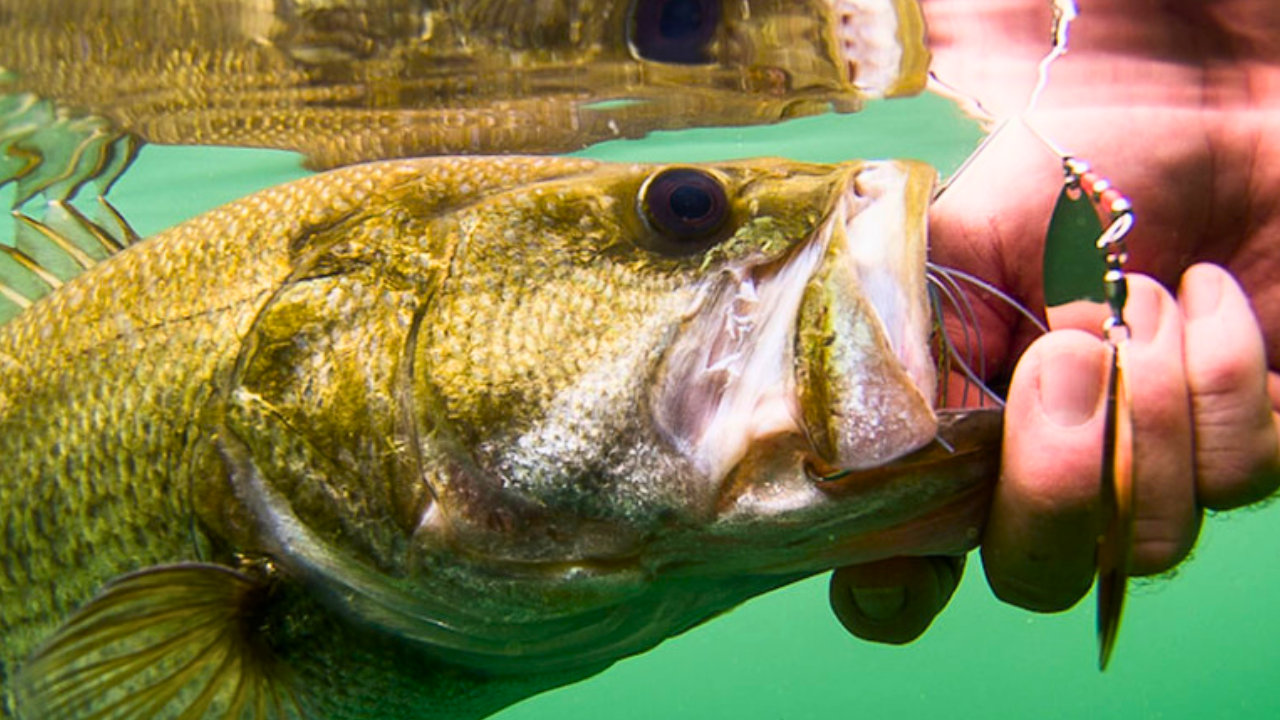
Crappie Magnet grubs are our go-to trailers for finesse jigs. These are very small grub bodies. If you’ve ever purchased a Crappie Magnet kit, you know they’re meant to be used with jig heads as small as 1/64 ounce. You don’t need to go that low for bass fishing. The grub bodies made for 1/16 and 1/8 sizes are great.
We like these for a few reasons. First, the kits themselves are great, and they’re highly accessible. They’re available as a small box with trailers in a variety of colors, along with a few jig heads, for one low price. You can also get them at big box stores and most online shops.
However, they also have amazing action in finesse applications. The twin tails vibrate. They don’t flop around. That gives it an extremely subtle presentation that really brings in the stubborn bass when you move it right.
Of course, even though we recommend the kit because of the variety you get, we are still talking about using the bodies on proper finesse jigs. Don’t just buy the kit and use the included heads for the strategies we’re discussing, as they don’t have skirts.
The other option is a pack of Leatherbait Chunk trailers. These have a similar design, but the legs are long, and they’re floppier than Crappie Magnets. You can also buy them in 1.75”, 2.25”, and even 4.25” sizes. So, you can buy different packs for both your finesse lure and your football. They’re not as accessible, and one pack can cost you almost as much as a Crappie Magnet kit. So, there’s definitely a tradeoff.
How to Use Jigs for Winter Bass
Now that we’ve gone over what you need, it’s time to start covering some of the strategies that are going to help you actually catch a winter bass. Catching a bass in the winter is not easy. It’s all about technique, lure choice, and patience.
Using the Football Jig for Winter Bass
The football jig with a craw chunk is the easier of the two to use. You’re going to throw it past a spot that you think holds bass, let the lure sit for 30 seconds to a minute, and then perform a wide sweeping motion with your rod tip to drag it in slowly.
Don’t yank your rod or move it like you’re readying a baseball bat. With your rod tip in front of you, gently rotate your torso about 90 degrees. This will drag the lure a few feet. Then, let it sit.
Even while the lure sits, water will move around it; the flappers might bounce a little, a nudge might make it wriggle, etc. A bass is most likely to bite during the pause or at the very beginning of your drag.
This is pretty much all you’re going to do with the football jig. It does take a while to get it back to you, and you’re not going to cover huge areas quickly. So, make sure you put more effort into picking good spots instead of just casting randomly.
Using the Finesse Jig for Winter Bass
The finesse jig is going to give you a more traditional jigging experience. Slip your twin-tail trailer on and toss it into an area where you think bass are.
Instead of dragging it like you do a football jig, you want to bounce it around and mix in some pauses. That’s probably a lot more familiar to you if you use jigs during the warmer seasons, but you want to take things slower than you ever have before.
Bounces need to be very small. Instead of popping your rod, give it a light twitch. When you let the lure sit, don’t touch it at all for at least 30 full seconds. The bass are extremely lethargic, and the more you make your lure like it’s barely hanging on to life, the more likely they are to bite it.
A light touch is crucial with a finesse jig. It’s so light that any movement is going to kick it into action, and you want to make sure you’re barely moving it around.
If you’re fishing in a lake that has a sandy bottom with almost nothing it can snag on, feel free to try dragging it, too. Those twin tails on the grub will vibrate gently with a drag.
Also, one good tip to use with finesse jigs comes from the ultra-light world. You can attach a slip-on foam bobber, and because the jig is so light, the bobber will keep it afloat.
That technique isn’t for fishing directly on the bottom, but you can adjust your depth to float the jig just an inch or two off the floor, and then not touch it at all. Just let the waves knock it around. This is a trout fishing technique, but trout fishing is all about finesse, and bass bite all the time.
Another thing we’d recommend is downsizing your rod to a light spinning rod with these smaller finesse jigs. That’s going to give you more casting distance, and it’s going to be a lot more sensitive. Using a lighter line, you risk a bass snapping off or even breaking the rod, but if you adjust your drag properly, it’ll work just fine.
Besides these winter bass fishing strategies and jig techniques, you also need to remember to bring proper gear for winter bass fishing in order to stay safe in the cold.
Jig for Your Next PB This Winter
Jigging is a great way to catch a winter bass. It takes a lot of patience, but if you’re willing to brave the cold and stay focused, you can catch a monster even during the coldest season.
For more advice on bass fishing, check out our guides or download the Bass Forecast app.

-1739275914.jpg)
.jpg)
.jpg)
.png)
.png)
.png)