
Why Bass Stop Biting in Spring (The Spawn Lockdown Explained)
Share this article with every angler you know!
Why Bass Suddenly Stop Biting in Spring
You were catching fish. Then you weren't. The water is warm, the weather is decent, and the bass are right there -- you can see them on beds in two feet of water -- but they will not eat your bait. You've tried everything. Nothing works.
Welcome to the spawn lockdown. It's one of the most frustrating phenomena in bass fishing, and it happens every spring across most of the country. Understanding what's actually going on biologically will not only save your sanity -- it will help you catch fish that most anglers walk away from.
Sign up to be notified of new bass fishing articles!
Get the Bass Fishing Playbook Every Week
The Feeding Switch Gets Flipped Off
During the spawn, bass essentially stop feeding. This isn't a figure of speech. It's a documented behavioral shift driven by hormonal changes -- primarily a surge in sex hormones that redirect the fish's energy and attention toward reproduction.
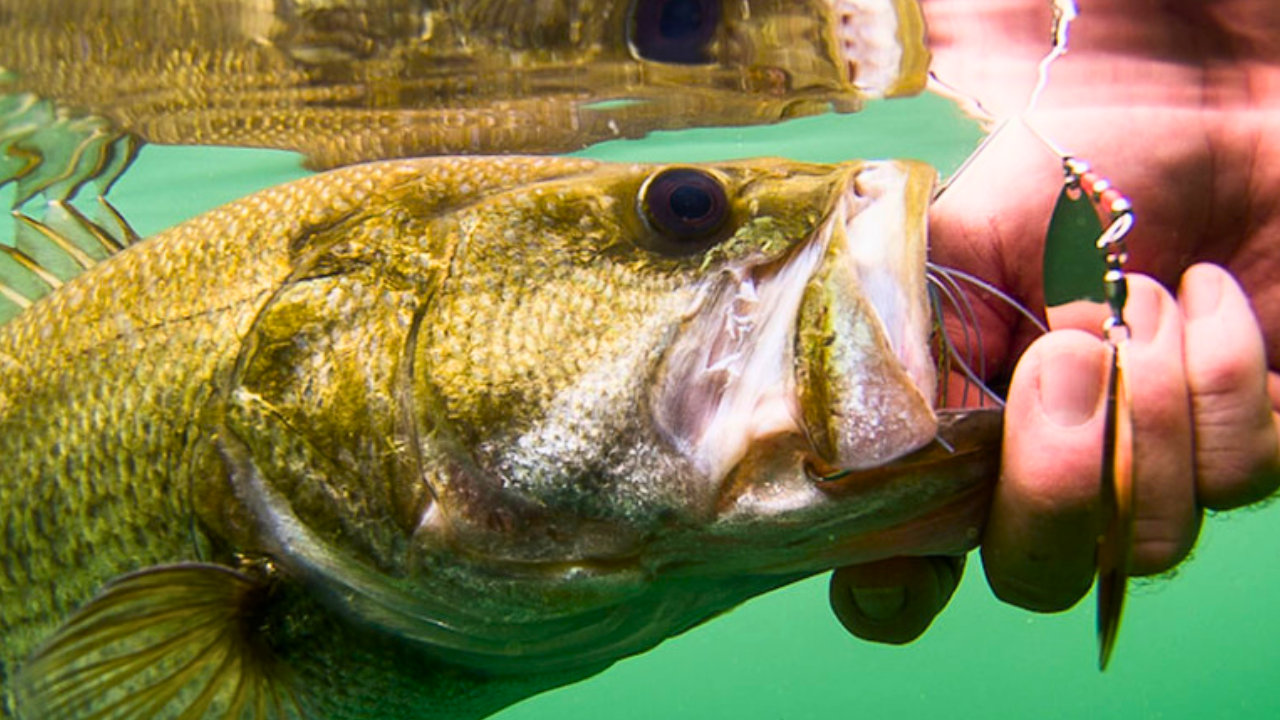
Female bass come shallow to deposit eggs. Male bass move up to prepare and guard nests. Both are operating on instinct, not hunger. Their metabolism doesn't stop, but the drive to actively hunt and consume prey is suppressed. A bass on a bed might dart at a crayfish or swipe at a bluegill that ventures too close, but it isn't chasing down a meal. It's protecting territory.
This is the core distinction that trips up most anglers: spawning bass aren't eating -- they're reacting. That changes everything about how you need to present a bait.
Aggression vs. Hunger: Two Completely Different Triggers
Pre-spawn bass were hungry. They were bulking up, feeding aggressively before the energy demands of spawning. That's why March and early April fishing can be so good -- big females in shallow water actively eating to put on weight before the spawn begins.
Once those fish are on beds, the equation flips. You're no longer trying to trigger a feeding response. You're trying to trigger an aggression or irritation response. Those require very different presentations:
Hunger triggers: Fast retrieves, reaction baits, covering water, matching the hatch, natural presentation
Aggression triggers: Slow and annoying, persistent presence, invading personal space, repetitive movement in a tight zone
A lipless crankbait burned through the shallows isn't going to work on a bed fish. A shaky head worm sitting on the edge of that bed, twitched just enough to look alive, worked for five minutes straight -- that might.
How to Actually Catch Bass During the Spawn Lockdown
Sight Fishing: The Direct Approach
If you can see the bed, you have an advantage. Polarized sunglasses are non-negotiable. Berkley PowerBait MaxScent Flat Worm is a strong choice here -- flat profile, heavy scent output, and it sits naturally on the bottom with minimal hardware.
The key with sight fishing during the spawn is patience. Cast past the bed, drag the bait onto it, and leave it there. The goal is to annoy the fish into moving it. If the bass fans the bait away with its tail, that's a good sign -- it knows it's there. Stay with it. Keep bringing it back to the center of the bed. Eventually many fish will pick it up just to remove it.
When a bed fish does pick up the bait, it usually doesn't run. Set the hook when you feel the weight, not a strike. The fish will often be sitting right on the bed with the bait in its mouth, barely moving.
Blind Fishing: When You Can't See the Beds
Not everyone is fishing from a boat with perfect visibility. For bank anglers and kayak anglers working murky or deeper water, the spawn lockdown is trickier -- you know the fish are there, you just can't find the exact beds.
In this situation, work slowly and stay in the zone. The Zoom Finesse Worm on a light drop shot or shaky head is a reliable producer. Fan cast a specific area and note every bite or follow. When fish are on beds, they cluster -- if you get a bite in a spot, there are almost certainly more fish within 20 feet.
Slower is almost always better. If you think you're fishing slow enough, slow down more.
Targeting Post-Spawn Females (For Regions Wrapping Up)
In the Southeast, the spawn is winding down. Females have largely left the beds and are in recovery mode -- staging in slightly deeper water adjacent to spawning flats, often near the first available structure: dock posts, brush piles, submerged laydowns, channel edges.
These fish are exhausted and won't chase. A Roboworm Straight Tail Worm on a drop shot fished vertically near structure is often the most effective post-spawn presentation. Keep it in front of the fish and let the worm do the work.
Regional Breakdown: Where Things Stand Right Now
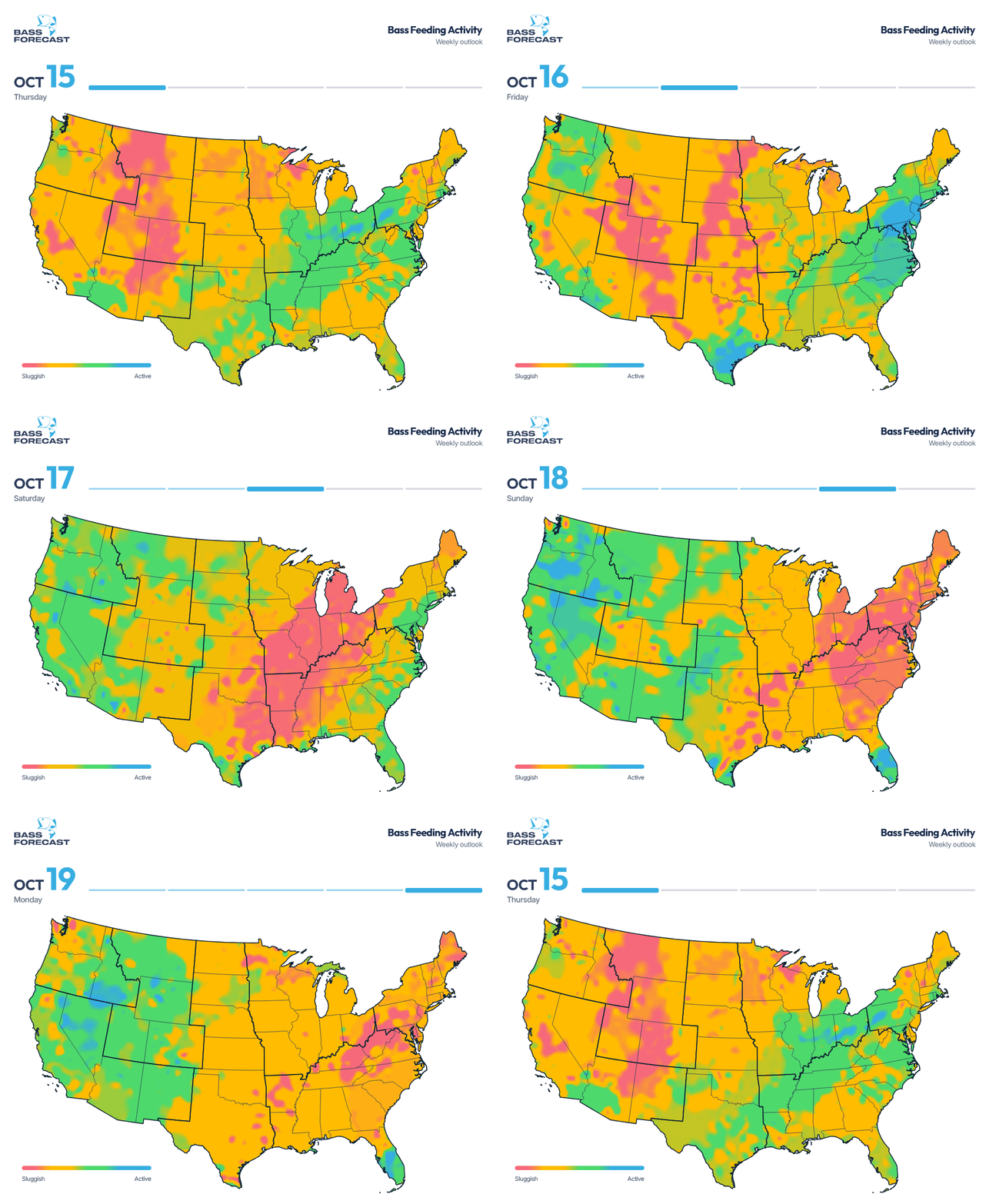
The spawn doesn't happen all at once. Water temperature drives the timing, and there's often a four-to-six week spread from the warmest to the coldest regions. Here's where most of the country sits in late April:
Southeast (Georgia, Alabama, Mississippi, Florida, South Carolina)
Largely post-spawn or wrapping up. Females are recovering. Males may still be guarding fry in some areas. Focus shifts to post-spawn staging areas -- creek mouths, points adjacent to flats, first available depth.
Southwest (Texas, Oklahoma, Arkansas, Louisiana, New Mexico)
Mid-to-late spawn in most areas. Texas and Oklahoma reservoirs are right in the thick of it. Expect the full spawn lockdown on sunny, stable days. Sight fishing is productive where visibility allows.
Midwest (Missouri, Illinois, Indiana, Ohio, Kentucky, Tennessee)
Peak spawn or just entering it. Water temps in the 60s in many areas. This is prime lockdown territory right now. Patience and persistence on beds will outperform covering water.
Great Plains (Kansas, Nebraska, Iowa, South Dakota)
Pre-spawn to early spawn. Fish are staging and beginning to move shallow on warming trends. Pre-spawn feeding windows still exist -- early morning and late afternoon can still produce aggressive bites before full lockdown sets in.
Northeast (New York, Pennsylvania, New England, Great Lakes)
Pre-spawn in most areas. Water temps are just getting into the mid-50s to low 60s. The bite is still more feeding-oriented than aggression-oriented. Enjoy it while it lasts -- the lockdown is coming.
Pacific Northwest (Washington, Oregon, Northern California, Idaho)
Still pre-spawn in most areas. Mountain lake and reservoir bass may not spawn until late May or even June depending on elevation. Traditional spring feeding patterns apply. Crankbaits and swimbaits are producing on warming flats.
Rocky Mountains (Colorado, Wyoming, Utah, Montana)
Pre-spawn to very early spawn at lower elevations. High-elevation reservoirs are still cold. Bass are moving shallow on warm afternoons but retreat to depth when temps drop. Watch water temperature closely.
Angler-Type Breakdown
Bank Anglers
You actually have an advantage during the spawn. Bass beds tend to be in accessible shallows -- near boat ramps, along shoreline flats, in protected coves. Walk slowly, wear polarized glasses, and look before you cast. The fish are close.
Work a small section of bank thoroughly rather than covering ground. A light spinning rod with 8-10lb fluorocarbon and a finesse worm is your best tool. Don't be in a hurry.
Kayak Anglers
Your low profile and quiet approach make you ideal for bed fishing. You can maneuver into tight coves and backwater areas that boats can't reach, and your reduced footprint spooks fish less. Use that advantage.
The Strike King KVD Finesse Spinnerbait is worth having on deck for pre-spawn fish that are still feeding aggressively in shallower areas before beds are fully established.
Boat Anglers
Don't let your access to water tempt you into covering too much of it. During the spawn lockdown, the best boat anglers are the ones willing to park over a single bed and work it for 20 minutes. Use your trolling motor to hold position quietly and stay as far from the bed as your casting accuracy allows.
The Gamakatsu G-Finesse Hybrid Worm Hook rigged weedless on a light weight is a go-to setup for dropping into thick beds without hanging up.
When to Move On
Not every fish will bite during the spawn. Some are simply locked down and nothing will trigger them. If you've worked a bed for 15-20 minutes with multiple presentations and the fish hasn't responded at all -- no chasing, no fanning, no curiosity -- it may be a female that has already deposited eggs and is about to leave. Cut your losses and find a more active fish.
Males that are actively guarding nests are almost always catchable with enough persistence. If you see the fish darting at the bait or exhibiting defensive behavior, keep working it. That fish will eventually pick it up.
Frequently Asked Questions (FAQ)
Why do bass stop biting during the spawn? Bass undergo a hormonal shift during spawning that suppresses feeding behavior. They are operating on reproductive instinct rather than hunger, so traditional feeding triggers don't work. Presentations that trigger aggression or irritation are more effective than those that mimic prey.
How do you catch bass that are on beds? Use slow, persistent presentations directly on or adjacent to the bed. Finesse worms, drop shots, and shaky heads worked slowly in a tight area produce the most bed fish. The key is patience -- keep the bait in front of the fish until it reacts out of aggression rather than hunger.
How long does the spawn lockdown last? The spawn typically lasts one to three weeks for a given body of water, depending on weather stability. Cold fronts can push fish off beds temporarily and extend the overall spawn window. Females usually leave beds within a few days of depositing eggs; males may guard nests for one to two weeks after.
Are bass still catchable during the spawn? Yes, but it requires a different approach. Pre-spawn females feeding aggressively give way to bed fish that respond to aggression triggers. Post-spawn fish recover in slightly deeper staging areas. Each phase requires a different presentation, but fish can be caught throughout the spawn period.
What baits work best during the spawn lockdown? Finesse presentations dominate: shaky heads, drop shots, light Texas rigs, and Ned rigs. Soft plastics with scent (like PowerBait or Berkley MaxScent products) can tip the scales on stubborn bed fish. Keep baits small, natural in color, and work them slowly.
Do bass eat at all during the spawn? Rarely. While a bass on a bed might opportunistically snap at something that invades its space, it is not actively hunting or feeding. Any bite during the spawn is almost always a reaction bite -- defensive aggression, not predatory feeding.
When does the bass spawn happen in my region? Spawn timing varies significantly by region and elevation. Southern states typically spawn in March and April; Midwest and Northeast in May; Pacific Northwest and Rocky Mountain regions in May and June. Water temperature is the primary trigger -- bass generally begin spawning when water temperatures reach the mid-50s to low 60s Fahrenheit.
Use the Bass Forecast App
Spawn timing is heavily dependent on water temperature, and water temperature varies significantly by region, reservoir, and even within a single lake. The Bass Forecast app tracks temperature trends and spawn stage indicators so you know whether you're fishing a pre-spawn feeding window, a full lockdown, or a post-spawn recovery period -- before you ever leave the house.
Download Bass Forecast and stop guessing what phase the fish are in.

.png)
.png)