.png)
.png)

Top Summer Bass Baits Right Now: Which One to Throw and When
Share this article with every angler you know!
Top Summer Bass Baits Right Now: Which One to Throw and When
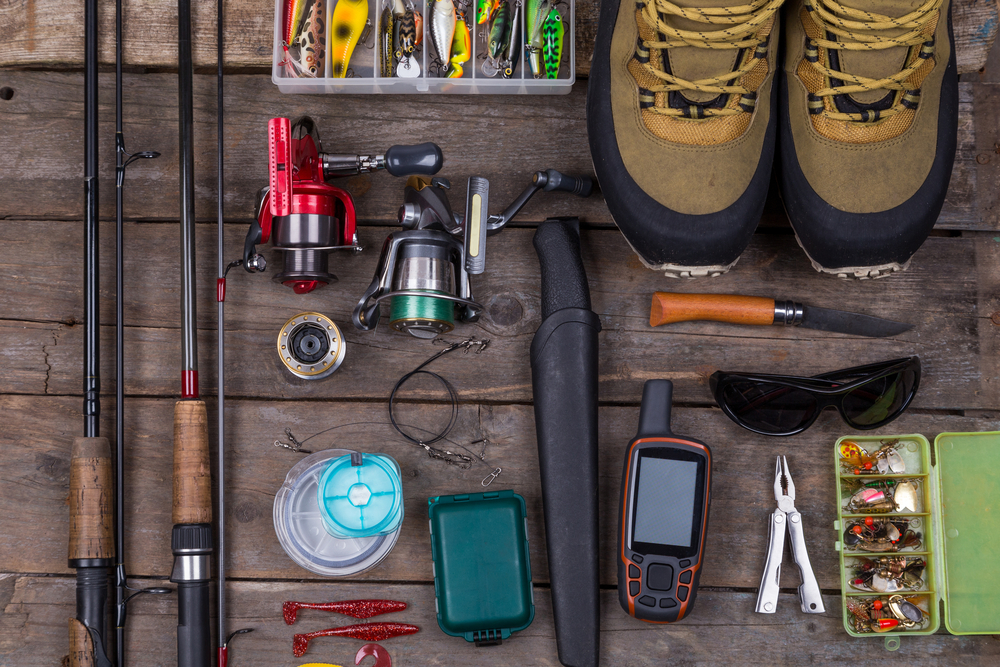
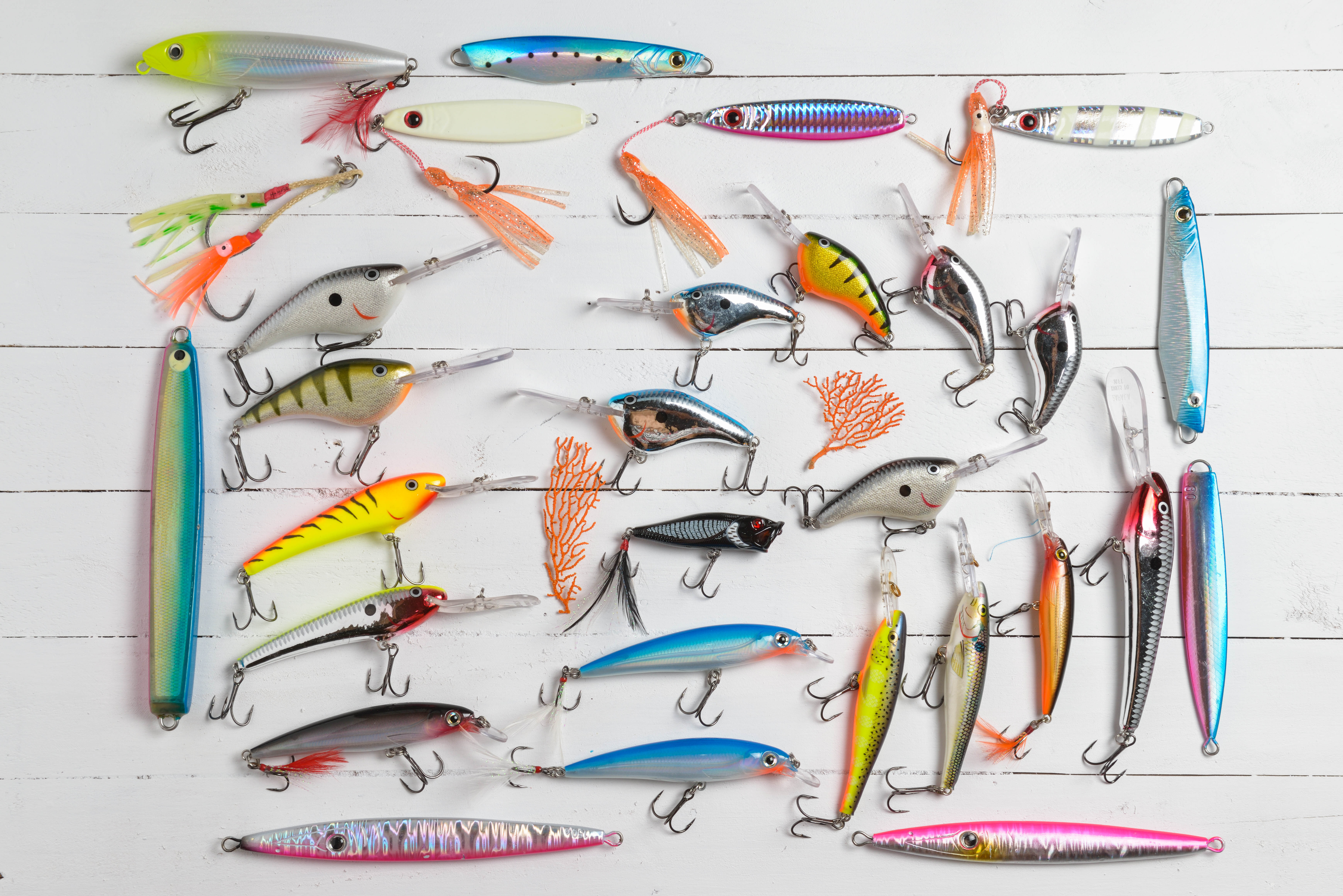
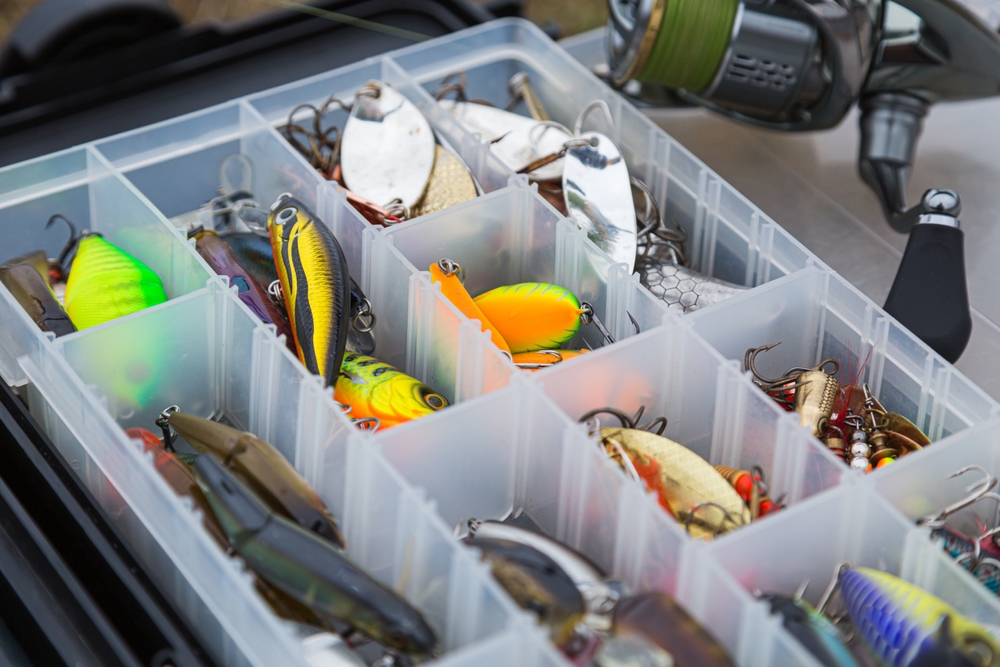
Twelve summer baits in the tackle box. Which three do you grab on the way to the lake Tuesday morning?
This is the question that defines summer bass fishing for most anglers, and most of us answer it badly. We fish whatever produced last weekend, even when conditions have completely changed by midweek. The fish move. The temperatures shift. The wind direction reverses. And the bait that crushed on Saturday gets ignored on Tuesday because we did not adjust to what the lake is actually doing.
Summer is the only season where bass are simultaneously available in multiple depth ranges, multiple feeding modes, and multiple cover types on the same day. Pre-spawn fish are mostly chasing. Spawn fish are mostly defending. Summer fish are doing all of it at once, and the bait that catches them depends entirely on what time you are fishing, what the conditions are doing, and which depth range you are working.
The full moon this week makes it the right week to start with topwater. The longer light window at dawn and dusk extends the productive surface bite on most waters by twenty to forty minutes, and full moon nights produce strong feeding windows on the right lakes. But topwater is only one piece of the framework. Once the surface bite closes, the lake does not stop fishing. It just demands a different bait, and most anglers get that transition wrong.
Here is the framework.
Sign up to be notified of new bass fishing articles!
Bass Forecast Newsletters
Why Summer Bait Selection Feels So Hard
Spring made it easy. In pre-spawn, you threw a reaction bait at shallow staging fish and caught them. In spawn, you threw a finesse worm at a bed and caught them. The right bait was obvious because the fish were doing one thing.
Summer breaks that simplicity. At dawn, your fish are shallow and feeding aggressively on the surface. By mid-morning, they have dropped to mid-depth structure. By noon, they are on offshore brush in twelve feet of water and refusing anything that does not get to the bottom. By the time the sun gets low again, they are back shallow chasing bait. Same fish. Four different patterns in one day.
This is why the bait that worked at six in the morning fails at noon. It is not the bait. It is the angler who keeps using the same bait when the conditions have changed underneath them.
Time of Day Dictates Depth More Than Calendar Date
In summer, the time you fish matters more than the date you fish. A reservoir on June 29 fishes differently at 5:30 AM than it does at 1:00 PM, and the bait choice has to follow the fish. Calendar-based bait selection ("it is June so I am throwing a Pop-R") fails because the fish do not care what month it is. They care what the light is doing.
Build your bait selection around the four windows of the summer day: low light morning, mid-morning transition, midday deep, and low light evening. Each window has its own category of bait. Mixing them up is how an angler with a full tackle box still gets skunked.
Conditions Matter More Than the Calendar
Wind direction, cloud cover, barometric trend, and water clarity all shift the right bait choice even within the same time-of-day window. A calm sunrise calls for a walking bait. A windy sunrise calls for a buzzbait. The bait selection moves with conditions hour by hour during the season.
Get your free 10-day forecast, bite windows, and location-specific bait picks for your bass fishing
at My Bass Forecast.
Topwater for the Low Light Windows
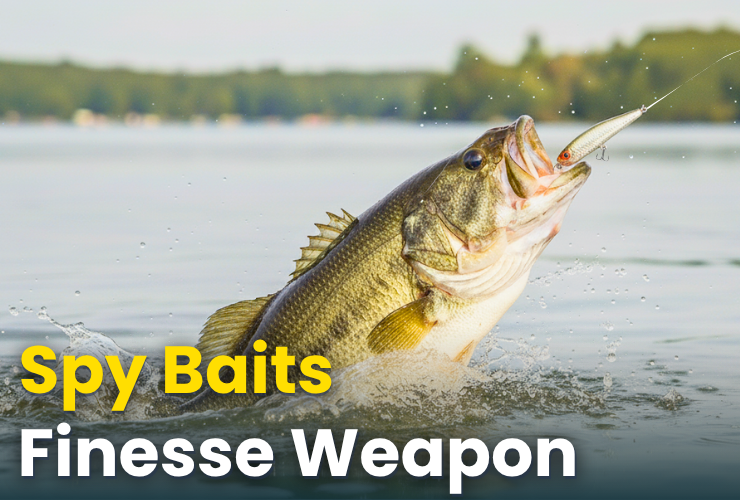
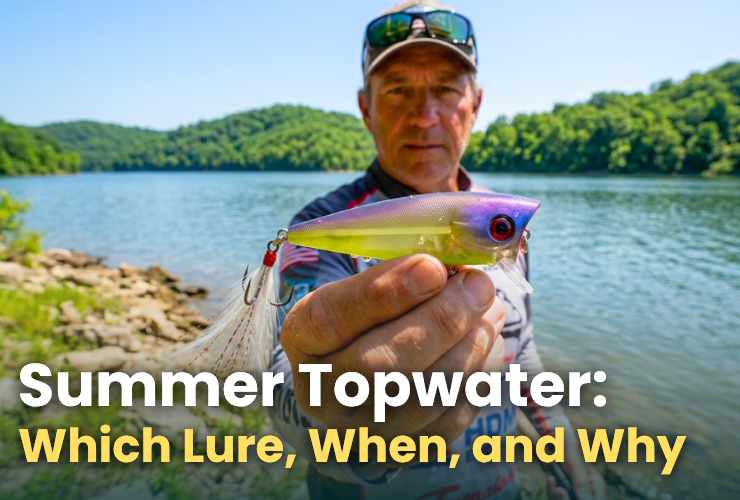
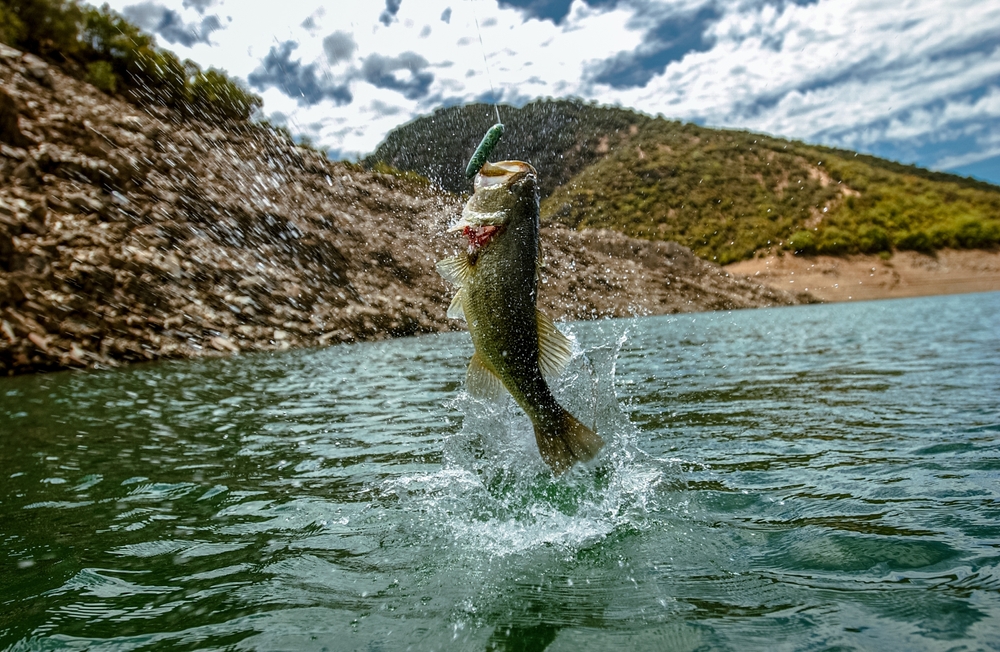
Summer topwater is the highest-percentage shallow water fishing of the entire year, and the full moon this week makes the next ten days some of the best windows of the summer. Bass commit to surface presentations during low light because the geometry of looking up into a backlit ceiling gives them an ambush advantage they exploit until the sun gets high.
Walking Baits for Open Water at Dawn
The Heddon Zara Spook is the open water summer standard. Work it across main lake points, shallow flats with depth access, the ends of creek arms, and the open side of grass edges. Tip the rod down, twitch with a rhythmic cadence, walk the bait side to side. Vary the cadence. Some days bass want a fast aggressive walk and other days a slow walk with two to three second pauses is what triggers the strike.
For clearer water and pressured fish, drop down to a Lucky Craft Sammy 100. The tighter walking action gets bites from fish that follow but refuse a larger profile.
Buzzbaits for Grass and Cover
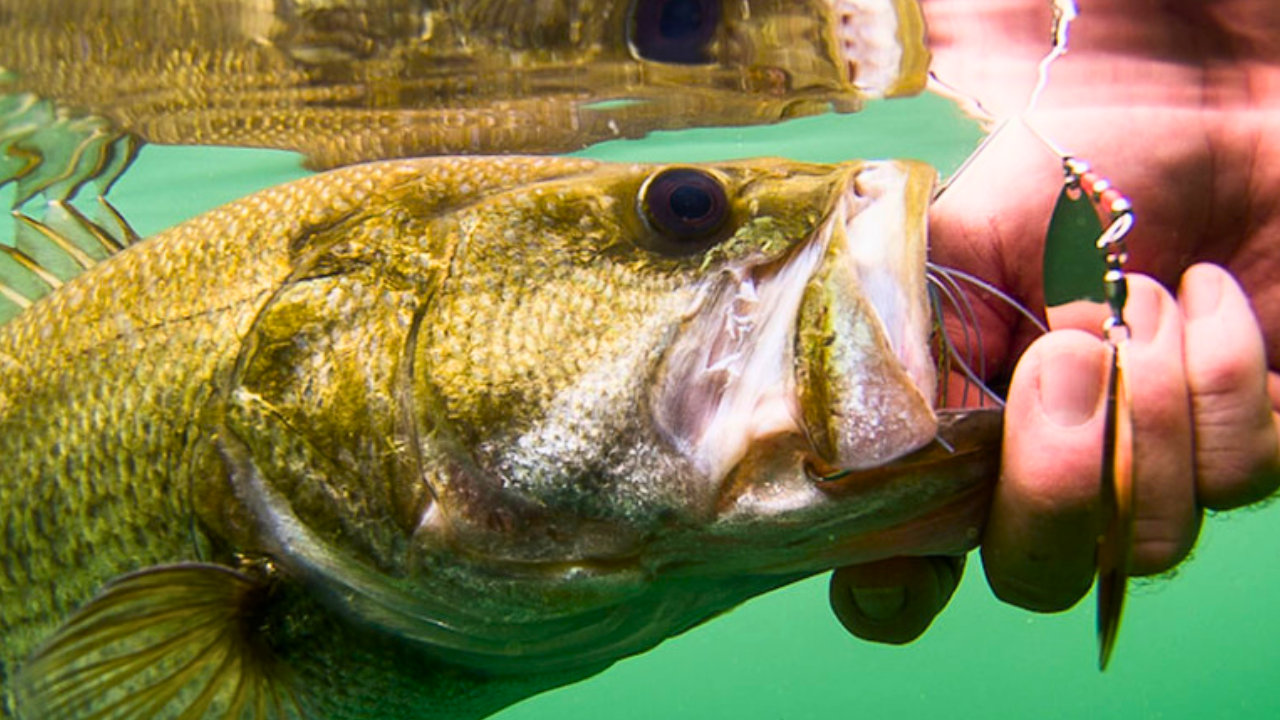
The Booyah Buzz with a Colorado blade is the sustained-noise bait for grass edges, dock shadows, isolated wood, and shoreline cover. Cast, hold the rod high, reel just fast enough to keep the bait planing on the surface. The blade thumps audibly through the water column and bass track it from distance.
Black blade and skirt for low light and stained water. White or chrome for clearer water and bright conditions. Add a Zoom Horny Toad as a trailer when fishing stained water or overcast extended windows to add bulk and a stronger bubble trail.
Frogs for Mats and Pads
The Booyah Pad Crasher is the standard hollow body frog for matted vegetation, lily pads, hydrilla mats, and any thick cover that would foul out other surface presentations. Work it slowly across cover, pause it in open pockets, and wait for the explosion.
The hookset is where most frog fish get lost. Wait when you see the strike. Count to two, reel down hard, then set. Setting on the splash pulls the bait away from fish that have not fully committed. Heavy braid in fifty to sixty-five pound test, a stout rod, and a high-speed reel are non-negotiable.
For premium presentation in open pockets within mats, the SPRO Bronzeye Frog 65 walks more cleanly than most hollow bodies and holds up to repeated hooksets on big fish.
Prop Baits for Sustained Surface Noise
The Whopper Plopper 110 covers open water with steady noise that walking baits cannot produce in slightly choppy conditions. Cast, reel at a moderate steady pace, and let the bait do the work. It is the topwater that requires the least skill in the retrieve, which makes it ideal for beginners or for any angler covering water during a short window.
Mid-Depth Baits for the Morning Transition
The window between the topwater bite closing and the deep bite opening is where most summer days get lost. Anglers either keep casting topwater past the productive window or jump straight to deep structure before the fish have committed to it. The mid-depth category fills the gap.
Mid-Depth Crankbaits on Points and Channel Swings
The Rapala DT-10 is the workhorse mid-depth bait for fish on main lake points, channel swings, and the first depth break off shallow cover. Crank it through eight to twelve feet, deflect it off rock and brush, and let the rebound trigger reaction bites. Fish that were chasing topwater an hour earlier will commit to a crankbait in slightly deeper water as they reposition.
Swim Jigs Along Grass Lines
The Strike King KVD Finesse Swim Jig along the inside and outside grass edges produces fish that have just dropped off shallow cover into the first available depth. Swim it parallel to the grass line, vary the depth based on where the line is breaking, and let the jig fall on the inside edge of holes in the vegetation. Especially effective on natural lakes and any reservoir with consistent grass.
Paddle Tail Swimbaits Over Structure
The Keitech Fat Swing Impact on a light head covers the same water as a topwater walking bait, just below the surface. When the surface bite fades, switching to a swimbait worked across the same flats and points often produces immediate bites from fish that were tracking the topwater but not committing.
Bladed Jigs in Stained Water
The Strike King Thunder Cricket produces in stained water and on overcast days when the vibration carries through the water column to fish that would not see a quieter bait. Slow-roll it through grass, around shallow wood, and across windblown flats during the morning transition window.
Deep Structure Baits for Midday
When the sun gets high and the surface goes dead, bass push to summer holding water. Offshore brush, ledges, points adjacent to deep water, shell beds, and rock transitions in twelve to twenty feet hold concentrated populations of fish through the heat of the day. This is the category that defines summer.
Football Jigs on Offshore Rock
The Dirty Jigs Casting Jig with a football head is the offshore standard. Drag it slowly across rock, shell, and hard-bottom transitions. Pay attention to where bites come from. Bottom composition changes hold fish. A football jig keeps contact with the bottom through irregular structure and reads composition through the rod tip.
Deep Crankbaits for Ledges and Brush
The Strike King 6XD and 10XD cover offshore brush, ledges, and channel swings in ten to twenty feet of water. Bang the bait off cover and let the deflection do the work. Pause it briefly after every deflection. Many deep crankbait bites come on the rebound, not on the retrieve.
Heavy Texas Rigs Pitched Into Cover
A Zoom Brush Hog on a Texas rig with a half-ounce or three-quarter-ounce weight punches through offshore brush and reaches fish holding tight to wood. Pitch to the cover, let it fall, hop it twice, and reposition. The presentation works on fish that will not chase a moving bait but cannot ignore something falling directly through their cover.
Carolina Rigs Across Transition Zones
A Carolina rig with a Zoom Brush Hog drags through offshore structure at exactly the right pace for summer transitional fish. Heavy weight to maintain bottom contact, long leader for natural presentation, slow retrieve. The Carolina rig covers more water than a Texas rig and produces on fish scattered across larger structure rather than stacked on single cover.
Finesse for Tough Conditions
Summer finesse is the category most anglers underuse and the one that produces when nothing else does. Post-front bluebird days, heavily pressured water, and the highest midday heat all compress the productive windows for the other three categories. Finesse fills that gap.
Drop Shot on Suspended Fish
The Roboworm Straight Tail Worm on a drop shot is the most reliable producer for summer fish suspended near deep structure. Position over the structure, drop the bait vertically, work it in place with subtle movement. Fish that have suspended off ledges, brush, or bridge pilings during midday heat will commit to a drop shot that stays in front of them when they will refuse anything they have to chase.
Ned Rig on Rock and Pressured Water
The Z-Man Finesse TRD on a Ned rig produces on rock transitions, shell beds, and any structure that has seen consistent pressure. The bait stands upright on the bottom with minimal hardware and gets bites from fish that have rejected larger, more aggressive presentations. Especially effective in clear water and on highland reservoirs.
Wacky Rig on Dock Shadows
A Zoom Trick Worm wacky-rigged on light tackle produces in shaded cover during midday: the deep side of dock posts, the dark corners under boat slips, the shaded side of bridge pilings, and overhanging trees with depth access. Cast to the shade, let it fall on slack line, give it time. The fall is when most bites happen.
Shaky Head on Hard Bottom
A Zoom Finesse Worm on a shaky head dragged across hard bottom transitions produces fish that have pushed slightly deeper than the football jig depth but are still relating to bottom structure. Lighter presentation than a jig, more natural fall, effective in clear water where heavier baits get refused.
How to Choose Between Baits on Any Given Day
This is the section that solves the actual problem at the boat ramp. Four conditions narrow the bait selection down to one or two specific products from the categories above.
Time of day. The first decision is which window you are fishing. Low light morning equals topwater. Mid-morning transition equals mid-depth. Midday equals deep structure. Low light evening equals topwater again. Time of day is the largest determinant of which category to start with.
Wind. Calm conditions favor walking baits, poppers, and finesse presentations. Light to moderate wind favors buzzbaits, prop baits, swim jigs, and bladed jigs. Heavy wind compresses topwater options to buzzbaits and prop baits, and pushes the rest of the day toward subsurface presentations exclusively.
Water clarity. Clear water favors smaller profiles, more natural colors, and finesse presentations. Stained water favors larger profiles, contrasting colors, and baits with vibration like bladed jigs and Colorado-blade spinnerbaits. Muddy water favors dark colors and sustained noise.
Cover type. Open water favors walking baits, prop baits, and crankbaits. Grass edges favor buzzbaits, swim jigs, and bladed jigs. Heavy mats and pads require frogs. Offshore rock and brush calls for football jigs and deep crankbaits. Dock shadows and pressured cover demand wacky rigs and finesse presentations.
Walk through those four conditions on Monday night before Tuesday's trip and your bait selection is made before you ever set the alarm.
Regional Breakdown: Where Each Category Is Peaking Right Now
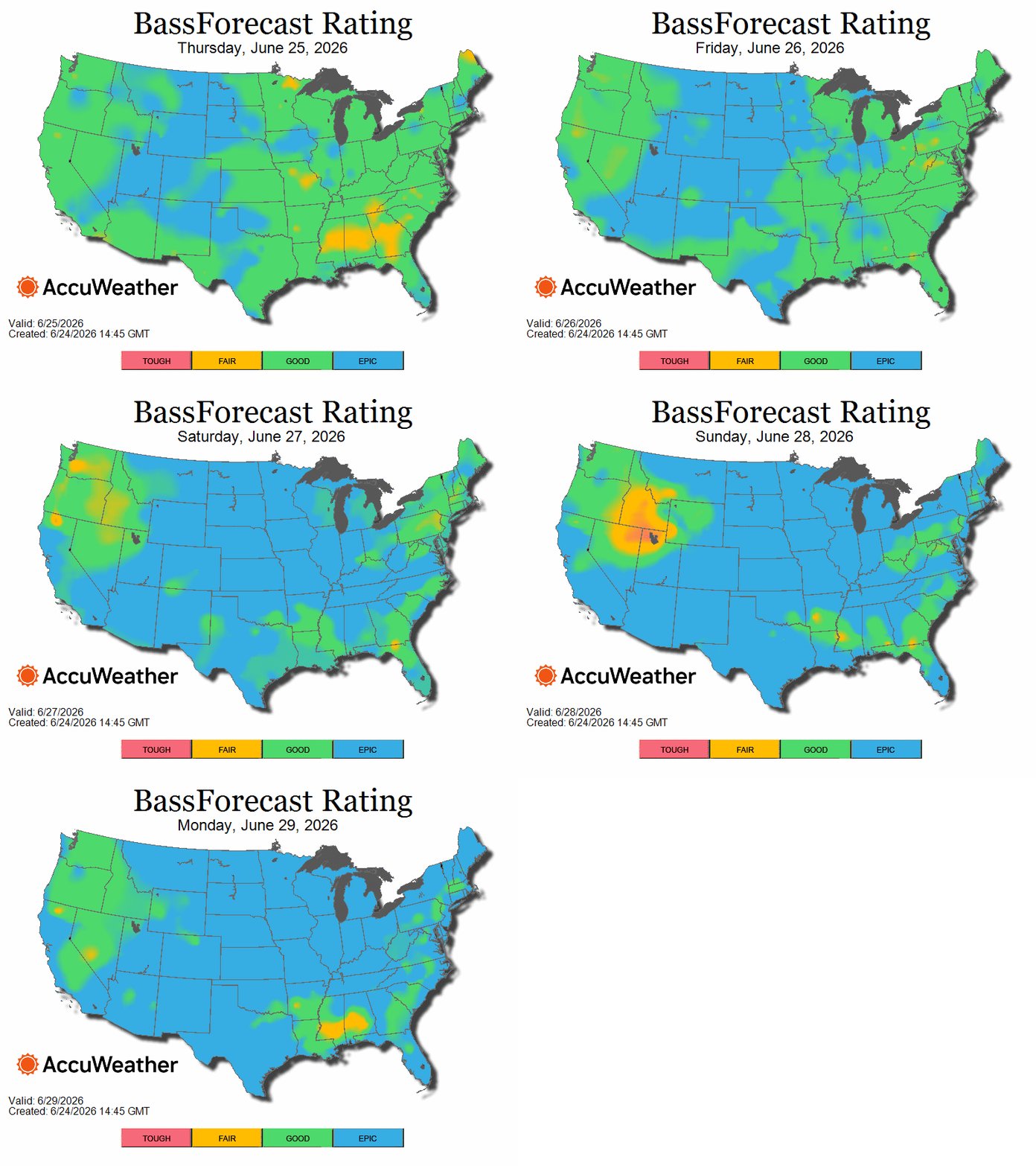
Southeast (Florida, Georgia, Alabama, Mississippi, South Carolina, Louisiana) Full summer with the hottest water of the season. Topwater windows compressed to the first hour and last hour of light. Night fishing is increasing on most waters as midday heat suppresses daytime production. Football jigs and deep crankbaits dominate midday on offshore structure. The hydrilla frog bite in Florida and Georgia is at peak production right now.
Southwest (Texas, Oklahoma, Arkansas, Louisiana) Full summer with offshore ledge fishing as the primary daytime pattern. Lake Fork, Texoma, Bull Shoals, and similar large reservoirs are in peak summer pattern. Walking baits at dawn and dusk over offshore structure produce when bass push shallow to feed on schooling shad. Deep crankbaits and football jigs at midday on ledges and brush.
Mid-South (Tennessee, North Carolina, Virginia, Kentucky, West Virginia) Early to full summer. Fish on main lake points and offshore brush in ten to eighteen feet during the day. Topwater windows are open and productive at dawn and dusk. Tennessee River reservoirs are producing consistent football jig and deep crankbait fish.
Mid-Atlantic and Ozarks (Missouri, Illinois, Indiana, Ohio, Maryland, Pennsylvania) Full summer transition complete. Highland reservoirs producing offshore football jig fish on rock and ledge structure. Natural lake areas producing frog and buzzbait action in grass and pads. Lake of the Ozarks and Bull Shoals are in peak summer pattern with both deep and topwater windows producing.
Great Lakes and Upper Midwest (Michigan, Wisconsin, Minnesota, Iowa, New York) Late post-spawn to early summer transition. Topwater is at peak intensity for both largemouth and smallmouth. Walking baits over rocky smallmouth structure produce some of the most explosive fish of the year. Frogs and buzzbaits along largemouth grass are productive. Subsurface follow-ups on weed edges in eight to fourteen feet of water.
Northeast and New England (New York, Pennsylvania, New Jersey, Connecticut, Massachusetts, Vermont) Early summer transition. Topwater windows opening to full production. Fish on main lake points and outside weed edges. Walking baits, buzzbaits, and swim jigs along grass produce. The post-spawn feeding window is open on most waters and the bite is at its strongest point of the year.
West and Pacific Northwest (California, Oregon, Washington, Nevada, Arizona) Low-elevation California reservoirs in full summer. Higher elevation lakes in early summer transition. Clear water means deeper bait presentations than equivalent Southern reservoirs. Walking baits and Whopper Ploppers at dawn over offshore structure produce on Clear Lake, Folsom, and similar California waters.
Rocky Mountains (Colorado, Utah, Wyoming, Montana, Idaho) Late post-spawn to early summer at lower elevations. High elevation lakes still in spawn or early post-spawn. Walking baits at dawn becoming productive on lower elevation lakes. The full framework applies as conditions develop over the next two to three weeks at altitude.
Angler-Type Breakdown
Bank Anglers
Summer favors the bank angler who fishes the windows. Be on the water thirty minutes before sunrise with a walking bait and a buzzbait. Switch to a wacky rig in dock shadows and shaded cover as the sun climbs. Skip midday entirely unless you have access to deep shoreline structure like riprap extending into deep water, bridge pilings, or bluff banks. Return forty-five minutes before sunset for the evening topwater window.
The full moon this week extends both windows by twenty to thirty minutes. Take advantage of it.
Kayak Anglers
Kayaks own the morning frog and buzzbait windows in backwater coves and mat-covered protected bays that boats cannot reach quietly. Launch in the dark and be over fish at first light. The first hour produces more than the next two combined.
Midday, shift to shaded cover with a wacky rig or finesse jig in protected areas where you can stay over fish without being baked by direct sun. Return for the evening topwater window when the heat drops.
Boat Anglers
Range is the summer advantage. Topwater on main lake points at dawn, run to offshore brush and ledges for midday, return to shallow grass and points for the evening topwater window. Use electronics to mark productive offshore structure during midday so the location is ready for the next morning.
The boat angler who efficiently fishes all four windows on the same day catches more fish than the angler who commits to a single pattern. Plan the route, time the runs, and stay disciplined about leaving one window to make the next.
Frequently Asked Questions (FAQs)
What is the best bait for summer bass fishing?
There is no single best summer bass bait. The right answer depends on time of day, conditions, and cover type. Topwater for dawn and dusk on shallow water. Mid-depth crankbaits and swim jigs for the morning transition between shallow and deep. Football jigs and deep crankbaits for midday on offshore structure. Finesse presentations like drop shots and Ned rigs for tough conditions and pressured water. Match the bait category to the window you are fishing.
What baits work best in hot weather for bass?
Heat compresses the productive windows for moving baits to dawn and dusk. Topwater at low light, then deep structure baits like football jigs and deep crankbaits during the heat of the day. Finesse presentations near shaded cover produce when fish have pushed tight to structure to avoid heat. Adjusting between depths through the day catches significantly more fish than committing to a single approach.
Does the full moon affect summer bait selection?
The full moon extends the topwater window at dawn and dusk on most waters and supports productive night fishing on the right lakes. During full moon weeks, topwater presentations including walking baits, buzzbaits, and frogs produce longer windows than they do on dark moon nights. The relationship is observational, tied to extended low light ambush conditions rather than a precise gravitational mechanism.
What is the best topwater for bass in summer?
Category matters more than single product. Walking baits like the Heddon Zara Spook for open water at dawn and dusk on main lake points and flats. Buzzbaits like the Booyah Buzz for grass edges and shoreline cover. Hollow body frogs like the Booyah Pad Crasher for mats, pads, and matted vegetation. Prop baits like the Whopper Plopper 110 for sustained surface noise in slight chop. Match the topwater category to the water type and conditions.
Should I fish deep or shallow in summer?
Both, at different times of day. Shallow water at dawn and dusk for the topwater windows. Deep water at midday for the structure pattern. The angler who fishes both windows on the same day during summer catches more than the angler who commits to a single depth range.
Why are bass not biting my topwater in summer?
Most missed or unproductive summer topwater situations come down to timing. The window is narrower in summer than in spring and tighter in midsummer than in early summer. Productive topwater in midsummer is often the first forty-five minutes of light and the final forty-five minutes of light, not the broader two-hour windows that work in cooler conditions. Adjust the time you fish, not the bait.
Are there summer baits that work all day?
Football jigs and deep crankbaits work consistently from mid-morning through late afternoon when fish have pushed to summer holding structure. Heavy Texas rigs pitched into deep cover produce all day for pressured fish. Drop shots on suspended fish near structure produce throughout midday windows. The all-day baits are subsurface and require finding the structure that holds fish first.
Use the Bass Forecast App or Web App to know the exact baits to use anytime and anywhere
Summer bait selection rewards anglers who match the bait to the conditions. Bass Forecast tracks wind, cloud cover, barometric trend, water temperature, and solunar timing so you know whether to grab a topwater, a deep crankbait, or a drop shot before you ever load the truck.
Download Bass Forecast or use My.BassForecast.com and stop overthinking the tackle box.
-1739275914.jpg)
.jpg)
.jpg)
.png)