
The Shaky Head: A Comprehensive Guide to Catching Largemouth Bass
Share this bass fishing article with every angler you know!
Dive deep into the finesse world of shaky head fishing. From its origins to advanced techniques, master this versatile rig to consistently land more largemouth bass.
Unlock the subtle art of shaky head fishing and turn finicky largemouth bass into willing catches. This deep-dive guide, from 1950s origins to pro-level retrieves, equips you with the gear, techniques, and secrets to dominate clear water and cover. Ready to finesse your way to bigger limits?
Let's dive in now!
Get notified of new bass fishing articles, tips and tricks!
Bass Forecast Newsletters
Introduction: The Shaky Head Technique
The shaky head is a finesse fishing technique utilizing a jighead and worm combination designed to imitate foraging baitfish or crawfish on the bottom. It is presented as a subtle, vulnerable offering that appeals to finicky largemouth bass. This guide aims to provide comprehensive information on the technique, its history, gear, and advanced strategies for catching more largemouth bass.
History of the Shaky Head
Origins: The concept of a "jighead worm" dates back to the 1950s and 1960s in the Kansas City area.
Refinement and Naming: The modern shaky head design was refined in Alabama, specifically for spotted bass on the Coosa River. William Davis of Davis Bait Company, along with Fred Bland, independently developed and popularized the design, coining the name "The Shaky Head."
Widespread Recognition: The technique gained significant popularity in the mid-2000s when professional anglers showcased its effectiveness. Kevin VanDam notably caught a nearly 12-pound bass using it in a 2005 Bassmaster Elite 50 event, and Jeff Kriet further cemented its fame on ESPN.
Evolution of Design: The shaky head has evolved from simple ball heads to specialized shapes like aspirin-head, mushroom-head, and flat-head designs for standing up. Improvements include better hooks and features like titanium weed guards.
Strengths and Effectiveness of the Shaky Head
The shaky head is considered a reliable technique for catching both numbers and large largemouth bass, particularly in clear water and pressured conditions. Its effectiveness stems from:
Natural Imitation: The combination of a jig head and a buoyant soft plastic allows the tail to quiver, mimicking a feeding baitfish or defensive crawfish.
Finesse Presentation: Its subtle action and smaller profile appeal to wary bass that might ignore larger or louder lures.
Bottom Contact and Feel: The rig is designed to stay on the bottom, allowing anglers to feel subtle bites and understand bottom composition through sensitive rods and fluorocarbon line.
Weedless Capability: When rigged Texas-style, the hook is concealed, allowing the bait to navigate through cover such as brush piles, docks, and rocks.

Weaknesses and Controversies of the Shaky Head
Limited Coverage: It is not a power-fishing technique for covering large areas; it is designed for meticulously working specific spots.
Snagging Potential: While weedless, certain head designs can still get wedged in dense cover or rocky areas.
Gut-Hooking: Some anglers report bass swallowing the bait deeply. This can be mitigated by using sensitive rods for quick hooksets.
Comparison to Other Rigs: Debates exist regarding its effectiveness compared to a Texas-rigged worm with a pegged weight or the Ned rig. The Ned rig typically uses smaller baits and excels at covering water, while shaky heads are often used for dragging on clean, hard bottoms.
Recommended Shaky Head Gear
Jig Heads
Weight: 1/16 to 1/4 ounce are common; 3/8 to 3/4 ounce are used for deep water or heavy cover. Lighter weights provide a slower fall, while heavier weights are for wind and current.
Shapes:
Ball Heads: Versatile with good rocking action.
Stand-Up/Flat Heads: Designed to keep the worm's tail upright (e.g., Z-Man SMH Jig Head, Epic Baits Shakey Head).
Football Heads: Effective in rocky areas (e.g., Buckeye Spot Remover Pro Model).
Nail-Shaped: Designed to slip through cover easily (e.g., Frenzy Baits Nail Shakey Head).
Keepers: Screw-locks or barbs for securing the soft plastic.
Material: Lead is common; tungsten shaky heads (e.g., Reaction Tackle Tungsten Shaky Head, Seibert Outdoors Tungsten) offer superior sensitivity and a smaller profile.
Colors: Green pumpkin and black are popular; unpainted heads are also used.
Soft Plastics
Finesse Worms: Straight-tailed worms are standard. Buoyant plastics (e.g., Strike King 3x Finesse Worm, Z-Man SMH Wormz) are crucial for tail quiver. Examples include Zoom Trick Worm, Zoom Finesse Worm, Roboworm Fat 6" Straight, and Big Bite Baits Squirrel Tail.
Other Baits: 3-4 inch crawfish imitations (e.g., Strike King Baby Rage Craw), tubes, small lizards, and creature baits can also be effective.
Colors: Natural tones (green pumpkin, watermelon, watermelon red) for clear water; darker hues (junebug, black and blue) for dirty water.
Rods
Spinning Rods: A 7-foot to 7'4" medium to medium-heavy power spinning rod with a fast to extra-fast action is recommended for sensitivity and hook-setting power.
Casting Rods: A medium-heavy casting rod can be used for heavier shaky heads or fishing in thicker cover.
Reels
Spinning Reels: 2500-4000 series with a smooth drag.
Casting Reels: 100-150 size with a 7:1 to 8:1 gear ratio for heavier applications.
Line
Braid to Fluorocarbon Leader: 10-15 lb braided mainline for sensitivity and strength, connected to a 6-12 lb fluorocarbon leader (using FG knot or double uni-knot) for invisibility and abrasion resistance.
Straight Fluorocarbon: 8-15 lb fluorocarbon is a viable option, especially in abrasive environments.
Monofilament Leader: Can be used for added stretch when fish are being particularly picky.
Shaky Head Techniques and Retrieves
Rigging
Tip Trim: Trimming 1/4 to 3/4 inch off the worm's head can create a tidier connection.
Attachment: Screw-lock or thread the worm onto the jig head.
Super Glue: A small amount of super glue on the jig head keeper can prevent the plastic from sliding down.
Retrieves
Dragging: Slowly drag the bait along the bottom, feeling for changes in composition.
Shaking in Place: Twitch the rod tip to make the worm quiver without moving the jig head significantly, especially when encountering cover or sensing a fish.
"Drag and Pop": Drag the bait, pop it with the rod tip, and let it fall. Bites often occur on the fall.
Dead-Sticking: Letting the bait sit motionless after a shake can entice ultra-finicky bass.
Hopping: Lift the rod tip a few inches and let the bait fall, mimicking a crawfish scooting away, particularly effective in rocky areas.
"Double Pop": Two sharp pops with the wrist can trigger reaction strikes.
Swimming: Maintain bottom contact while moving the bait, suitable for paddle-tail plastics.
Detecting Bites
Line Watching: Observe the line for any twitches, jumps, or unnatural slack.
Feel the "Tick": Pay attention to faint "ticks," spongy feelings, or changes in bait weight.
Premature Stop: Set the hook if the bait stops falling before it should.
Hookset
A firm, straight upward sweep over the head or shoulder is recommended. Reel down to feel the fish before sweeping.

Regional Adaptations of the Shaky Head
The shaky head's effectiveness varies by region, requiring adjustments in color and presentation:
Pacific Northwest (PNW): Natural colors are favored.
Southwest (SW): Shad or crawfish colors (green, brown, red accents) are effective.
Southeast (SE): Crawfish patterns are popular, especially on rattling shaky heads in the fall.
Rocky Mountains (RM): Lighter line is used for increased invisibility.
Great Plains (GP): Heavier jig heads (1/4 oz+) are used to maintain bottom contact in windy conditions.
Midwest (MW): General applicability.
Northeast (NE): Lighter jig heads (1/8-3/16 oz) and smaller worms (4-6 inch) are often key.
Shaky Head Fishing by Angler Type
Bank Anglers: A long (6'8"-7'2") medium-fast action spinning rod is recommended for maximizing casting distance. Focus on shallow wood or rock cover.
Boat Anglers: Can utilize electronics to observe bass reactions and make precise bait placements.
Kayak Anglers: Limited gear space necessitates versatile rods. Mobility allows for precise positioning.
Future of Shaky Head Fishing
The shaky head technique continues to evolve with innovations in tackle and techniques:
Tackle Innovations
"Power Shaky Heads": Larger hooks and heavier tackle for flipping bigger baits into dense cover.
Next-Gen Hook Designs: Patent-pending hook shapes (e.g., by Epic Baits) aim for easier rigging, improved hook-up ratios, and horizontal bait presentations.
Technique Evolution
"Power-Finesse": Using heavier braided line (30lb braid to 12lb fluoro leader) with medium-heavy spinning rods for more aggressive hooksets and pulling bass from thicker cover.
The Free Rig: An emerging alternative for offshore ledge fishing, allowing the worm to swim more freely for potentially better hook-up-to-land ratios.
Shakyhead Bass Fishing Conclusion
The shaky head is a versatile and essential technique for largemouth bass fishing, capable of consistently catching fish even in challenging conditions. Mastering its subtle presentation and understanding its nuances can significantly improve an angler's success rate.
Use Bass Forecast to know exactly what to throw
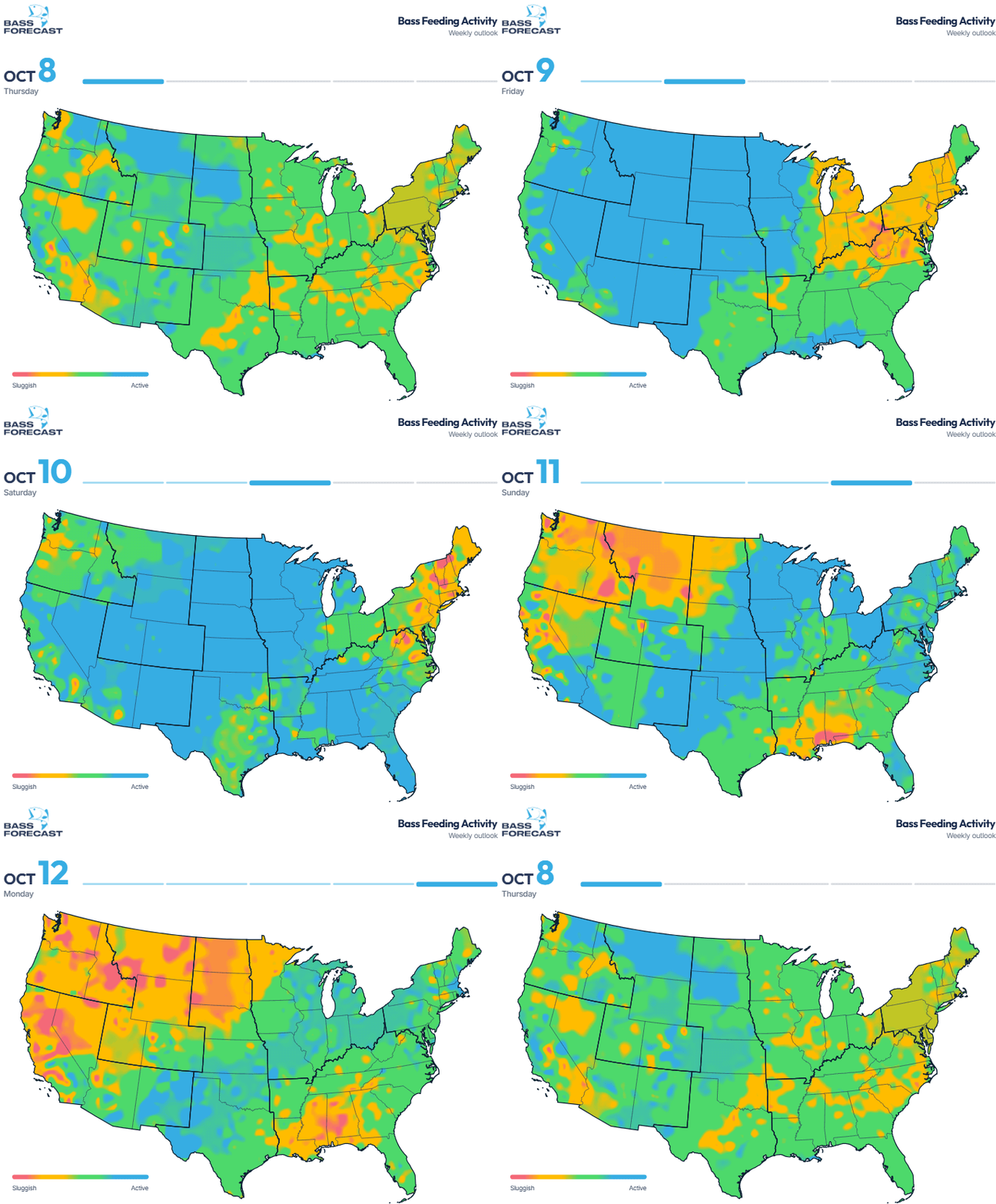
As you refine your shaky head game and dial in those subtle drags and quivers, remember that the real edge comes from stacking the odds in your favor, before you even wet a line. Enter Bass Forecast, our game-changing app that puts hyper-local bass intelligence right in your pocket.
Whether you're eyeing LA's urban reservoirs or chasing trophies across the country, Bass Forecast delivers real-time solunar predictions, weather impacts, water temp forecasts, and bite windows tailored to your spot. Plus, our AI bait recommender scans conditions to suggest the perfect shaky head setup, finesse worm or craw imitation, anywhere, anytime.
Download Bass Forecast today and turn every outing into a limit-maker.
Tight lines, and may your next bass be a personal best!




-1739275914.jpg)
.jpg)
.jpg)


.png)
.png)