
Hot Weather Bass Fishing: Where the Fish Actually Go and How to Catch Them
Share this article with every angler you know!
Hot Weather Bass Fishing:
Where the Fish Actually Go and How to Catch Them
The lake exploded at 5:30 AM. Topwater fish on every cast. Walking baits drawing strikes from open water, buzzbaits getting hammered along grass lines, frogs producing explosions over visible mats. The kind of morning that makes summer fishing worth every early alarm of the year.
By 9:00 AM, the same water felt dead. Same baits, same angler, nothing.
Most anglers blame the bait when this happens. Some blame the weather. A few blame their own skill and start swapping presentations every ten casts trying to find the magic combination that brings the bite back. None of those answers are the right one. The fish moved. Hot weather does that, and once you understand what is actually happening to bass behavior above 85 degrees, the toughest fishing window of the year becomes one of the most predictable.
Most of the country is in the hottest stretch of the summer right now. Here is what is actually happening to the fish on your lake, where they have gone, and how to catch them anyway. Frog fishing in particular hits its peak during this window, and the section on heavy cover patterns is the one to read closely if you have access to mats, pads, or matted vegetation on your home water.
Sign up to be notified of new bass fishing articles!
Bass Forecast Newsletters
Why Summer Bait Selection Feels So Hard
Spring made it easy. In pre-spawn, you threw a reaction bait at shallow staging fish and caught them. In spawn, you threw a finesse worm at a bed and caught them. The right bait was obvious because the fish were doing one thing.
Summer breaks that simplicity. At dawn, your fish are shallow and feeding aggressively on the surface. By mid-morning, they have dropped to mid-depth structure. By noon, they are on offshore brush in twelve feet of water and refusing anything that does not get to the bottom. By the time the sun gets low again, they are back shallow chasing bait. Same fish. Four different patterns in one day.
This is why the bait that worked at six in the morning fails at noon. It is not the bait. It is the angler who keeps using the same bait when the conditions have changed underneath them.
Time of Day Dictates Depth More Than Calendar Date
In summer, the time you fish matters more than the date you fish. A reservoir on June 29 fishes differently at 5:30 AM than it does at 1:00 PM, and the bait choice has to follow the fish. Calendar-based bait selection ("it is June so I am throwing a Pop-R") fails because the fish do not care what month it is. They care what the light is doing.
Build your bait selection around the four windows of the summer day: low light morning, mid-morning transition, midday deep, and low light evening. Each window has its own category of bait. Mixing them up is how an angler with a full tackle box still gets skunked.
Conditions Matter More Than the Calendar
Wind direction, cloud cover, barometric trend, and water clarity all shift the right bait choice even within the same time-of-day window. A calm sunrise calls for a walking bait. A windy sunrise calls for a buzzbait. The bait selection moves with conditions hour by hour during the season.
Get your free 10-day forecast, bite windows, and location-specific bait picks for your bass fishing
at My Bass Forecast.
What Heat Actually Does to Bass
Bass are ectothermic. Their body temperature mirrors the water around them, which means their metabolism, feeding patterns, and positioning all respond directly to what the lake is doing thermally. Spring water in the 60s lets bass roam, feed across multiple depths, and commit to a wide range of presentations. Summer water in the upper 80s and beyond compresses all of that.
Why Metabolism Stays High While Feeding Windows Compress
A common misconception is that hot weather slows bass down. The opposite is closer to the truth. Bass metabolism stays high in warm water. The fish are actually burning more calories than they do in cooler conditions and they have higher overall food needs to maintain themselves through the summer. What changes is when and where they can feed efficiently.
The feeding windows compress because the conditions that support active feeding (favorable oxygen levels, low light, prey availability) only line up for a few hours each day in extreme heat. Bass spend the rest of the day positioning themselves to conserve energy and wait for the next productive window. They are not inactive. They are waiting.
This is the most important shift to internalize. The hot weather bite is not gone. It is concentrated into fewer hours, and those hours are non-negotiable.
Dissolved Oxygen and the Thermocline Reality
On larger reservoirs and deeper lakes, hot weather creates thermal stratification. Warm surface water sits on top, cooler deeper water sits below, and a transition layer called the thermocline separates them. The upper layer holds the oxygen. The lower layer does not.
Bass position above the thermocline because that is where the oxygen is. On a reservoir that has stratified, fish will not be in the deep water you might assume holds them. They will be at the depth where temperature is tolerable and oxygen is available, which is often shallower than midsummer convention suggests. Locating the thermocline depth on your specific water is one of the highest-value pieces of information you can have for summer fishing.
Shallow lakes and rivers do not stratify the same way. Current, depth, and shoreline shape all affect whether oxygen is consistent or pocketed. On rivers, current itself provides oxygenation, which is why river bass often remain catchable through heat that shuts down still water bite.
Why Bright Sun Changes Everything for Shallow Fish
The third variable is light. Bright sun penetrates shallow water in summer and exposes fish that would otherwise be in productive ambush positions. The geometry of bass holding shallow at midday under bright sun puts them at a visibility disadvantage. They lose the ambush advantage that makes shallow feeding productive at dawn, dusk, and under cloud cover.
So they leave. Or, more precisely, they reposition. They push to depth where light penetration is reduced, or they tuck into shaded cover where they regain the ambush position. The shallow water that produced at 5:30 AM is not holding fish at 11:00 AM because the geometry has changed against them.
Where Bass Actually Go in Extreme Heat
Bass do not become inactive in heat. They reposition into three primary zones, and finding which zone your fish have chosen on any given day is the actual game.
Deep Structure With Oxygen Access
The midday primary zone on most reservoirs. Fish push to the deepest available structure that still sits above the thermocline. Offshore brush piles, ledges, rock transitions, shell beds, and main lake humps all hold concentrated populations of fish during the heat of the day.
The structure itself matters less than the depth relationship to the thermocline. A brush pile at twelve feet is the right depth on a lake where the thermocline sits at sixteen. The same brush pile is empty on a lake where the thermocline is at eight feet because fish are above it, not below. Use electronics to find the thermocline on your water first. Then target structure just above that depth.
Shaded Shallow Cover
The holdout pattern. Some bass do not push deep during heat. They tuck into the heaviest available shallow cover and stay there through midday. Dock shadows, overhanging trees, the deepest corner of a slip under a boat house, lily pad fields, hydrilla mats, and matted vegetation all hold fish that prefer the cover-and-shade strategy to the deep-structure strategy.
These fish are harder to catch than deep structure fish because they require specific presentations to reach. A football jig fished offshore covers structure efficiently. A frog over a mat at noon requires patience, accurate casting, and the willingness to work each piece of cover thoroughly. The reward is that mat-holding fish are often the largest fish in the lake, and they get pressured less than offshore fish because most anglers default to deep structure during midday heat.
Current and Aeration Sources
The underrated zone. Anywhere oxygen levels stay elevated through heat. Below dams releasing water, around aerator systems on smaller lakes, near current edges on reservoirs with significant flow, and in tributary mouths where moving water enters the main lake. Bass concentrate at these locations during heat because the oxygen and slightly cooler water create a thermal refuge that does not exist elsewhere on the lake.
If your home water has any current source, learn it. Bass will be there in heat when the rest of the lake feels empty.
Frogs and the Heat Advantage
This is where hot weather fishing becomes truly distinctive. Frog fishing is not just a hot weather pattern. It is the hot weather pattern that produces some of the most explosive, satisfying, and visually memorable bites of the entire fishing year.
Why Heavy Cover Concentrates Fish in Hot Weather
Mats, lily pads, hydrilla, and matted vegetation serve three functions during heat that no other cover provides simultaneously. They block direct sun, which keeps the water beneath them cooler than open shallow water on the same flat. They provide oxygen through ongoing plant photosynthesis. And they concentrate baitfish, frogs, surface insects, and bluegill that bass feed on at the surface from below.
Bass holding under a thick mat at noon are not refugees from the heat. They are positioned in optimal ambush habitat with cover, cooler water, oxygen, and food all in one location. They will sit there for hours and feed on anything that comes through the canopy.
Mats and Pads as Thermal Refuge and Ambush Position
A bass under a quality mat is not the same fish that was burning a topwater at sunrise. The ambush mode is different. The fish is patient, positioned, and waiting for prey to enter the strike zone above. The angler's job is to bring the bait through the cover in a way that mimics natural prey behavior. Hop a frog across the canopy slowly. Pause it in open pockets. Make the fish commit to leaving its position to strike upward through the vegetation.
The strike is the most violent in bass fishing. The bait disappears into a spray of water and vegetation. The fish is committed and pulling down. The angler has approximately one second to recover slack and set hard before the bass gets wrapped in cover.
Named Frog Products and Rigging
The Booyah Pad Crasher is the standard hollow body frog for most situations. Versatile, durable, and effective across mats, pads, and matted vegetation. Black for low light and stained water. White or natural for clear water and bright conditions. Black is the most consistent producer because it creates the strongest silhouette against the surface from below.
The SPRO Bronzeye Frog 65 is the premium option for open pockets within heavy cover and for situations requiring a cleaner walking action. It holds up to repeated hooksets on big fish better than most hollow bodies and is worth the price for serious frog anglers.
The Stanford Baits Boss Dog Frog is a popping frog variant that works well in heavy slop and matted vegetation where you need a pop-and-pause cadence rather than a walked retrieve. The cupped face displaces water through cover and gets attention from fish that would not commit to a quieter presentation.
Rigging matters more than most anglers realize. Tune the legs to the desired length, trim braided line on the trailing edge to reduce drag in cover, and check that the hooks ride exposed enough to penetrate but not so exposed that they catch on every mat. Frog tuning is a constant process. Carry pliers and a pair of scissors in your tackle.
Use heavy braid in fifty to sixty-five pound test, a stout flipping rod with backbone for hookset, and a high-speed reel for picking up slack quickly. Light tackle is the most common reason for missed frog fish. The setup has to be capable of moving a big bass out of heavy cover the moment you set.
Hookset Timing and the Fixes for Missed Frog Fish
Most missed frog fish are angler error, not bait failure. The fish blows up on the frog, the angler sets immediately, and the bait pulls away before the fish has fully committed. The fix is patience.
When the explosion happens, do not set. Reel down to remove slack as quickly as possible. Wait. Count to two while you load the rod by reeling, then set hard with the rod going from low to high. The pause feels impossibly long when the splash is right in front of you. Do it anyway.
A second common mistake is setting too soft. Frog fish are in heavy cover and have leverage against you the moment they take the bait. A light hookset does not penetrate the hard mouth of a large bass through the body of a hollow frog and does not move the fish out of cover. Set like you mean it.
When the Bite Actually Happens in Hot Weather
The timing rules change in heat. The two-hour topwater windows that produce in spring and early summer compress to forty-five minute windows in midsummer. Night fishing becomes legitimate. Midday produces only under specific conditions. Knowing when to be on the water matters more than what bait to throw.
The Compressed Dawn Window
The first forty-five minutes of light is the primary topwater window in heat. Often the most productive window of the entire twenty-four hour cycle. Bass have fed during the cool overnight hours, are positioned shallow at first light, and commit aggressively to surface presentations before the sun begins penetrating shallow water.
The window closes faster in heat than in cooler conditions. By the time the sun is fully above the treeline, many shallow fish have already started repositioning. Be on the water and casting before sunrise, not at sunrise.
The Extended Dusk Window into Night
The evening window is often longer than the morning window in heat. Surface water cools as the sun drops, oxygen levels rebound, and bass become more willing to commit to shallow ambush positions through dusk and into the early dark hours. A buzzbait or walking bait worked into and past sunset can produce thirty to ninety minutes of consistent activity on the right water.
Night fishing extends from this window. Once surface temperatures climb past 85 degrees consistently, bass that feed at night during the cooler overnight hours create a legitimate fishing opportunity that most anglers ignore. A dark hollow body frog worked across a moonlit flat or a black spinnerbait slow-rolled along shoreline cover after dark produces big fish in conditions that look completely dead during the day.
Midday Only With Cloud Cover or Pre-Front Conditions
The middle of a hot bright sunny day is generally unproductive for shallow water bass fishing. The exception is cloud cover. Overcast conditions that move in over a hot stretch extend the productive shallow window dramatically. The same lake that fishes dead at noon under bright sun fishes alive at noon under overcast skies.
Pre-front conditions before a summer thunderstorm produce some of the most aggressive feeding windows of the entire season. Falling barometric pressure, building cloud cover, increasing wind, and dropping light all stack the conditions in favor of shallow ambush feeding. If a system is approaching and conditions are deteriorating, get on the water.
Why the Hour After a Thunderstorm Produces Big
The window after a summer thunderstorm passes is one of the most productive and most underutilized periods in hot weather bass fishing. The storm dropped water temperatures, oxygenated the surface through wind and rain mixing, and pushed prey into windblown shoreline cover. Bass take advantage of the conditions for sixty to ninety minutes after the rain stops before the lake stabilizes.
If you can be on the water in the hour after a thunderstorm during a hot stretch, the fishing can be exceptional. Bring rain gear and watch the lightning closely, but do not wait until the next day to fish a recently-stormed lake.
Beyond Frogs: Other Hot Weather Producers
The article opened with frogs because they own the heat pattern, but no angler should be entirely frog-dependent. The other three bait categories serve different windows and situations during the same hot weather conditions.
Football Jigs and Deep Crankbaits for Midday Structure
The Dirty Jigs Casting Jig with a football head on offshore rock, shell, and brush is the primary midday producer on most reservoirs during heat. Drag it slowly across the structure where the thermocline depth concentrates fish. Long pauses, methodical retrieves, and bottom contact through irregular structure are the keys.
The Strike King 10XD covers offshore brush, ledges, and channel swings at ten to fourteen feet of water. Deflect the bait off cover and let the rebound trigger reaction bites from fish positioned on structure during midday.
Drop Shots on Suspended Fish Near the Thermocline
The Roboworm Straight Tail Worm on a drop shot is the most reliable midday producer for fish suspended near the thermocline rather than holding on bottom structure. Use electronics to find the suspended fish, position over them, drop the bait vertically into the strike zone, and work it with subtle movement in place.
Drop shot fishing during heat requires patience. The fish are not aggressively chasing. They are holding and conserving energy. A bait kept in their face for an extended period produces bites that more active presentations miss entirely.
Walking Baits and Prop Baits for the Short Surface Windows
The Heddon Zara Spook walked across open water during the compressed dawn and dusk windows produces some of the most aggressive fish of the day. The Whopper Plopper 110 works the same water with steady noise that triggers in slight chop where walking baits lose effectiveness.
The Booyah Buzz with a Colorado blade along grass edges and shoreline cover during the same low light windows produces the cover-oriented fish that walking baits often miss. Buzzbait, walking bait, and frog form the three-pronged surface attack that covers most water types during productive heat windows.
Punching Through Matted Grass
Punching is the bigger brother to frog fishing and one of the most productive hot weather techniques on lakes with thick matted vegetation. Where a frog works the canopy from above, punching drops a heavy weight straight through the mat to deliver a bait directly to bass holding underneath. These are the same fish that crush frogs, but punching reaches them when they are not committed enough to come up through the cover.
The setup is heavy and purposeful. A one-ounce to one-and-a-half-ounce tungsten weight pegged to the line, a stout 4/0 or 5/0 flipping hook, and a compact creature bait like a Zoom Z-Craw, Berkley PowerBait MaxScent Creature Hawg, or Missile Baits D Bomb threaded behind it. Sixty-five-pound braid, a heavy flipping rod, and a high-speed reel are non-negotiable. Punching is short-line fishing through cover that will wrap and break light tackle immediately.
The technique is straightforward. Position the boat or kayak directly above thick matted grass, hydrilla mats, or matted hyacinth. Pitch the rig up and let the weight punch straight down through the canopy into the open water below. Let it fall on a controlled slack line. Most bites happen on the initial fall. If nothing strikes within ten seconds, lift the bait once, let it fall again, then move to the next punch hole. Cover thoroughly, work each piece of cover quickly, and let the weight do the work of getting through the mat. Punching during the hottest part of the day on a mat-covered lake is one of the few midday patterns that produces consistent fish in extreme heat.
Regional Breakdown: Where Each Pattern Is Hitting Right Now
Southeast (Florida, Georgia, Alabama, Mississippi, South Carolina, Louisiana) Hottest water of the season. Surface temperatures in the upper 80s to low 90s on most reservoirs. The frog bite on hydrilla mats in Florida and Georgia is at peak production right now. Night fishing is widespread and worth planning around. Midday topwater is essentially over until cloud cover returns. Football jigs and deep crankbaits dominate the offshore daytime pattern.
Southwest (Texas, Oklahoma, Arkansas, Louisiana) Heat dome conditions. Texas and Oklahoma reservoirs running 88 to 92 degrees on the surface. Offshore ledge fishing remains the daytime pattern but the topwater windows have compressed to the first 45 minutes and last 45 minutes of light. Walking baits and frogs during those windows. Night fishing is starting to produce on the right water.
Mid-South (Tennessee, North Carolina, Virginia, Kentucky, West Virginia) Approaching peak heat. Tennessee River reservoirs in the mid to upper 80s. Football jig and deep crankbait fishing on offshore structure dominates midday. Topwater windows at dawn and dusk remain productive. The frog bite on Tennessee River grass and matted vegetation is hitting peak production this week.
Mid-Atlantic and Ozarks (Missouri, Illinois, Indiana, Ohio, Maryland, Pennsylvania) Full summer heat. Highland reservoirs producing offshore football jig fish on rock and ledge structure. Natural lake areas producing frog action on grass and pads. Lake of the Ozarks and Bull Shoals are in peak summer pattern with both deep and shallow heat patterns producing on the same water.
Great Lakes and Upper Midwest (Michigan, Wisconsin, Minnesota, Iowa, New York) Early to mid-summer heat building. Surface temperatures in the upper 70s climbing. Topwater windows remain extended compared to southern regions. Frog and buzzbait fishing along largemouth grass at first and last light is at peak production. Smallmouth topwater over rocky structure remains productive longer than further south.
Northeast and New England (New York, Pennsylvania, New Jersey, Connecticut, Massachusetts, Vermont) Early summer heat. Surface temperatures in the mid 70s. The hot weather behavioral changes covered in this article are forward-looking for this region as temperatures continue climbing through July. Most patterns from the early summer transition are still applicable here.
West and Pacific Northwest (California, Oregon, Washington, Nevada, Arizona) Low-elevation California reservoirs at peak summer heat. Higher elevation Pacific Northwest lakes in early to mid summer. Walking baits and Whopper Ploppers at dawn over offshore structure produce on Clear Lake, Folsom, and similar California water. Frog fishing on hydrilla and tule mats in California reservoirs is productive.
Rocky Mountains (Colorado, Utah, Wyoming, Montana, Idaho) Lower elevations entering summer heat. Higher elevations still in spawn or early post-spawn at altitude. The full hot weather framework is forward-looking for most of this region as temperatures continue building through July.
Angler-Type Breakdown
Bank Anglers
Hot weather is the hardest stretch of the year from the bank because the productive water is deeper than shoreline access allows during midday, and most of the productive shallow fishing happens at times when most anglers prefer to be home. The strategy is windows.
Be on the water 45 minutes before sunrise with a walking bait and a frog if you can reach matted vegetation. The first 45 minutes of light is the most consistent productive window of the entire day. Skip midday entirely unless you have access to deep shoreline structure like riprap extending into deep water, bridge pilings, or bluff banks with immediate depth access.
Return 30 minutes before sunset for the evening topwater window and consider staying into dark for legitimate night fishing on familiar banks. A black hollow body frog worked across visible cover after dark produces fish that the same bank will not give up during daylight.
Kayak Anglers
Kayaks own hot weather frog fishing. Mat-covered protected coves and shallow lily pad fields that boats avoid because of trolling motor noise are exactly where bass concentrate during heat for thermal protection and ambush. A Booyah Pad Crasher worked across matted vegetation from a kayak at first light is one of the most productive patterns of the entire summer.
Launch in the dark. Plan the route. Be over fish at first light. The kayak access advantage is meaningless if you arrive at the cover after the productive window has closed.
Midday, shift to shaded backwater coves with finesse presentations or a wacky-rigged worm. The same kayak access that makes you effective at dawn lets you stay over fish in shaded protected areas through midday when boat anglers cannot reach the same water quietly.
Boat Anglers
Use electronics to locate the thermocline on your specific water. This single piece of information is the difference between catching fish on summer offshore structure and casting at empty water all day. The thermocline depth varies by lake, season, and weather, and finding it is non-negotiable for serious summer boat fishing.
Once you have located the thermocline depth, mark the brush piles, ledges, and offshore structure that hold fish above it. Run between topwater locations at dawn, work the offshore structure during midday, and return for the dusk window. The angler who tracks the thermocline depth on a specific lake through the heat season catches significantly more fish than the angler who guesses at depth.
Frequently Asked Questions (FAQs)
Do bass bite in hot weather?
Yes, but the productive windows compress significantly. Above 85-degree water temperatures, dawn and dusk become the primary surface windows with night fishing increasingly productive. Midday production shifts almost entirely to deep structure and shaded shallow cover. Bass do not stop feeding in heat. They feed for shorter periods and in different locations than they do in cooler conditions.
At what temperature do bass stop biting?
Bass do not stop biting at a specific temperature, but they adjust their behavior significantly as water climbs above 85 degrees. The relationship is observational and varies by water body, depth, dissolved oxygen levels, and current. Bass remain catchable through the highest summer temperatures with the right approach to timing, location, and presentation.
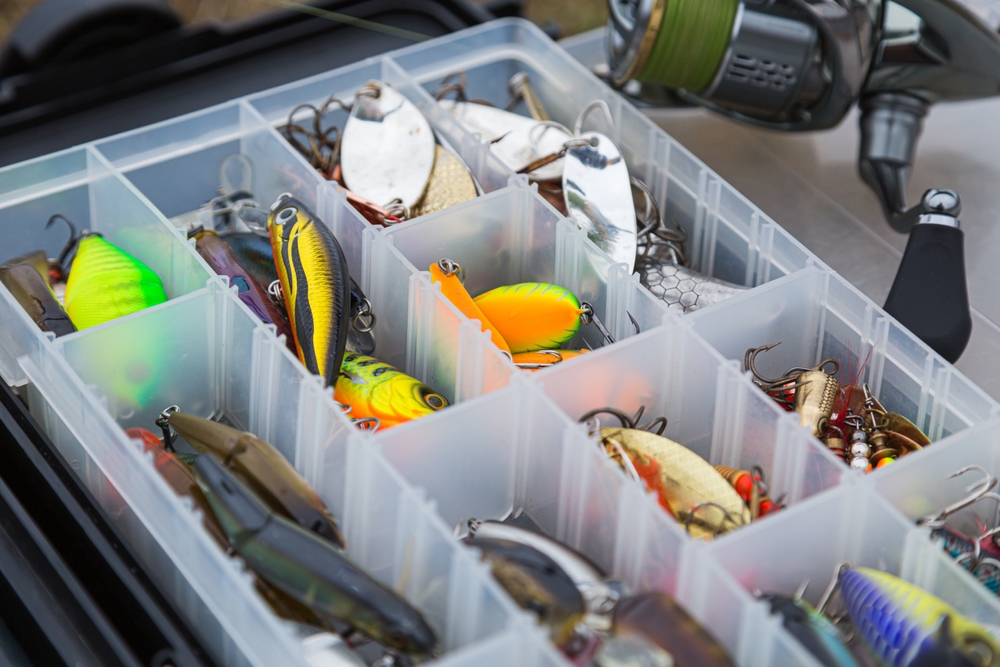
What is the best bait for hot weather bass fishing?
Category and timing matter more than any single bait. Frogs over mats and pads during the productive shallow windows. Football jigs and deep crankbaits on offshore structure during midday. Walking baits at dawn and dusk on open water. Drop shots on suspended fish near the thermocline during midday windows. The right bait depends on where the fish are and what window you are fishing.
Why are frogs so effective in hot weather?
Bass use heavy cover like mats, lily pads, and matted vegetation for thermal protection and ambush during hot weather. The cover provides shade, oxygen, and concentrated prey including frogs, surface insects, and bluegill chasing those insects. A hollow body frog is the only presentation that can reach fish holding in heavy cover without fouling out. The fish are not heat refugees. They are positioned in optimal ambush habitat.
What time of day is best for bass fishing in hot weather?
First 45 minutes of light and final 45 minutes before dark consistently produce the most aggressive surface bites in hot weather. Overcast and pre-front conditions can extend the productive window. Midday is best for offshore deep structure fishing rather than shallow water. Night fishing becomes legitimate on most waters once surface temperatures push past 85 degrees and is one of the most underutilized opportunities in summer bass fishing.
Should I fish deep or shallow in hot weather?
Both, at different times. Shallow during the compressed dawn and dusk windows for topwater, buzzbait, and frog action. Deep during midday on offshore structure above the thermocline. The angler who fishes both windows on the same day during hot weather catches significantly more fish than the angler who commits to a single depth range.
Does the thermocline matter for bass fishing in hot weather?
Yes, on lakes deep enough to develop one. The thermocline separates warmer oxygenated upper water from cooler oxygen-depleted lower water. Bass position above the thermocline because that is where the oxygen is available. Locating the thermocline depth on your specific water and targeting structure just above it concentrates summer fish during midday windows. Shallow lakes and rivers do not stratify the same way and require different reading.
Use the Bass Forecast App or Web App to know the exact baits to use anytime and anywhere
Summer bait selection rewards anglers who match the bait to the conditions. Bass Forecast tracks wind, cloud cover, barometric trend, water temperature, and solunar timing so you know whether to grab a topwater, a deep crankbait, or a drop shot before you ever load the truck.
Download Bass Forecast or use My.BassForecast.com and stop overthinking the tackle box.

-1739275914.jpg)
.jpg)
.jpg)
.png)
.png)