
Bottom Bass Fishing Rigs Explained: When to Use Each and Why They Work
As much as we all love our topwater frogs, swimbaits, and Whopper Ploppers, they just don’t work sometimes.
Bass move throughout the water column frequently, and you need to have a diverse repertoire of bottom bass fishing rigs to keep the action going when those topwater staples are failing.
There are a ton of bottom fishing rigs in the sport, and new ones are made all the time when anglers get creative.
Today, we’re going to go over the best bottom bass fishing rigs for you to learn and when it’s best to use them.
1: The Texas Rig
This is one bottom rig that you’ve probably already used countless times unless you’re just starting on your journey with the sport. It’s the first rig most anglers learn, and it’s so versatile that many anglers don’t even look at it as a bottom rig.
However, that is what it was made for, and fishing the bottom is where it excels.
What is a Texas Rig?
A Texas rig is a very simple weedless rig that can be used with almost any soft plastic lure. It’s cheap to set up, easy to tie, and is one of the most effective rigs out there. It’s also one of the easiest to learn.
Making a Texas Rig
Making a Texas rig is cheap and easy. You need a worm hook that’s sized appropriately for the lure you’re using, a bullet weight, and, of course, a soft plastic lure.
For your first rig, we recommend using a good old-fashioned Zoom Trick Worm or a similar worm-style bait. Those are what the rig was originally made with, and they’re going to be your bread and butter for most of the prime fishing season when you bust this rig out.
First, you slip your weight onto your line so the point is aiming back up to your rod tip. This is going to control how the lure behaves underwater, and it’s going to give you extra casting distance since it cuts through the air like a bullet.
Then, tie your hook on. We recommend a Palomar knot. You’ll learn in the next section that this is used in some pretty rough spots, and you want a tough knot holding it on your line.
All you do to finish it off is thread the hook point about ¼ inch through the “face” of the worm and pop it out the back so the lure is belly up. Then slide the head up to the shaft of the hook, rotating it to position the worm belly down. Finally, pop the hook point through the mid-section of the worm.
A proper Texas rig will have the worm lying horizontal without bends or kinks.
That’s it. It takes about a minute to tie it on when you get used to the process.
When Does a Texas Rig Work and Why?
A Texas rig can be used in a wide variety of situations, but it’s primarily used for bottom fishing in areas with lots of weeds and hazards.
The way the lure is hooked makes it extremely weedless. Most anglers bury the point of the hook into the back of the lure at the end, but even if you don’t do that, it’s a lot harder to snag limbs, weeds, reeds, garbage, and other things that tend to be very close to the perfect fishing spots.
You can cast a Texas rig right into a weed bed to target hiding bass, and as long as you keep the line from wrapping around harder material, it’s going to come right back out without a fuss.
Due to the positioning of the weight in comparison to the lure’s face, it also makes most lures look as if they’re gently pecking at crustaceans on the bottom of the lake. Of course, you can also make it look like a hopping craw, a swimming worm, and other things.
It’s best to use the Texas rig in places where the bottom tends to claim a lot of lures. Rocky bottoms, weed lines, and similar spots are where the Texas rig really shines. With a heavyweight, you can even use it to punch through moss mats.
2: The Drop Shot
The drop shot rig is a far more specialized rig than the Texas rig, and it’s one that you might not be familiar with, despite having experience on the water. It’s popular, but it’s not used as often.
How to Make a Drop Shot Rig
Making a drop shot rig is simple. You tie a simple Palomar knot at the end of your line, and you attach a special drop shot weight. These are weights that look like cylinders with an eye protruding from the top to tie them on.
While specialized drop shot weights are preferred, you can use some other weight designs, such as casting sinkers. They just have to have the eye of the weight on top so they can sink straight down. The issue with using other weights is that the rig’s performance and presentation might change.
Then, about 18 inches up from your weight, attach a hook with a cinch knot and put your preferred lure on it.
If you did it right, you’ll have the weight dangling at the end, and your bait will stand up perpendicular to your line. Imagine the weight resting on the bottom right beneath your rod tip. The lure should look like it’s swimming through the column, if you did it right.
There’s also an ultralight variant of this rig that functions the same way, but you clamp a larger split shot onto the bottom. This is used for very small ultralight lures on ultralight equipment, but it’s a nice tool to keep in your mental toolbox in case you ever need it.
When to Use a Drop Shot Rig and Why it Works
The drop shot rig is designed for vertical fishing. While it’s a bottom bass fishing rig, it’s important to note that it often catches bass on the drop, and that makes it effective throughout the entire column. The catch is that it tends to be very limited when it comes to when you should use it.
Most anglers use it during the spawning season. If you can find bass beds, a drop shot rig lets you bounce your bait right on top of them. It’s highly precise, and it will irritate the bass if you use it properly.
You can also use it on suspended bass if you can get over them, or when you have to fish in a very tight hole where casting around is risky.
This works because it allows you to bounce the lure in one spot controllably, and if you dead stick it in a current, it looks like a small fish trying to swim by.
3: Carolina Rig
The Carolina rig is essentially a Texas rig that’s longer and requires more steps and gear. It creates a more natural and slower hopping presentation, and it can be great for getting bites in situations where the Texas rig just isn’t getting the job done.
How to Make a Carolina Rig
Fishing a Carolina rig means working with a setup that uses more steps and gear than a standard Texas rig.
First, you’ll slide a heavier weight onto the line. Usually, you see anglers using ball weights for this. It helps when they choose to drag the lure rather than bounce it. It’s not required, though.
Then, a bead is slid onto the line before tying on a swivel. The bead works as a cushion. It won’t let your swivel beat up your lead weight as they slam together.
From there, you tie a leader that’s about 12 to 18 inches long onto the free end of the swivel. Choose the lure you’re going to use, find an EWG hook that’s the right size for it, and tie the hook on. All you have to do to finish it off is thread your lure like you would for a Texas rig.
When to Use a Carolina Rig and Why
A Carolina rig is a weed-resistant rig that functions a lot like a Texas rig. The difference is that the lure isn’t right behind the weight. So, instead of looking like a fish pecking at the bottom, your lure will hop up and gently glide in an arc.
Also, since the weight will land much sooner than the unweighted lure, the lure will finish that hop with a natural fall.
With the Carolina rig, you get the weedless features of the Texas rig, but the action is toned down dramatically. This is perfect for situations with finicky bass.
The issue is that rigs with lots of line between sections can get wrapped around things more easily. So, you need to be a bit more careful. It’s also not as versatile, and you’ll want to stick to using it on sandy bottoms and lightly weeded areas.
4: The Ned Rig
The Ned rig is probably the simplest bottom rig you can tie, and it’s extraordinarily easy to use.
It lacks some key benefits of other rigs on this list, though. It’s not weedless. That can be a problem with bottom fishing, especially for beginners.
However, it does an amazing job in finesse situations, and it’s very easy to use.
How to Make a Ned Rig
Making a Ned rig is as simple as tying on a jig head and threading a soft plastic lure onto it.
Specifically, you want a mushroom head jig. This is a special jig head that has a flat “face” on the front of it. The bait should be smaller. We usually like to use 2-inch or 3-inch soft plastics with this rig.
When to Use a Ned Rig and Why it Works
Ned rigs are useful in high-pressure situations when finesse is key. That’s why we prefer to use small plastics with it.
This works because the mushroom jig drops it to the bottom and stands the lure up vertically. It’s a relatively slow fall with such a small head and lure, and it makes the lure look like it’s pecking at the bottom or digging. You just hop it around slightly to give it a bit of action.
While it’s not going to work as well when the bass want a big meal, it is perfect for days when the bass are being hammered by other anglers. In fact, that’s why it was made. It was used in a tournament with amazing results by Ned Kehde.
When to Switch to Bottom Fishing
Each of these rigs has specific situations it excels in, but they’re mostly environmental situations.
Knowing when to switch to these rigs instead of your swimbaits and similar options is just as important.
The bass moves lower in the column for a wide variety of reasons. They’ll do it throughout the day, during different seasons for various reasons, and more.
The bass typically heads lower in the column to cool down during the summer. In the fall and winter, they go lower to stay in the hot zones, because it takes longer for those parts of the water to change temperature. Then, when the sun is hitting the surface hard, they come up to enjoy some warmth.
They’ll also dive deep before storms and during other adverse conditions.
If you notice any of that when you’re on the water, it’s time to look at the more specific details of your fishing spot and pick one of the bottom rigs that match those details. Continuing to fish up top isn’t going to do much good.
Expand Your Skill Set with These Must-Know Bottom Rigs
Bottom bass fishing rigs are crucial if you want to consistently catch fish. You can’t always rely on spinners, Whopper Ploppers, and swimbaits. Take the time to learn these 4 rigs, and you’ll be prepared for anything.
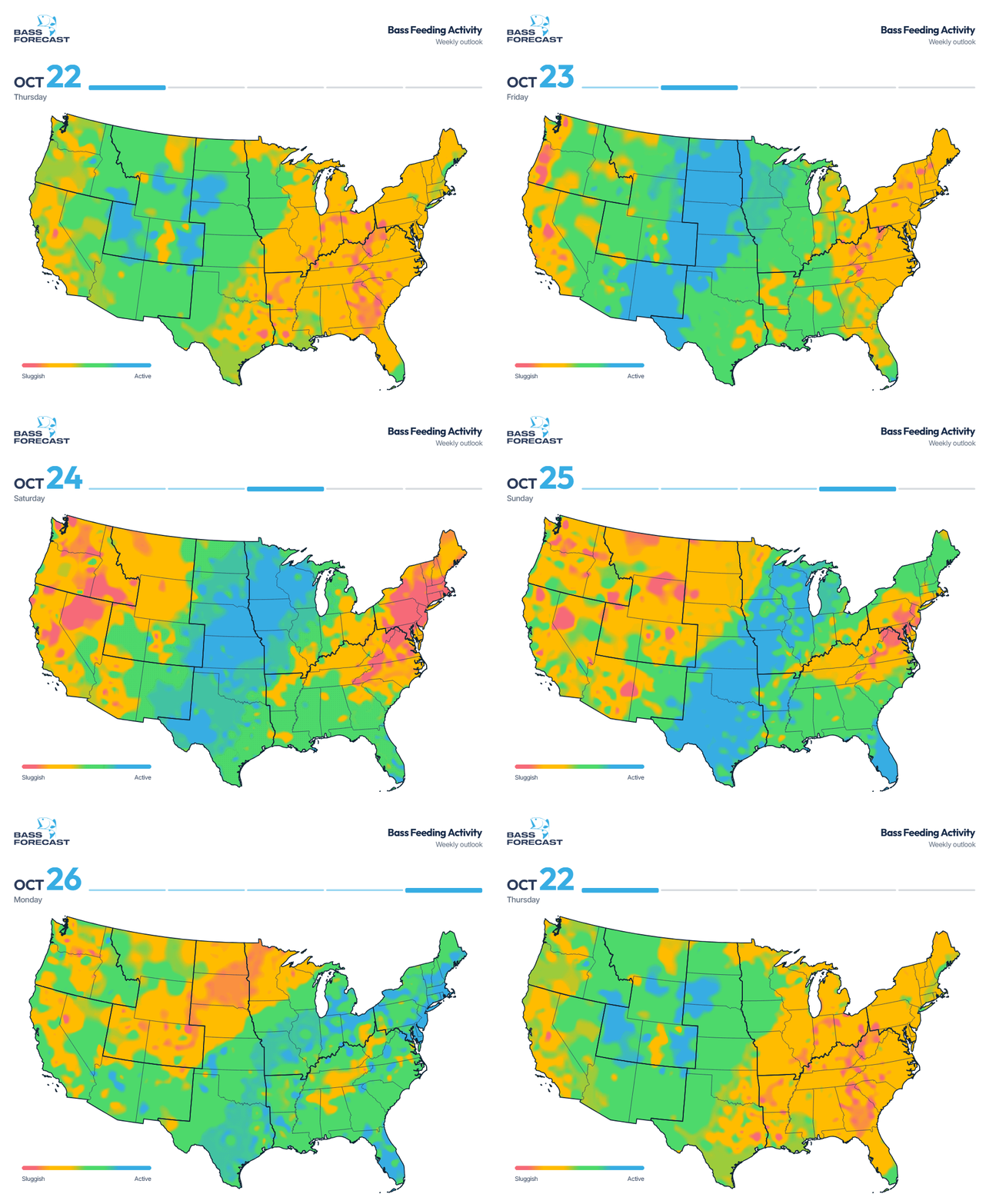
To find the perfect spots and times to try them out, download the Bass Forecast app!


.png)
.png)