
Fall Smallmouth Bass Fishing: Cold-Water Tactics for Hard-Fighting Fish
Largemouth bass might be the reigning champion of the sport fishing world, but smallies offer one of the hardest fights you can get in North America’s freshwater fisheries, and they’re an amazing target when the temps drop.
In fact, while largemouth are starting to feel the impact of the weather, smallies are at their best.
However, you do need to adjust your approach when targeting smallies, and there are even more adjustments when you target them in cold water.
Today, we’re going to go over smallmouth bass fall fishing tactics you can rely on, cast after cast.
Getting Started: When The Smallies Fire Up
When you think of fall bass fishing, you probably start thinking about the first month or so after the turnover. That’s when the largemouth bass are really aggressive, and since the largemouth dominate the sport, that sets the tone for most anglers.
Well, smallies don’t kick it into high gear nearly as quickly. You’ll want to wait until the water dips beneath 60 degrees consistently, and in most places, that’s going to be near the end of fall.
This lines up perfectly for bass anglers, because you can target largemouth during their peak season, and then switch to smallies when the largemouth tone it down for the year.
Of course, you’ll need to live in an area where both are readily accessible, but that’s not too difficult in the US.
Gear Adjustments to Target Smallmouth in the Cold
As you shift from the first half of fall into the latter half to target smallies, you might need to make some small gear adjustments. You don’t have to worry about anything crazy. Smallies just tend to weigh less, and your lure choices will be a little different.
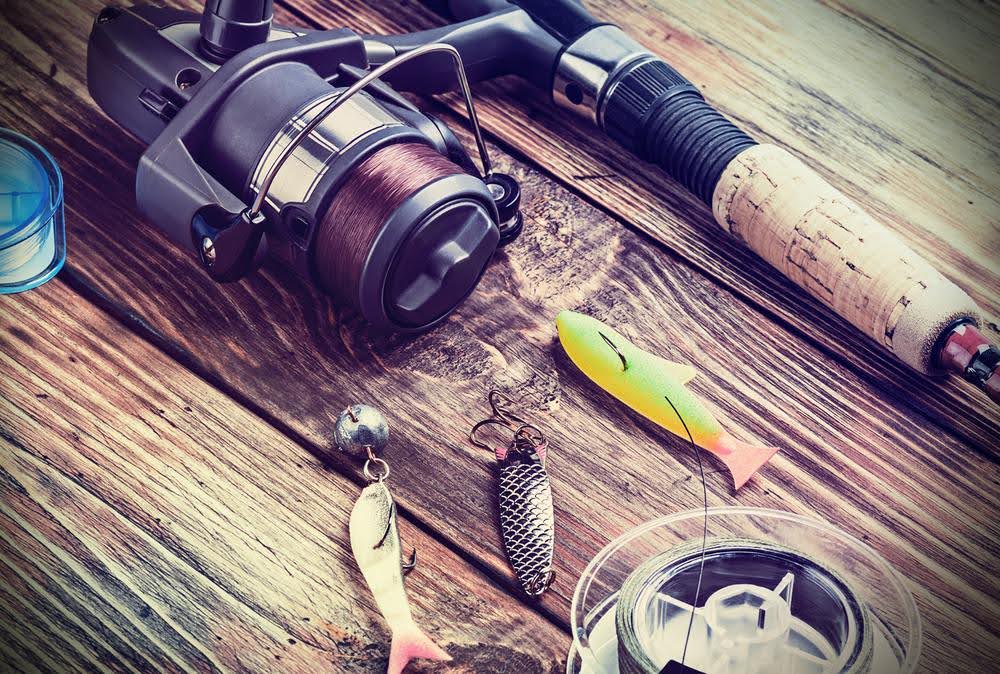
A good all-around option for every trip is a medium-powered casting rod paired with a well-matched baitcaster reel. A lot of the lures we’ll be mentioning are fast-hitting lures that you want to burn across the water, and the extra accuracy you get from this setup is excellent for making long casts right along smallmouth hotspots.
However, it’s always good to have a medium-heavy casting rod on-hand for any bottom fishing you need to do with heavier rigs, and we personally like to use an ultralight when the pressure starts ramping up or the bass are moving slowly.
You can dial down your line’s test rating. Smallies are usually going to be under five pounds, and even if you break a lake record, you’re unlikely to break the 10-lb mark.
While they’re not small fish, they don’t get nearly as big as the largest largemouth. While you don’t have to do this, it will help you get extra casting distance.
In any event, you won’t need your super-heavy rods for moss mat punching or anything like that to follow these tips.
The Best Lures for Fall Smallmouth Bass Fishing
Getting your tacklebox right is one of the biggest decisions you’ll make. Your lure choice is crucial, and it will make the difference between high-octane fishing fun and slow days staring at the waves.
Luckily, most of the lures we love for smallmouth bass fall fishing are in most anglers’ tackle boxes already. They just might not be your bread-and-butter lures most of the year.
First up, you need a Whopper Plopper. We recommend the original full-sized model, but you can try the smaller version. This is going to be an excellent topwater lure that caters to the strike behaviors of smallmouth bass.
A Ned rig with multiple colors of your preferred soft plastic is also a good choice. Just like when you’re using a Ned for largemouth, this is going to be your go-to finesse option.
The Strike King Rage Swimmer is a single-tail paddle tail bait that kicks up a lot of water like the Whopper Plopper, but you’ll be using it to get down into the column when the topwater bite isn’t working out.
Finally, grab a good deep-diving crank. We love Rapala and 6th Sense, but you likely have your own favorite in your tackle box if you’re an experienced angler.
There are plenty of other lures that will work, but those 4 options are a solid foundation for following the tips we’ll be talking about throughout the rest of the guide.
Where to Target Late Fall Smallmouth Bass
One of the most obvious differences you’ll spot between smallies and largemouth during the fall is where they tend to hang out.
Here's where to start your hunt to avoid casting into dead water.
1: Drop Offs Near Deep Water
The smallmouth will hang out around the shallows at certain times during this period, and you should start there like you would with largemouth bass. However, you’ll find them in the deep end just as often as the weather changes. So, don’t get too attached to fishing the shallows.
One of the best places to start your hunt is on a nice flat, shallow area next to a big drop-off. The optimal depth is going to be between 5 feet and 15 feet of water if the water is in the 50s or lower.
In most parts of the country, that’s the typical water temperature in the late part of fall. Of course, in some areas, the water is warmer or colder, and your strategy will have to change. There’s a lot of adaptation required when targeting smallies.
Around these drop-offs, you can use a variety of lures, but starting with a paddle tail or Ned rig is a good idea. Since the water is shallower, these lures fit right in, and they’re proven bass slayers.
2: In the Deep End
If the water hasn’t hit the lower 50s yet, you can still find smallies in the deep end. They hang around in the depths near the shallower spots to catch wandering bait fish and craws that are unfortunate enough to get in front of them.
When this is the case, we recommend going straight to the deep end and tossing your deep-diving crank bait. Make some noise lower in the column, and the smallmouth are almost guaranteed to snap it up quickly.
This isn’t just something the smallies do on warmer days, either.
When you get to the really cold parts of fall toward December, they’ll head out to the deeper water.
This is why adaptability is so important. Some parts of the country will hit 40-degree water temps earlier than December, when most anglers are still tossing Ned jigs around in the shallows.
3: Points
Look at the lake’s geography and find a point. That’s a great spot to start fishing, regardless of the temperature. The smallmouth will hang around points where baitfish get a break from the current, and you’re almost guaranteed to find something.
The main consideration to make here is how you approach the spot.
You don’t want to get too close and risk scaring the smallmouth off. Casting past the point from a distance is far more effective.
The goal should be to cast several feet beyond where you think the bass will be and then reel your lure in through that hotspot for a natural presentation. They’re on the hunt, and they’re far more likely to bite something that looks natural than a random piece of plastic that fell right in front of their face.
Tactics for Cold-Water Smallmouth in the Late Fall
There are a variety of ways to approach each of the fishing opportunities we highlighted, and we’re going to go over each one.
1: Burn a Whopper Plopper
In the early morning hours, when there is barely any sunlight, and then right as the sunlight is disappearing in the afternoon, you need to tie a Whopper Plopper.
The topwater bite is usually dead in the late fall, but when you’re targeting smallies, it’s still a practical approach until the water gets extremely cold.
Burning a Whopper Plopper around points and along reed lines is almost a surefire way to get an aggressive bite.
If you don’t have a Whopper Plopper, a chatterbait is another great option for the same tactic, and plenty of anglers tie topwater frogs onto heavier rods for the same purpose.
Personally, we prefer the classic Plopper, and it’s what we’ve had the best results with, especially since the frogs aren’t nearly as active in the late fall.
2: High-Stick Your Topwater Lures
This tip goes with our previous one. If you’re using a topwater lure to buzz the reed lines and points, point your rod up high while you retrieve it.
This doesn’t impact your presentation. It resolves one of the major issues anglers have with topwater fishing.
You get so used to instantly jerking your rod up and setting the hook that it becomes muscle memory. Smallies don’t get the bait into their mouth instantly when you see the water swell, and you end up pulling the lure away.
By high-sticking your rod, you’ll have to lower the tip all the way down and then crank it all the way back to set the hook well. This makes it a lot easier to ensure you give the bass time to take the lure in than counting or watching the lure disappear first.
3: Use the Ned Around Hard Cover
If you’re fishing around rocks, boat dock stilts, and other hard features, slip a Ned rig onto your line with a small finesse bait on it.
Dragging that small Ned rig around isn’t as loud and energetic as a crank or Whopper Plopper, but the subtle action will draw out the lazier bass hiding in those spots.
This is particularly useful if it’s really late in the season and even the smallies are starting to wind down. Some of the bigger and more intense baits won’t entice the lethargic bass, but a small Ned rig promises an easy meal.
4: Put a Paddle Tail on the Bottom
Usually, you want to swim a paddle tail swimbait around in the middle of the column or just over the bottom, but in these colder temperatures, it can be a good idea to let it sink and roll it around.
To do this, thread it onto a ball head jig. These are the standard traditional jigheads that most anglers have hundreds of. They’re not as commonly used as trendier rigs these days, but they’re still effective and great for smaller swimbaits.
When you use this approach, it’ll look like a small bait fish struggling to get food on the bottom, and that paddle tail will have just enough action to draw in the bass without being too obnoxious.
Just make sure to maintain contact with the bottom and use a soft dragging motion instead of your usual pops and twitches.
You can even fish these vertically like you would for crappie.
Is There a Reason to Fish This Late in the Fall?
Since most anglers pack up their kits when the weather gets slightly uncomfortable, we completely understand if you’re gauging the effort-reward balance for late fall fishing.
You probably hear all the time that the fish aren’t going to bite, and when you have to stand out in the cold for hours, it’s tempting to just do something else.
Well, with largemouth, it is very hard to catch fish around the late fall and the winter transition. Even a lot of experienced anglers don’t bother.
Smallies are a bit more practical to target, though. They do better in colder water, and while they’re still affected by it, their higher tolerances make them much more likely to bite.
Not only that, but this is when you’re going to catch the heaviest smallies possible. They just packed on weight to prepare for winter. If you want to break a record or even just beat your personal best, this is the time to do it.
Cold-weather fishing is challenging, but every catch feels like a win, and that’s what makes it so rewarding.
Make the Most of the Fall Bite
Smallmouth bass fall fishing can be unpredictable, but it also offers some of the most rewarding moments of the year. With fewer anglers on the water and bass feeding aggressively before winter, every trip has the potential for a standout catch.
Staying alert to changing conditions and choosing the right windows to fish will always give you an edge.
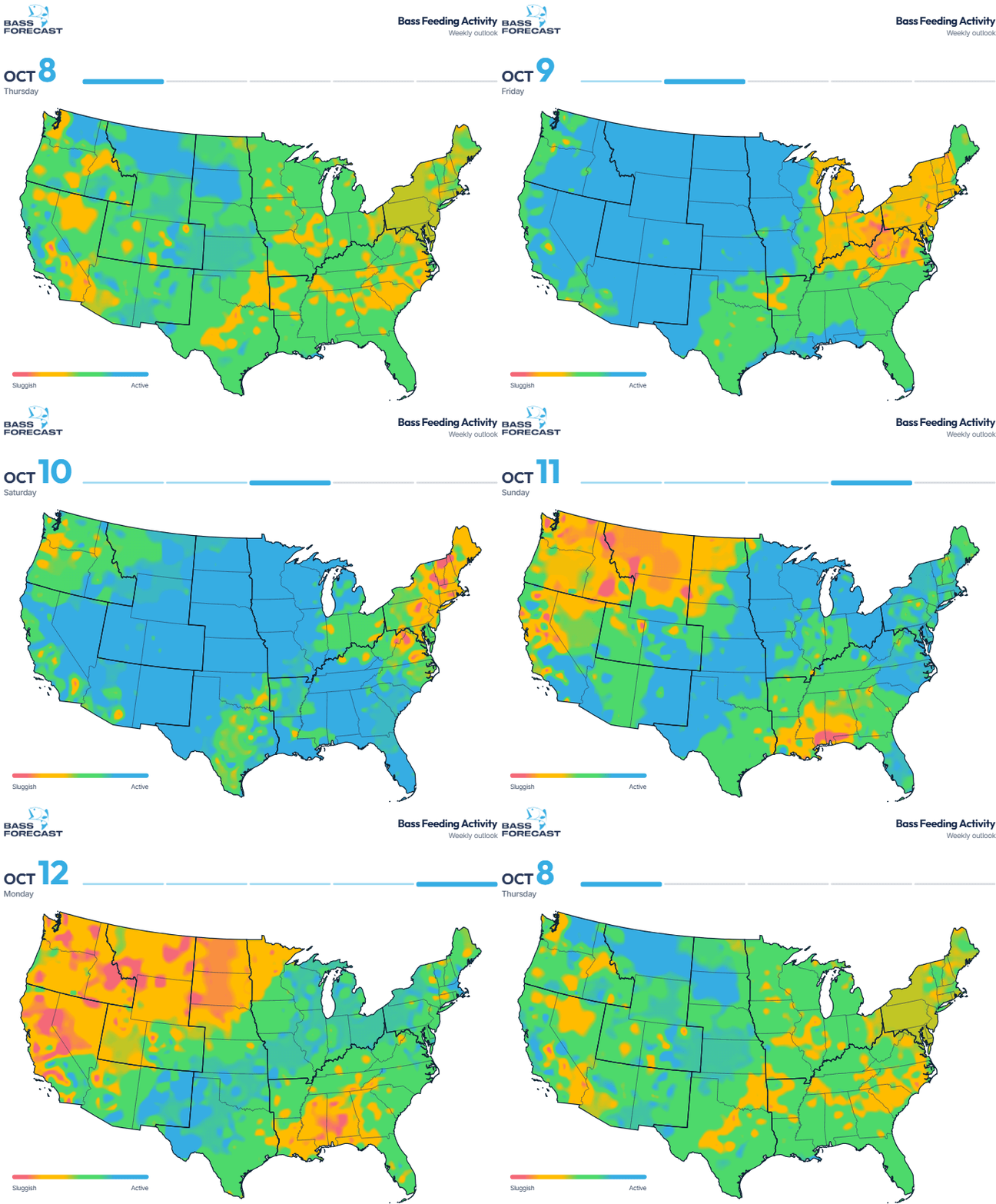
If you want to boost your success and time your trips more effectively, download the Bass Forecast app and fish smarter this season!

-1739275914.jpg)
.jpg)
.jpg)
.png)
.png)