
Post-Spawn Bass Fishing Right Now: Why They Stopped Biting and How to Catch Them
Share this article with every angler you know!
Post-Spawn Bass Fishing Right Now: Why They Stopped Biting and How to Catch Them Anyway
Two weeks ago you were sight fishing beds in two feet of water and catching fish on every other cast. The lake felt loaded. You had three good trips back to back and you were starting to think this might be the year you finally figure bass fishing out.
Then last weekend happened.
Same lake. Same shoreline. Same baits. Same time of day. Nothing.
Welcome to post-spawn. It is the most predictable disappointment in bass fishing, and it happens every year across most of the country as the spawn winds down and the fish slide into one of the most distinct biological phases of their entire calendar. The bass have not vanished. They have not stopped existing. They are doing exactly what they are supposed to do, and once you understand what that is, you can catch them again.
It just looks nothing like the way you were fishing two weeks ago.
Sign up to be notified of new bass fishing articles!
Bass Forecast Newsletters
What Happens to Bass After the Spawn
The post-spawn period is not a single event. It is a multi-week biological recovery that affects female and male bass differently, takes time to play out, and ends with the fish returning to active feeding mode and transitioning into summer patterns. Understanding what is happening to the fish during that window is the foundation of catching them.
Female Recovery: The Depleted Phase
Female bass arrive at the spawning flat carrying eggs that may account for fifteen to twenty percent of their body weight. When they spawn, all of that mass leaves their body in a short window. Their bodies are physically depleted, their metabolism is rebuilding from the hormonal demands of the spawn, and their feeding drive is suppressed for a period that typically lasts two to three weeks for individual fish.
During this recovery, females are not chasing anything. They suspend near structure, hold tight to cover, and conserve energy. A fish that was a chrome-bright aggressive female three weeks ago is now a thinner, darker, slower version of the same animal. Standard reaction baits do not interest her. Standard moving presentations do not trigger her. She is alive and well. She is just not interested.
Male Guard Behavior: Still on the Flat, Different Reasons
Male bass on the bed have a different post-spawn timeline. After the female deposits eggs and leaves, the male stays on the nest, guards the eggs through incubation, and continues guarding fry for one to two weeks after they hatch. During this period, the male is still on the spawning flat or in the same general area but is operating on defensive instinct rather than feeding behavior.
You will still find these fish in shallow water. They will still strike baits that invade their territory. They are not chasing bait, but they will react to a presentation that approaches the fry. This creates a confusing situation for anglers: some bass on the lake are still catchable in shallow water using bed fishing tactics, while the majority of the population has moved into deep recovery and requires a completely different approach.
The Recovery Timeline
Most individual fish need two to three weeks to return to active feeding. The full transition for an entire population on a body of water typically takes three to four weeks because not all fish spawn at exactly the same time. The earliest spawners begin recovering and feeding again while the latest spawners are still in the depleted phase.
This is why post-spawn fishing on the same lake can produce wildly different results over the course of a month. Anglers who fish the same body of water consistently through May and June will often report a tough first two weeks of post-spawn, a slowly improving middle stretch, and a sudden break in the bite as recovered fish return to aggressive feeding before settling into deeper summer holding patterns.
The recovery is gradual, not switch-on switch-off. Patience and observation matter more than any specific tactic.
Where Post-Spawn Bass Actually Go
Post-spawn fish are not random. They follow a predictable progression from the spawning flat to the first available staging structure to deeper summer holding areas over the course of several weeks. Knowing which stage your fish are in is the difference between fishing the right water and fishing empty water.
Stage 1: The Immediate Post-Spawn Drop
In the first few days after a fish leaves the bed, she does not go far. She drops to the first significant depth break adjacent to the spawning flat and holds there. If she was spawning in three feet of water against a hard-bottom point, she is probably suspended in six to eight feet of water just off the same point. If she was in a protected cove with a four-foot flat, she is at the channel edge where the flat drops to ten feet.
These fish are exhausted. They do not chase. They do not move much. They sit, recover, and wait. Vertical presentations near the structure they are using produce the most consistent bites during this stage.
Stage 2: The Staging Week
After the first few days, recovering fish push out from the immediate flat edge to secondary cover at slightly deeper depths. This is the staging week. Fish move to dock posts in deeper coves, brush piles in eight to twelve feet of water, submerged laydowns, isolated stumps, and creek channel breaks adjacent to the spawning area.
Fish in stage 2 are still in recovery mode but have started repositioning toward summer habitat. They will hold on a piece of cover for hours at a time. They are catchable, but they require a methodical presentation directly to specific cover rather than the search approach that works during pre-spawn.
Stage 3: The Main Lake Transition
Two to four weeks after the spawn ends, recovered fish begin moving toward main lake structure. Points, channel swings, offshore brush, shell beds, and rock transitions in twelve to twenty feet of water start holding fish. This is the beginning of the summer pattern, and it usually coincides with the feeding window that closes out the post-spawn phase.
Anglers who target main lake structure too early during post-spawn fish water that has not received fish yet. Anglers who continue working the spawning flats too late miss fish that have already transitioned. Reading where on the path the population currently sits is the entire game.
How to Actually Catch Post-Spawn Bass
The baits and tactics change based on which stage of recovery your fish are in. Match your approach to the location and the timeline.
Stage 1: Vertical Presentations Near the First Drop
The Roboworm Straight Tail Worm on a drop shot is the most reliable producer for fish that just dropped off the flat. Position over the first depth break adjacent to the spawning area, drop the bait vertically, and work it in place with subtle movement. The bait stays in the strike zone without requiring the fish to chase. Cast distance is irrelevant. Bait position is everything.
The Z-Man Finesse TRD on a light Ned rig head is the alternative for fish hugging bottom structure at the base of the spawning flat. Light hardware lets it stand upright on the bottom with minimal pull. Drop it near the structure and give it time. Stage 1 fish will pick the bait up almost imperceptibly. Watch your line.
Stage 2: Working Secondary Cover
The Strike King Tour Grade Finesse Jig is the call for fish on secondary cover during the staging week. Pitch it to specific targets: dock posts, isolated brush, single laydowns, the deepest end of submerged wood. Let it fall slowly, hop it once or twice, and bring it back. Move to the next target. The angler who works ten high-percentage targets thoroughly will outfish the angler who covers a hundred mediocre ones during this stage.
The Zoom Trick Worm Texas-rigged with a light eighth-ounce weight is the slow drag presentation for transitional cover. Use the lightest weight that still lets you feel the bottom. The natural profile and slow fall produce bites from fish that will not commit to a faster presentation.
Stage 3: Main Lake Transition Tactics
The Dirty Jigs Casting Jig with a football head is purpose-built for fish that have moved out to offshore rock, shell beds, and hard-bottom points. The football head maintains bottom contact across irregular structure and reads composition through the rod tip. Drag it slowly. Pay attention to where the bites come from. Bottom transitions hold fish.
The Rapala DT-10 or DT-14 covers offshore brush, channel swings, and structure in ten to fourteen feet of water with a deflection-oriented retrieve. Bang the bait off cover and let the rebound trigger reaction bites from recovered fish that are starting to chase again.
When the Bite Breaks Open
The transition from post-spawn recovery to active summer feeding is rarely gradual. It often happens within a single week as water temperatures stabilize, prey activity ramps up, and recovered fish push back into feeding mode. Anglers who fish the same water consistently will notice a sudden shift: same structure, same baits, dramatically more bites.
When the break happens, the methodical finesse tactics that worked during recovery can be supplemented with faster presentations. Swimbaits, deeper crankbaits, and topwater in low-light windows all start producing again. The trick is recognizing the shift the day it happens rather than three trips later.
The Post-Spawn Feeding Window Most Anglers Miss
Within the multi-week post-spawn recovery, there is a specific window of roughly ten to fourteen days after the spawn ends when females begin feeding aggressively to replenish lost weight before settling into summer patterns. This window is short, often overlooked, and produces some of the most productive fishing of the entire early summer for anglers who recognize it.
How to Recognize the Window Opening
The first sign is usually a fish or two caught on a faster presentation when nothing has been working. A swimbait that produced a single bite where finesse was getting nothing. A topwater strike at dusk that did not happen the night before. A reaction bait getting hit in water that has been dead for two weeks.
These are not flukes. They are signals that recovered fish have started chasing again, and they typically precede a broader opening of the feeding window by two to four days.
Watch for water temperature stabilizing in the upper sixties to low seventies. Watch for bait activity increasing. Watch for cloud cover and wind returning after a stretch of bluebird post-spawn conditions. The window often opens with a weather change rather than on a specific calendar date.
What to Throw When the Window Opens
The Keitech Fat Swing Impact paddle tail swimbait covers the right speed for the early feeding window. Work it slowly enough to stay in the strike zone but quickly enough to look like fleeing bait. Recovered fish chasing again will commit to a swimbait that they would have ignored during peak recovery.
The Heddon Zara Spook walked across calm water in low-light windows produces some of the most aggressive topwater bites of the early summer. Dawn and dusk on the first few stable evenings after the window opens are worth scheduling around.
Once the window is fully open and fish are actively feeding, the entire summer playbook becomes available. The post-spawn grind is over.
Regional Breakdown: Where Things Stand Right Now
Here is the national snapshot as of May 25. Find your region, identify your stage, and match your approach.
Southeast (Florida, Georgia, Alabama, Mississippi, South Carolina, Louisiana) Past post-spawn recovery for most of the region. Fish are transitioning to summer patterns on main lake structure, offshore brush, and channel swings. The feeding window has opened on most bodies of water and the focus shifts to deeper structure with reaction baits and football jigs. The article still applies for the last group of late-spawning fish finishing recovery, but the majority of the population is in early summer mode.
Southwest (Texas, Oklahoma, Arkansas, Louisiana) Late post-spawn transitioning to early summer. The feeding window is opening on many Texas and Oklahoma reservoirs. Watch for the bite to break this week or next. Stage 3 main lake transition tactics apply, with swimbaits and football jigs on offshore points and channel swings becoming productive as recovered fish move out.
Mid-South (Tennessee, North Carolina, Virginia, Kentucky, West Virginia) Peak post-spawn recovery across the region. Tough fishing for most anglers right now. Stage 2 tactics apply: secondary cover, eight to twelve feet of water, finesse jig and shaky head presentations directly to dock posts, brush piles, and laydowns. Patience is the entire game this week. Fish are catchable but require the right approach to the right structure.
Mid-Atlantic and Ozarks (Missouri, Illinois, Indiana, Ohio, Maryland, Pennsylvania) Just entering post-spawn after peak spawn two weeks ago. Stage 1 applies for most fish, immediate drop off the spawning flat to the first depth break. Drop shot and Ned rig near structure adjacent to the flat is the starting point. The recovery clock is just beginning here.
Great Lakes and Upper Midwest (Michigan, Wisconsin, Minnesota, Iowa, New York) Late spawn wrapping up. Some fish still on beds in the warmest protected bays. Others just beginning post-spawn recovery. Mixed approach needed. Bed fishing tactics still apply for visible fish in shallow water. Drop shot and Ned rig near the first depth break for fish that have already dropped off. The article serves as the framework for what is coming over the next two to three weeks in this region.
Northeast and New England (New York, Pennsylvania, New Jersey, Connecticut, Massachusetts, Vermont, New Hampshire, Maine) Still in peak spawn. Post-spawn is roughly seven to ten days away for most of the region. Bookmark this article for the transition. Right now, bed fishing and pre-spawn tactics still apply depending on the specific body of water and protected area.
West and Pacific Northwest (California, Oregon, Washington, Nevada, Arizona) Elevation-dependent. Low-elevation California reservoirs are in post-spawn recovery with stage 2 and stage 3 tactics applying depending on the body of water. Higher elevation lakes in Northern California, Oregon, and Washington are wrapping spawn or just entering post-spawn. Clear water in Western reservoirs means post-spawn staging structure runs deeper than Southern reservoir averages. Check fifteen to twenty feet on offshore structure rather than the eight to twelve foot range that produces in stained Southern reservoirs.
Rocky Mountains (Colorado, Utah, Wyoming, Montana, Idaho) Peak spawn at lower elevations now. High elevation lakes still in late pre-spawn. Post-spawn is two to three weeks away for most of this region. Article is forward-looking for the audience here.
Angler-Type Breakdown
Bank Anglers
Post-spawn is one of the toughest stretches of the year for bank anglers because the fish have left the shallow water you can reach from the shoreline. The shoreline that produced two weeks ago is producing nothing now, and that is not a coincidence. The fish are not there.
Focus on banks with immediate depth access. Riprap with rock extending into deeper water, dock posts on coves that have channel access, bridge pilings, and bluff banks that drop quickly all hold post-spawn fish that pushed down but did not go far. A drop shot or finesse jig worked vertically against the deepest available shoreline structure is the call. Patience matters more than coverage. Work each high-potential spot thoroughly before moving rather than running the bank.
The post-spawn feeding window opening typically brings fish back into a more accessible depth range. When the break happens, walking the same banks that produced during pre-spawn will start producing again. Until then, slow down and fish deep.
Kayak Anglers
The kayak advantage during post-spawn is access to protected backwater coves and creek arms where recovering fish hold in quiet, slightly stained water. These areas often hold post-spawn fish a few days longer than open main lake structure because the water warms more slowly and the recovery process extends in cooler protected bays.
Low profile and quiet approach matter more than ever right now. Post-spawn fish are spooky and will move off cover at the first disturbance. Approach high-percentage targets from a distance, cast accurately, and avoid running the trolling motor across structure you are about to fish. A drop shot near dock posts, a finesse jig at the base of laydowns, and a Ned rig in protected coves are the consistent producers.
Boat Anglers
Post-spawn is when electronics become the difference between catching and not. Fish are not random during recovery. They are on specific structure at specific depths, and once you locate them on the graph you can stay on the same school for an extended window of productive fishing.
The angler who tracks the recovery progression on a single body of water week to week will consistently outfish the angler who runs new water every trip looking for active fish. Note where fish are on May 18, where they have moved by May 25, and where they have repositioned by June 1. The progression is predictable. Use it.
When the feeding window opens, transition immediately. The same structure that held fish during recovery often holds them through the early feeding period, but the bait and retrieve change dramatically. Have a swimbait and a deeper crankbait ready when the first faster bite signals the window opening.
Frequently Asked Questions
Why are bass not biting after the spawn? Bass enter a recovery phase after spawning that suppresses feeding behavior for two to three weeks. Females have expelled eggs that accounted for fifteen to twenty percent of their body weight and their metabolism is rebuilding from the hormonal demands of reproduction. Males may still be guarding fry near bed locations. Neither group is actively hunting. The fish are alive and well, but they are operating in recovery mode rather than feeding mode.
How long does post-spawn last? Two to three weeks for most individual fish. The full transition for an entire population on a body of water typically takes three to four weeks because not all fish spawn at the same time. Earliest spawners begin recovering and feeding while latest spawners are still in the depleted phase. The recovery is gradual, not switch-on switch-off.
Where do bass go after the spawn? Post-spawn fish follow a predictable three-stage progression. Stage one is an immediate drop to the first depth break adjacent to the spawning flat, typically six to eight feet down. Stage two is a push to secondary cover at eight to twelve feet, including dock posts, brush piles, and laydowns. Stage three is the transition to main lake structure at twelve to twenty feet, including points, channel swings, offshore brush, and shell beds. Most fish move through all three stages over the course of two to four weeks.
What is the best bait for post-spawn bass? Stage-dependent. Stage one fish respond best to vertical finesse presentations: a Roboworm Straight Tail Worm on a drop shot or a Z-Man Finesse TRD on a Ned rig near structure at the flat edge. Stage two fish respond to slower presentations directly to cover: a Strike King Tour Grade Finesse Jig pitched to specific targets, or a Texas-rigged Zoom Trick Worm worked methodically through transitional cover. Stage three fish respond to bottom-contact presentations on offshore structure: a Dirty Jigs Casting Jig with a football head or a Rapala DT-10 or DT-14 deflected off cover.
Do male bass guard the eggs after the spawn? Yes. Male bass guard the eggs through incubation and continue protecting fry for one to two weeks after they hatch. During this time, males remain on or near the original bed location while females have moved to deeper recovery areas. This is why some shallow fish remain catchable even when the general lake bite has died, and why bed fishing tactics still produce for a short window after the broader spawn ends.
When does the post-spawn feeding window open? Roughly ten to fourteen days after the spawn ends for most populations, though the timing varies based on water temperature and conditions. Signs the window is opening include scattered reaction bites where finesse had been producing nothing, increased bait activity, and water temperatures stabilizing in the upper sixties to low seventies. The window often coincides with a weather change rather than a specific calendar date.
Is post-spawn the toughest bass fishing of the year? For many anglers, yes, particularly during the first two weeks after the spawn ends in their region. The fish are alive and present but require a completely different approach than pre-spawn or spawn tactics. Anglers who continue fishing post-spawn the way they fished pre-spawn will struggle. Anglers who shift to finesse presentations, vertical structure fishing, and patient bait positioning will catch fish through even the toughest part of the recovery.
Use the Bass Forecast App to know what spawn season you're in
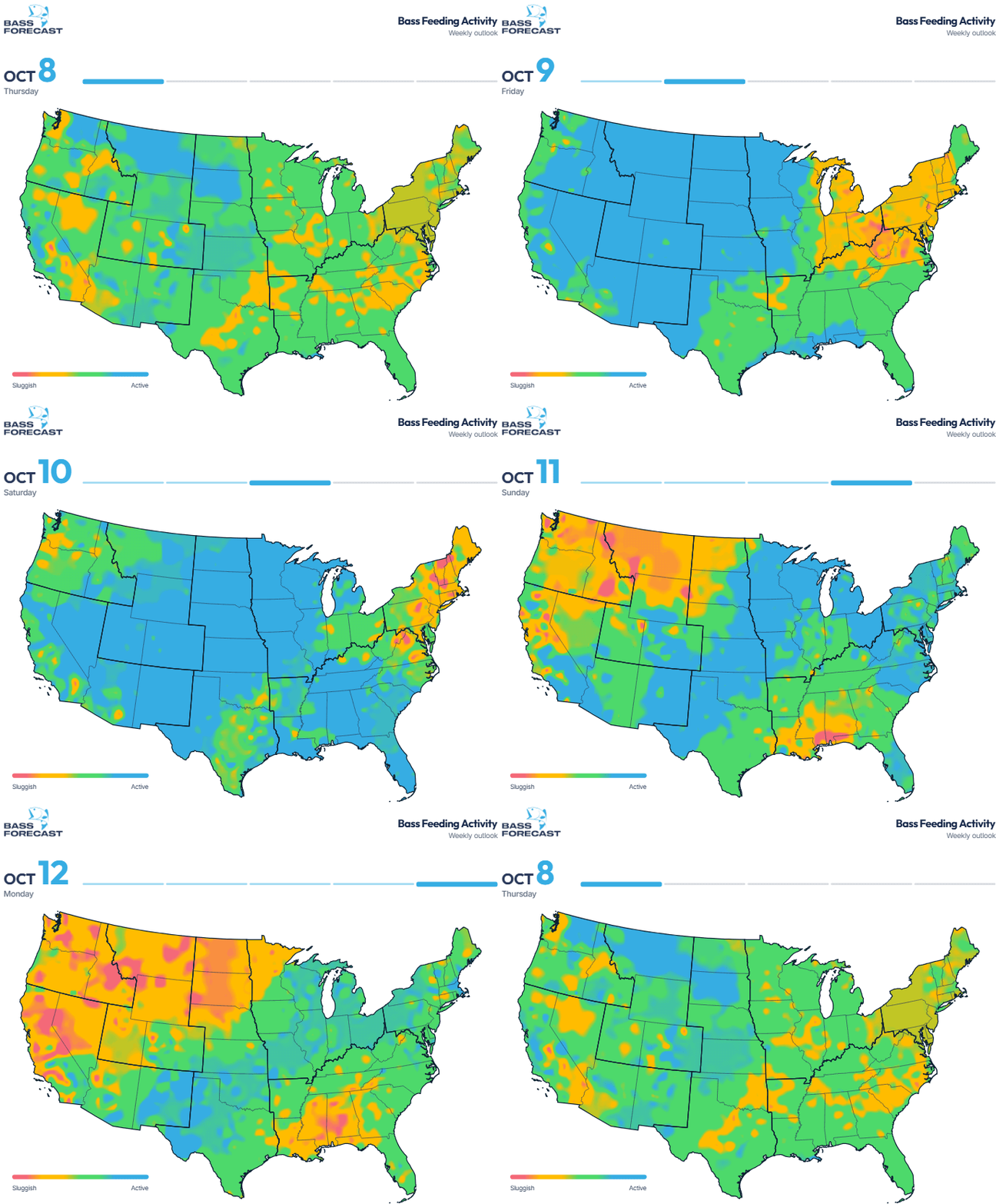
Post-spawn fishing rewards anglers who know exactly when the feeding window opens and where on the recovery path their fish are right now. Bass Forecast tracks water temperature trends, conditions, and seasonal phase data by region so you know whether to expect a slow grind or a feeding window before you load the truck.
Download Bass Forecast and stop wasting trips during the toughest two weeks of the year.



-1739275914.jpg)
.jpg)
.jpg)
.png)
.png)